Does Reverse Osmosis Remove Forever Chemicals

You’ve probably heard the ominous phrase “forever chemicals” whispered at brunch, between sips of oat milk lattes and avocado toast. These PFAS compounds are everywhere—from y...
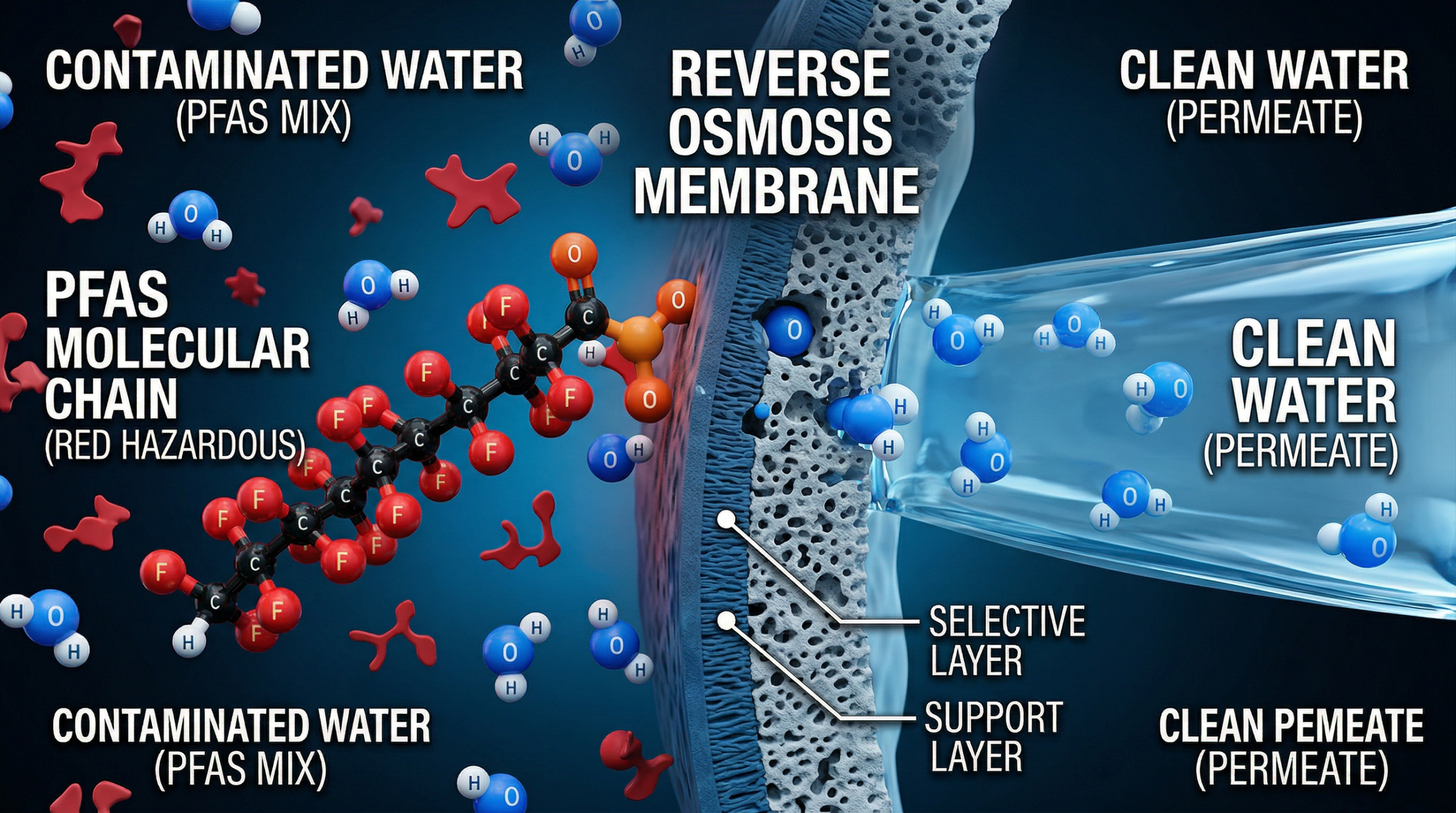
You’ve probably heard the ominous phrase “forever chemicals” whispered at brunch, between sips of oat milk lattes and avocado toast. These PFAS compounds are everywhere—from your non-stick frying pan to the waterproof jacket you swore you’d wear hiking. The big question haunting your fancy filtered water bottle is simple: does reverse osmosis actually kick these stubborn chemicals to the curb?
The short and satisfying answer is yes, reverse osmosis—or RO—is a powerhouse when it comes to removing PFAS. Studies show that properly maintained RO systems can eliminate up to 99% of these pernicious pollutants. That’s not just a win for your hydration; it’s a victory lap for modern engineering.
Think of reverse osmosis as the polite but firm bouncer at the club of your kitchen faucet. Water molecules are the VIPs who slip through the semi-permeable membrane, while forever chemicals—with their bulky molecular structures—are turned away at the door. It’s a selective, and frankly, a bit elegant, process.
Must Read
Of course, not all RO filters are created equal. The cheap countertop model your roommate bought on a whim might only catch about 75% of PFAS. That’s like hiring a security guard who sleeps through his shift. For serious protection, you’ll want a certified system—look for those with NSF/ANSI Standard 53 or 58 ratings.
The Science of Separating Forever from You
Let’s get a little geeky for a moment, because the magic is genuinely fascinating. Reverse osmosis uses pressure to force water through a membrane with pores so tiny—about 0.0001 microns—that they block molecules larger than water. PFAS molecules, being roughly 200 to 300 times bigger, don’t stand a chance.
This isn’t the same as a basic Brita pitcher, which relies on activated carbon and might catch only low levels of certain PFAS. Brita works best for taste and basic contaminants, but for forever chemicals, you need the heavy artillery. It’s like comparing a bicycle to a Tesla—both get you places, but one does a lot more heavy lifting.
Here’s a fun cultural nod for you: remember the water purification system in The Martian where Matt Damon broke down his own urine? That was a form of reverse osmosis. If it’s good enough for surviving on Mars, it’s probably good enough for your tap water on Earth.
Practical Tips for Your RO Journey
Tip one: Don’t skip the pre-filters. RO systems usually come with sediment and carbon filters that protect the membrane. Without them, you’ll clog the bouncer and reduce performance. Replace these filters every 6 to 12 months like you’d change your car’s oil.
 Does Reverse Osmosis Remove Forever Chemicals From Drinking Water
Tip two: Understand the trade-off. RO systems waste about 3 to 4 gallons of water for every gallon they filter. That’s called “reject water,” and while it sounds wasteful, many modern units recirculate it for other uses. Think of it as a high price for clean luxury.
Tip three: If you’re renting or on a tight budget, consider a countertop RO unit rather than an under-sink installation. Brands like Waterdrop or APEC offer systems that click in place without a plumber. It’s the IKEA of water filters—functional and just a little bit hip.
For the true water nerds, there’s also a hybrid option called nanofiltration, which sits between RO and regular carbon filters. It’s more efficient but less aggressive on PFAS removal. Good for softening water, but not your go-to for forever chemicals.
The Forever Chemical Backstory (Brief and Fun)
PFAS, or per- and polyfluoroalkyl substances, have been the stars of every environmental headline since 2000. They’re called “forever” because they don’t break down naturally. They’re the zombies of the chemical world—persistent, unstoppable, and showing up everywhere.
Fun fact: These chemicals are so ubiquitous that a 2021 study found PFAS in the blood of 99% of Americans tested. That’s more common than owning a smartphone. So, yes, we’ve all got a little bit of forever inside us.
But before you panic, remember that the EPA has set health advisories for PFAS in drinking water at near-zero levels. The science is evolving, but the takeaway is that reducing exposure—even by installing an RO system—is a meaningful step. You’re not trying to live in a bubble; you’re just stacking the odds in your favor.
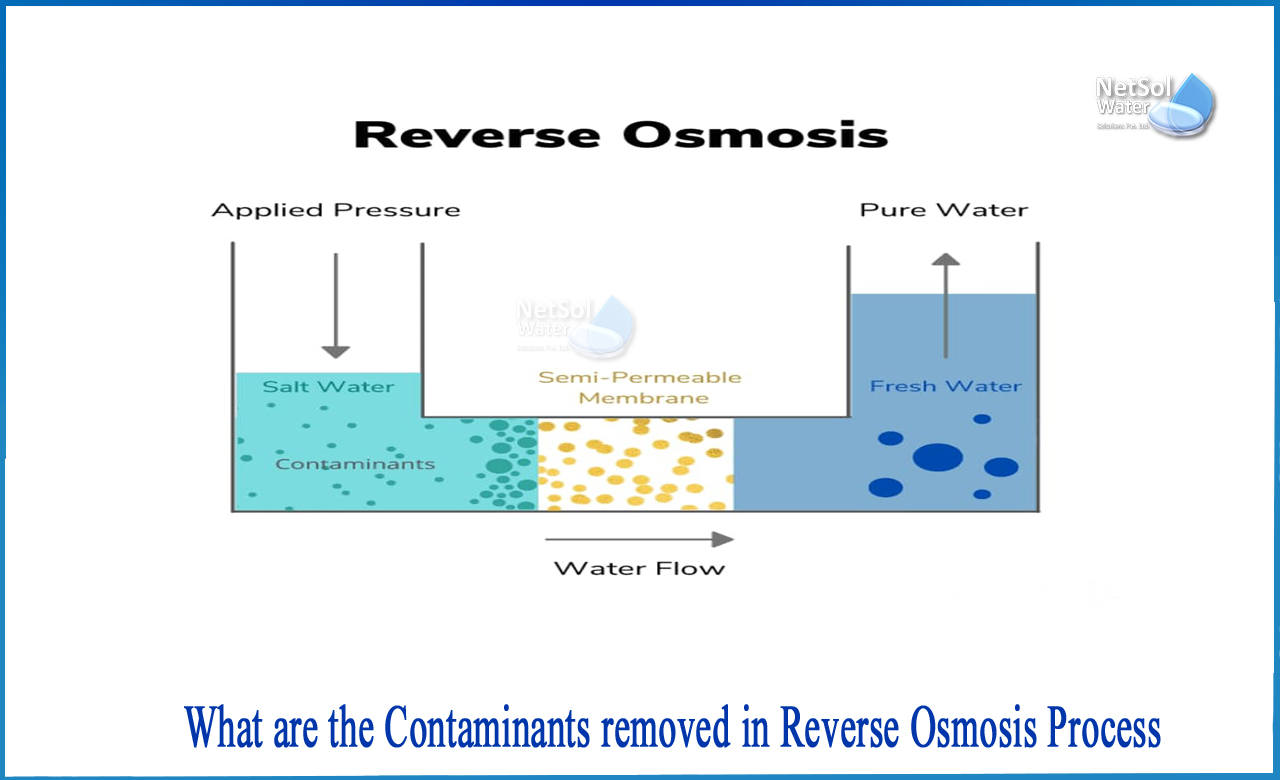 Osmosis Process Pictures
Does It Feel Like Overkill?
Maybe you’re thinking: “I don’t live near a chemical plant, and my tap water tastes fine.” Fair point. But forever chemicals have been found in rain, snow, and even remote Arctic ice cores. They’re the ultimate party crashers. Even if your water smells like a mountain stream, it might still carry these molecules.
The good news is that boiling water doesn’t help—in fact, it can concentrate PFAS. Fancy countertop distillers? Also not effective. Reverse osmosis is one of the few at-home solutions that genuinely works. It’s the Goldilocks of water filtration: not too gimmicky, not too passive—just right.
And if you’re the type to worry about plastic waste, many RO systems now come with BPA-free housing and reusable glass water carafes. You can be both hydrated and environmental, like carrying a tote bag to a farmers market. It’s lifestyle, not just technology.
A Short Reflection on Daily Life
At the end of the day, worrying about forever chemicals can feel like another chore in an already crowded life. But here’s the thing: water is the most intimate thing we consume. We drink it, cook with it, and bathe in it. Investing in its purity is a quiet act of self-care.
Think of your RO system as a small but reliable ally, like the friend who always remembers to save you a seat at the movie theater. It doesn’t solve every problem, but it makes this one a little less stressful. And sometimes, that’s exactly what you need.
So pour yourself a glass of that newly filtered water, maybe add a slice of lemon, and toast to the fact that you just made one tiny, smart choice. Your kidneys will thank you, and so will your next decade. Cheers to clear, calm, and forever-free hydration.
