What Is The Recommended Tds In Drinking Water

So, you’re standing in the water aisle at the grocery store, staring at a dozen bottles, and thinking, “What in the world is TDS?” Relax, you’re not alone. TDS stands for Tota...
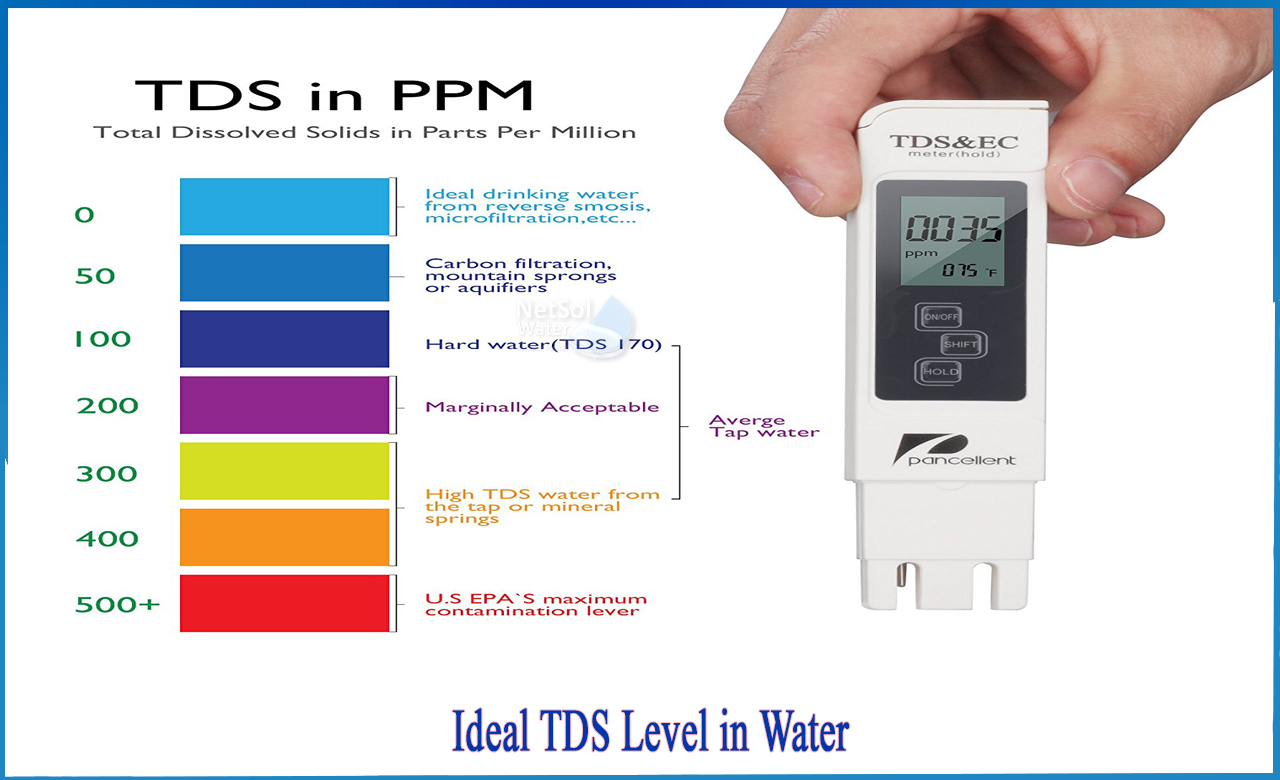
So, you’re standing in the water aisle at the grocery store, staring at a dozen bottles, and thinking, “What in the world is TDS?” Relax, you’re not alone. TDS stands for Total Dissolved Solids—basically, all the tiny minerals, salts, and stuff floating in your water. It’s like the “personality” of your H2O, and knowing the right number can save you from drinking something that tastes like a swimming pool.
The Magic Number: What’s “Recommended”?
First off, the WHO (World Health Organization) says water with a TDS level below 300 mg/L is excellent. Excellent sounds fancy, right? It means your water is as clean and crisp as a mountain spring—without the bear danger.
But here’s the kicker: the ideal range for most people is between 150 and 250 mg/L. That’s the sweet spot where water tastes fresh, not like a rock quarry or a salt lick. Think of it as the “Goldilocks zone” for hydration—not too much, not too little, just right for sipping.
Must Read
If your TDS is below 50 mg/L, your water is basically a blank slate. It’s like drinking air—refreshin’ but boring, and it might pull minerals from your body. That’s why some fancy bottled waters add minerals back in. Sneaky.
When TDS Goes Wild (High vs. Low)
High TDS (above 500 mg/L) can make water taste salty, bitter, or metallic. Yuck. It’s like drinking a melted battery. But don’t panic—it’s usually safe, just unpleasant, unless it’s off-the-charts high (like >1000 mg/L).
Low TDS (under 100 mg/L) is common in distilled or reverse-osmosis water. It’s pure but flat, like a soda that’s lost its fizz. Your coffee might taste weird, and your kidneys will do a double-take. Pro tip: add a pinch of sea salt? Kidding… mostly.
The EPA in the U.S. doesn’t set a federal limit for TDS in drinking water. They just say anything over 500 mg/L is a secondary nuisance—meaning it’s not dangerous, but it’s annoying. Like a mosquito in your bedroom at 3 a.m.
How Do You Measure This Stuff?
You don’t need a chemistry degree. Get a TDS meter—they’re like $10 online. Dip it in your glass, and boom: a number appears. It’s like a mood ring for your water, but more accurate.
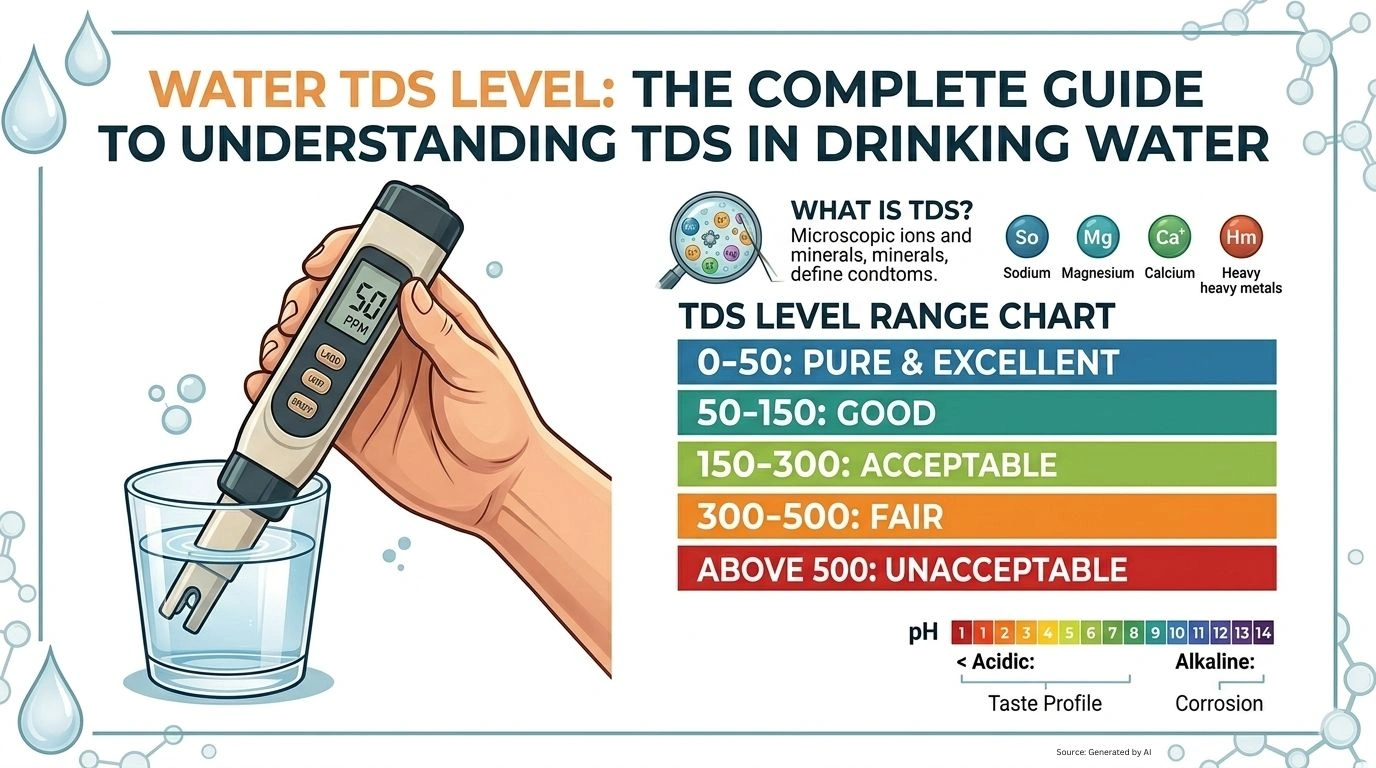 Water TDS Level: The Detailed Guide For Drinking Water TDS | ZeroB
Test your tap water, your filtered jug, and even the puddle outside (for science!). If your tap reads 400, you might want a filter. If it reads 50, you’re basically drinking cloud tears. Fine, not tears, but you get it.
Fun fact: bottled water brands vary wildly. One source might be 150 TDS, another 500. Always check the label—unless you enjoy surprises, which is fine for birthday parties, not for your morning thirst.
What About “Hard” Water?
Hard water is rich in calcium and magnesium, so its TDS is naturally higher (200–500 mg/L). Is it bad? Nah, it’s actually healthy for bones—but it’s rough on your pipes and leaves soap scum that looks like a science experiment. You can soften it, but softening adds sodium, which raises TDS. It’s a pickle.
Soft water (low TDS, below 100) feels silky and makes bubbles like a jacuzzi. But it might taste flat, and some worry about sodium levels. The trick? Use softened water for washing, drink filtered water for tasting. Why complicate your life? Because you’re a human.
The Myth-Busters Corner
Myth: “Zero TDS is the best!” False. Your body needs trace minerals like calcium and magnesium from water. Drinking pure H2O only is like eating plain rice for every meal—you’ll survive, but your taste buds will file a complaint.
 Drinkable Water Tds Range
Myth: “All high TDS water is dangerous!” Nope. Many natural springs have TDS of 400+ and are packed with beneficial minerals. It’s just a matter of how it tastes to you. If it’s gross, filter it. If it’s glorious, thank Mother Nature.
Myth: “TDS meters tell you if water is safe.” Sorry, no. They can’t detect bacteria, lead, or pesticides—just total solids. Think of it as a speedometer: it tells you how fast you’re going, not if the road is clear. Use a proper test kit for the scary stuff.
So, What’s the Bottom Line?
Shoot for a TDS between 150 and 250 mg/L for the best taste and health. If you’re in a range of 100–300, you’re in the “happy zone” where you can sip without worrying. But don’t obsess—water is still water, and you’re doing great.
Remember: your tap water might be perfectly fine even if it’s a little high or low. The real enemy is dehydration, not a few extra minerals. So drink up, adjust if you want, and stop staring at water bottles like they’re alien artifacts.
One last joke: Why did the TDS meter break up with the water? Because it found too much dissolved stuff. I’ll show myself out.
Here’s your uplifting conclusion: You now know the secret language of water. Go forth, test your tap, impress your friends at parties (“Hey, this water is at a perfect 180 TDS!”), and remember—no matter what the number says, every sip is a little victory. You’re hydrated, you’re informed, and you’re awesome. Cheers to that!
