Does Drinking Coffee Count As Drinking Water

You’re on your third cup of black coffee by noon, feeling alert but suddenly wondering: does this count toward my water intake? It’s a question that’s haunted the hydrated and...

You’re on your third cup of black coffee by noon, feeling alert but suddenly wondering: does this count toward my water intake? It’s a question that’s haunted the hydrated and the caffeinated alike, usually whispered between sips at a trendy café. Let’s settle the debate once and for all, with a splash of science and a dash of everyday sense.
The old myth that won’t die
For decades, we were told coffee dehydrates you—that every cup of joe actually sucks water from your system. This idea stems from the diuretic effect of caffeine, which makes your kidneys produce more urine. But here’s the twist: modern research shows that for regular coffee drinkers, the diuretic effect is mild and temporary.
A landmark 2014 study asked men to drink four cups of black coffee a day for three days, then measured their hydration levels. The result? No significant difference compared to drinking the same amount of water. Your body adapts, and the net fluid loss is negligible—meaning coffee does contribute to your daily fluid balance.
Must Read
So, yes—but with a foam-topped asterisk
Think of coffee as water with benefits, not just a substitute. A standard 8-ounce cup is about 98% water, so that morning latte counts toward hydration, just slower than plain H2O. The caveat? Additives like sugar, cream, or syrups don’t change the hydration math, but they do add calories and can slow absorption.
If you’re someone who drinks five espresso shots with minimal water, the math gets trickier. A 2017 review in the British Journal of Nutrition concluded that moderate coffee consumption—under 400 mg of caffeine, or about four cups—fits neatly into your daily fluid needs. Beyond that? You’re flirting with jitters, not dehydration, so just grab a glass of water alongside.
What about espresso? Cold brew? Decaf?
The water content in espresso is lower because it’s concentrated—about 60% water—so one shot is like a hydration appetizer rather than a main course. Cold brew, on the other hand, is typically diluted with water, so it hydrates almost as well as regular drip coffee. Decaf? It’s almost identical to regular, minus the stimulant effect, making it a gentler way to sip your hydration.
Fun fact: In Italy, locals often sip a tiny espresso after lunch and then follow it with a glass of water—a ritual called “acqua e caffè.” This isn’t just for palate cleansing; it’s an intuitive understanding that coffee alone isn’t your body’s full drink. They know that balance is key.
 Does Coffee Count as Water? What Caffeine Lovers Must Know
Practical tips for the modern coffee lover
First, listen to your thirst. Coffee doesn’t trigger the same thirst signals as plain water, so you might miss cues. If your lips feel dry or your urine is dark amber, pour a glass of water—not another latte. Second, match each coffee cup with a cup of water, especially if you’re active or live in a hot climate.
Try the “one-for-one” rule: for every morning mug, drink an equal amount of water by lunch. This isn’t punishment; it’s a gentle habit that keeps your skin plump and your brain sharp. And if you’re traveling or on a mountain hike, never rely on caffeine alone—a dehydrated hiker is a grumpy hiker.
Cultural shortcuts and smart swaps
In Sweden, people drink coffee with “fika”—a break that often includes a glass of water alongside. Borrow this hygge-inspired practice and set a water glass next to your mug. In Japan, some cafés serve a tiny cup of water with espresso—a silent nod to balance.
If you’re feeling fancy, try “iced coffee with a splash of milk” instead of a heavy frappuccino. The ice itself adds extra water to your cup, and the milk provides protein and electrolytes. Every little sip counts.
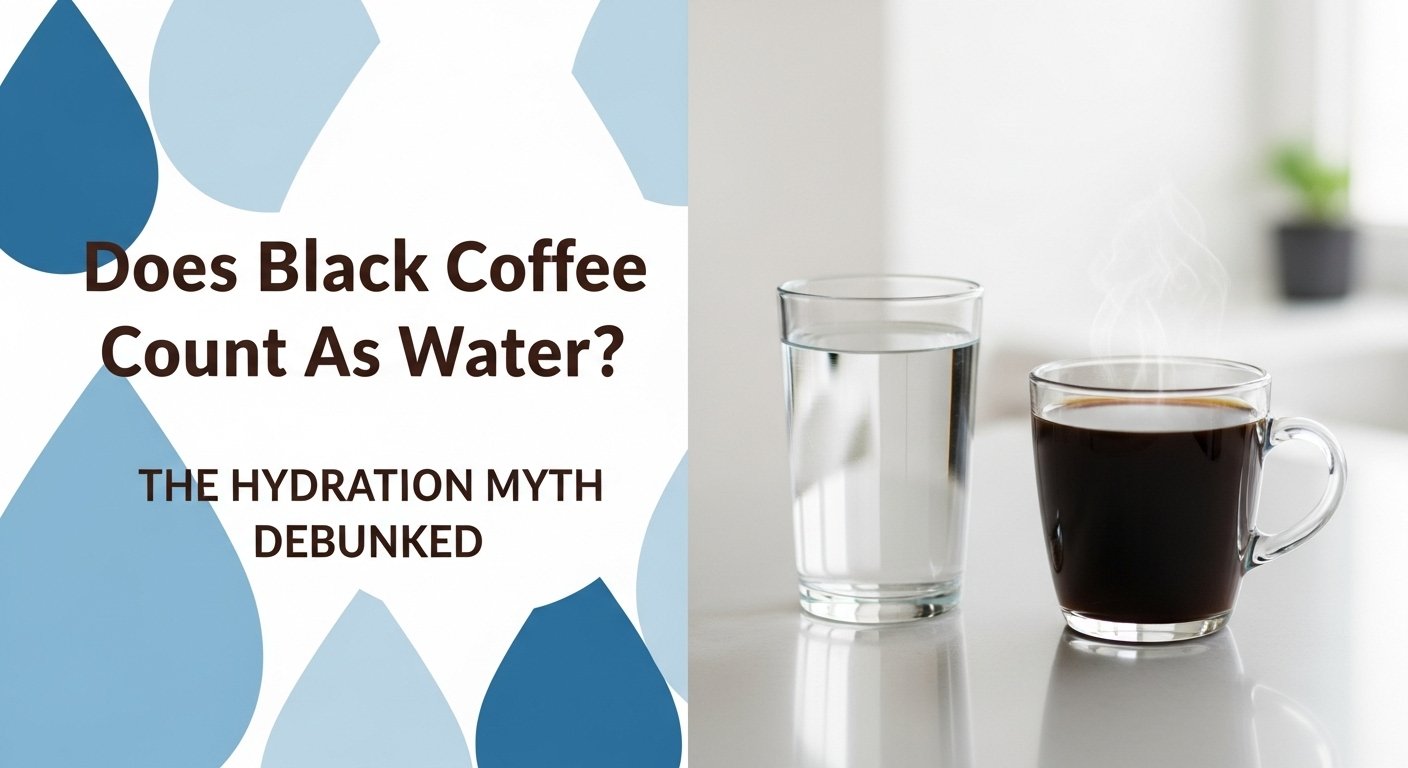 Does Black Coffee Count As Water? The Hydration Myth Debunked
The bottom line: count it, but don’t lean on it
Yes, your morning coffee counts toward your daily water intake—but treat it like a supportive friend, not your only source. The National Academies of Sciences recommends about 11.5 cups of fluid per day for women and 15.5 for men, and your coffee cups can fill part of that tally. Just don’t forget that nature’s original drink—plain, still water—still rules for hydration efficiency.
So next time someone tells you coffee doesn’t count, smile and sip your Cortado. You’re hydrating with a side of ritual, and science is on your side. But if you feel that 3 p.m. slump? That’s your hint to switch to the clear stuff—your body will thank you with clearer skin and steadier energy.
A final reflection for your daily life
Here’s the real takeaway: the question itself reveals how much we overthink simple pleasures. We juice, we detox, we track macros—but sometimes the best hydration advice is the oldest: drink when thirsty, eat when hungry, and enjoy your coffee without guilt. One cup won’t dry you out, and a glass of water alongside won’t ruin your vibe.
Let your mornings be forgiving. Let your coffee be a ritual, not a calculation. And if you finish this article and reach for a refill, just tip a water bottle in the same toast to your cells. They’ll appreciate the variety—and so will your soul.
