How Much Caffeine In Regular Coffee Vs Decaf

Ever found yourself staring at the coffee aisle, wondering if decaf is even worth the hype? You’re not alone. Let’s get real about the numbers and why this comparison is way m...

Ever found yourself staring at the coffee aisle, wondering if decaf is even worth the hype? You’re not alone. Let’s get real about the numbers and why this comparison is way more interesting than you’d think.
The Bold Truth: Regular Coffee’s Kick
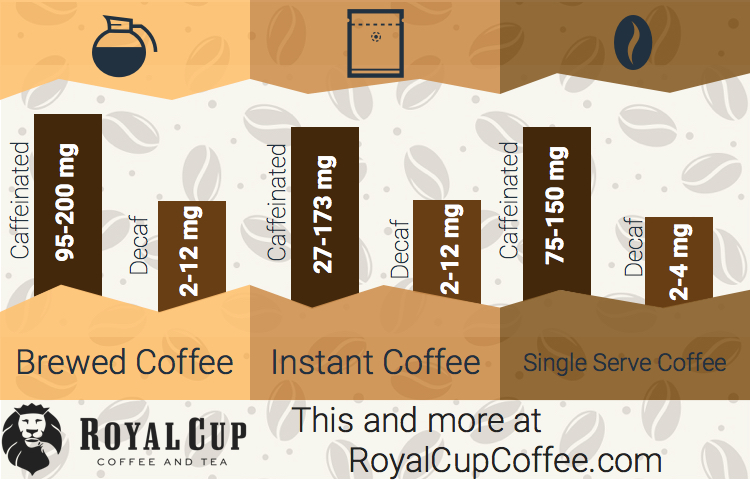
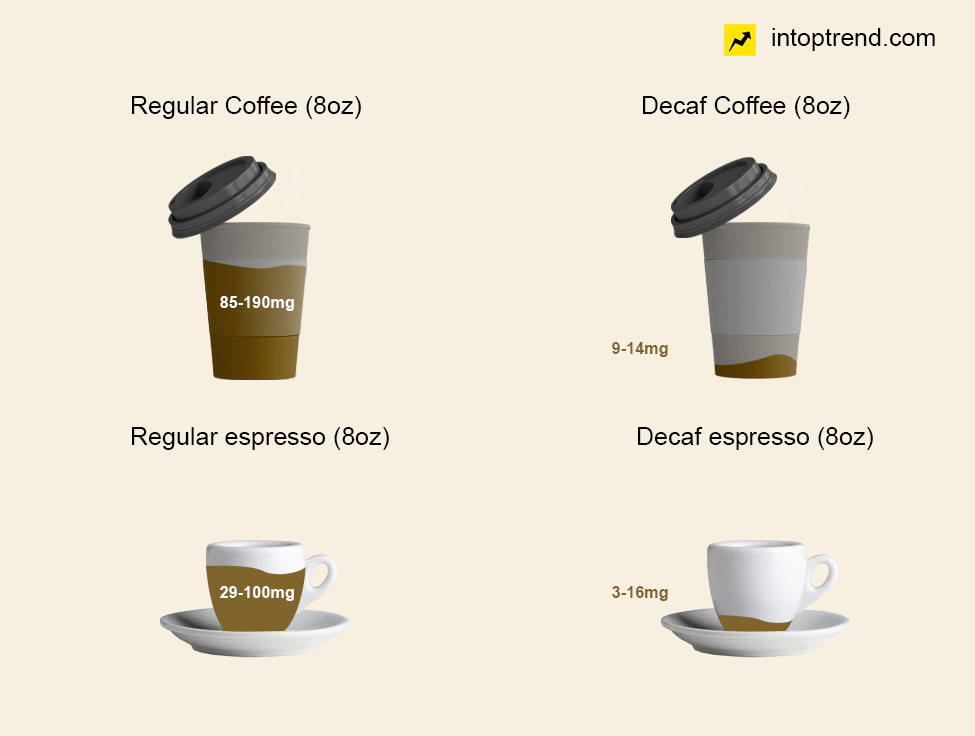
A standard 8-ounce cup of regular brewed coffee packs about 95 milligrams of caffeine. That’s like the jolt you’d get from a small energy drink, but without the neon colors. Some roasts, especially lighter ones, can push that number to 120 or even 150 mg.
Think of it as your brain’s gentle alarm clock—only it rings with a fist pump. It’s no wonder regular coffee is the go-to for getting through that 3 PM slump or a Monday morning meeting.
Must Read
Does the Bean Type Matter?
Oh, absolutely. A single shot of espresso, despite being tiny at 1.5 ounces, holds around 63 mg of caffeine. That’s why espresso feels like a concentrated power-up. Drip coffee, on the other hand, is like sipping a steady river of energy—less intense, but it flows longer.
So if you’re after pure acceleration, espresso wins; if you want background buzz, drip is your buddy.
The Decaf Illusion: Not Zero, But Close Enough?
Here’s the bombshell: decaf is not caffeine-free. Shocker, right? A cup of decaf still contains about 2 to 7 milligrams of caffeine. That’s roughly the amount found in a single square of dark chocolate.
Imagine you’re at a party, and regular coffee is the loud friend who dances on tables. Decaf is the one quietly refilling the snack bowl in the corner. It’s still there, but barely making a ripple.
 How Much Caffeine in Decaf Coffee: Surprising Facts Revealed - Go Mehedi
Why the Range?
The exact amount depends on the decaffeination process. Methods like the Swiss Water Process can strip away 99.9% of caffeine, while others leave a bit more behind. A study from the Mayo Clinic even found some decaf samples hitting 15 mg per cup.
So if you’re truly sensitive to caffeine, don’t assume decaf means “off switch.” It’s more like “dim the lights.”
The Cool Comparison: How They Stack Up
Let’s put it in perspective. Drinking one cup of regular coffee is like binging a whole season of your favorite show in one night. Decaf? That’s like reading just one page of a magazine before bed.
Regular coffee gives you 95 mg of fuel; decaf gives you, well, a whisper. It’s the difference between a sprint and a slow morning stroll. Both are valid—just don’t expect the stroll to get your heart racing.
Which One Wins for Taste?
Here’s the plot twist: many people can’t tell the difference in blind taste tests. The flavor comes from the beans’ roast and origin, not the caffeine. So if you brew a high-quality decaf, it can taste just as rich and nutty as the real deal.
 How is decaf coffee made | 4 amazing things that you didn't know
But if you’re craving that ritual and energy boost, regular coffee is the classic. Decaf is the understudy that still deserves a standing ovation.
Why This Matters for Your Daily Ritual
Maybe you love the idea of a warm mug at 9 PM without staring at the ceiling until 2 AM. Decaf gives you that. Or maybe you need a kickstart before hitting the gym—regular coffee is your secret weapon.
It’s not about which is “better.” It’s about knowing your numbers so you can pick your vibe. Feeling mellow? Go decaf. Need to conquer the world? Go regular.
The Final Sip
Next time someone asks, “How much caffeine is in that?” you can drop some knowledge. Regular coffee is the heavyweight champ at 95–150 mg; decaf is the featherweight at 2–7 mg. Both are coffee, both are delicious, and both have a place in your life.
So grab your favorite mug, and remember: the power isn’t just in the cup—it’s in your choice. Now, go brew something amazing.
