How Much Does It Cost To Build A Water Well

Let’s be real for a second: we take water for granted. You turn the tap, and out it comes—like magic, but cheaper. But what if you live off-grid, or your well has finally give...
Let’s be real for a second: we take water for granted. You turn the tap, and out it comes—like magic, but cheaper. But what if you live off-grid, or your well has finally given up the ghost after 40 years of faithful service? Suddenly, you’re staring at a hole in the ground that costs more than a used Honda Civic.
The Short Answer (No, It’s Not Free)
Building a water well usually costs anywhere from $3,500 to $15,000 for a standard residential setup. That’s like the price of a decent kitchen renovation, minus the fancy backsplash. If you hit tricky rock or need deep drilling, you could easily push past $20,000—which is what my neighbor paid for his “starter” boat that he never uses.
Think of it as paying for a plumbing system that starts 200 feet underground. It’s not just digging; it’s engineering with a side of dirt.
Must Read
Factor #1: The Hole (Obviously)
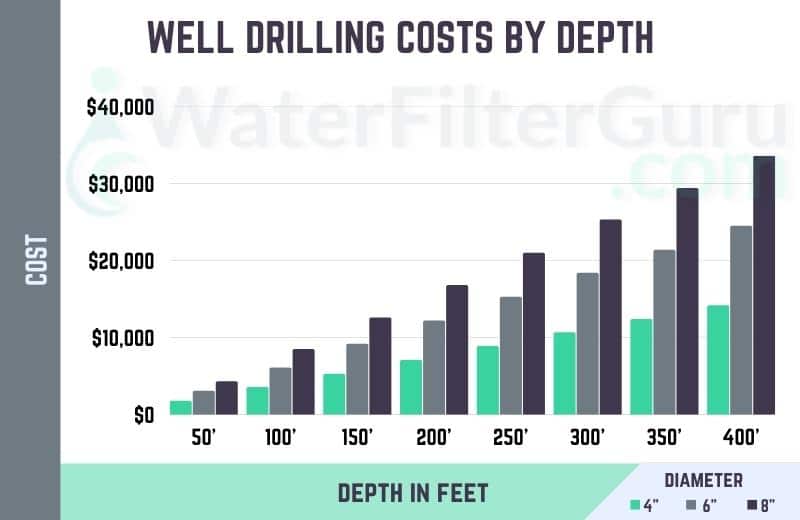
Drilling is the biggest chunk of your budget. You’re paying by the foot, typically $15 to $30 per foot for a standard 6-inch diameter well. That’s like buying a steak dinner every time you go down another foot—except the steak is mud and you can’t eat it.
In my area, the average well goes down 150 feet. That’s $3,000 to $4,500 just for the privilege of poking the earth. If you hit bedrock that requires a special drill bit (a “rock bit” that costs extra), you might as well be paying for a round of drinks for everyone at the dig site.
Factor #2: The Pump and the Plumbing (The Real Heroes)
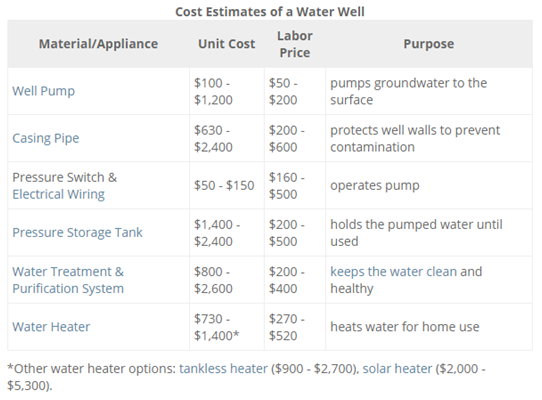
Once the hole is done, you need a pump to actually get the water out. A basic submersible pump runs $500 to $1,200. That’s about the same as a high-end espresso machine, but it won’t make your morning caffeine buzz—just your morning shower.
You’ll also need a pressure tank (think of it as a water “battery” that stores pressure), piping, and wiring. This “pack of extras” can add another $800 to $2,000. It’s like buying a new TV and realizing you also need a stand, cables, and a surge protector—except this TV lives in a damp hole.
 2025 Well Drilling Costs | Average Water Well Installation Cost
The Hidden Costs That Sneak Up on You
Don’t forget the permits. In most places, you need a water right permit, which costs anywhere from $100 to $500. That’s the government’s way of saying, “Thanks for not just drilling willy-nilly and stealing the aquifer from your neighbor’s petunias.”
Then there’s the well casing—a steel or PVC pipe that lines the hole so it doesn’t collapse. That’s typically $10 to $20 per foot. It’s basically a very expensive drinking straw for your yard.
The “Bonuses” That Hurt Your Wallet
You might need a well cap to keep bugs, frogs, and the occasional curious raccoon out of your water supply. That’s another $50 to $200. I once saw a well cap that looked like a tiny manhole cover. It was adorable—and expensive.
And let’s talk about water testing. After drilling, you’ll want to test for bacteria, minerals, and toxins. That’s $100 to $400. It’s like a physical for your water—except the water doesn’t complain about the cold stethoscope.
So What’s the Final Tab?
For a typical 150-foot well with a decent pump and all the trimmings, budget $8,000 to $12,000. That’s about what you’d pay for a gently used 2015 sedan that smells faintly of French fries. But unlike that car, a well doesn’t need oil changes or new tires—just the occasional pump replacement every 10-15 years.
 How Much Does a Well Cost? (2024 Well Drilling Cost Guide)
My uncle once paid $14,000 for a well that hit a natural spring on the first try. He bragged about it for a decade. Meanwhile, my other cousin paid $6,000 for a shallow well that went dry during a drought—and then he had to pay another $8,000 to dig deeper. That’s the water well equivalent of buying a “fixer-upper” house and then discovering the foundation is made of dreams and drywall.
How to Save a Few Bucks
If you want to reduce costs, consider a sandpoint well (a DIY option for very shallow water tables) for about $500. But that’s like camping in your backyard instead of building a cabin—it works, but you’ll miss the hot shower.
Another trick: share a well with a neighbor. Splitting the drilling cost might bring your share to $4,000-$6,000. Just be prepared for the occasional “I used more water than you!” argument, which is your new version of “Who ate the last cookie?”
The Bottom Line (Pun Intended)
In the end, a water well costs about as much as a small wedding, a used boat, or a decade’s worth of fancy coffee. But here’s the magic: once it’s done, you never get another water bill. That’s a feeling that makes even the priciest well feel like a bargain—until the pump motor dies at 2 a.m. on a Sunday.
But hey, that’s a story for another article. For now, just know that water independence costs something—but it’s usually less than you’d spend on therapy after arguing with your municipal water company.
