How To Make Normal Saline Solution At Home

Let’s be real—you’ve probably had that moment at 2 a.m. when your sinuses feel like they’re hosting a tiny, angry mosh pit, and the only thing open is your fridge. You’re too...
/how-to-make-saline-solution-608142_V2-01-5c8a85d1c9e77c0001a925f9.png)
Let’s be real—you’ve probably had that moment at 2 a.m. when your sinuses feel like they’re hosting a tiny, angry mosh pit, and the only thing open is your fridge. You’re too tired to drive to the pharmacy, and the nearest 24-hour store might as well be on the moon. That’s when you start eyeballing the salt shaker and thinking, “How hard can this be?” Well, my friend, you’re about to become a kitchen chemist.
Why You’d Even Want To Do This
Normal saline is just fancy medical-speak for salt water that’s the same concentration as your tears, blood, and general body fluids. It’s the holy grail for clearing a stuffy nose, flushing a tiny cut, or even rinsing a new piercing without screaming. Buying it is easy, but making it? It’s like baking a cake—except safer, and you don’t have to worry about soggy bottoms.
I once spent fifteen minutes staring at a bottle of contact lens solution, wondering if it counted. Spoiler: it doesn’t. You want the kind of salt water that won’t make your nostrils feel like they’ve been doused in battery acid. Homemade saline is that gentle best friend who always has a tissue and a hug.
Must Read
The Two Magic Ingredients
Here’s the secret: you only need table salt and water. But not just any salt—skip the fancy pink Himalayan stuff or the sea salt with crunchy bits. You want plain, iodized table salt, because it dissolves like a dream and is sterile enough. Non-iodized salt works too, but iodized is fine—it won’t turn your nose into a science experiment.
The second star is tap water, but let’s not be reckless. You need to boil it first to kill any microscopic party crashers. Think of it like this: you wouldn’t drink from a garden hose after it’s been sitting in the sun all summer. Your nose feels the same way about unboiled water.
The Exact Ratio You’ll Forget by Next Week
Grab a clean pot and pour in 1 cup of water (that’s 8 ounces, or 240 milliliters if you’re fancy). Bring it to a rolling boil for five whole minutes. Yes, set a timer. I once got distracted by a squirrel outside and ended up with half the water gone—my saline was basically a salt lick.
Take it off the heat, then stir in 1/2 teaspoon of salt. Don’t add more—it’s not a pinch-of-this, pinch-of-that situation. That’s the Goldilocks ratio for normal saline: not too salty, not too weak. If you use a whole teaspoon, you’ll make a brine that belongs on a pickle, not in your face.
 Making Normal Saline At Home , How to make saline solution – BYOFB
The Cool-Down Dance
Now you wait. Stir until the salt dissolves completely—no grains should be visible, like a magic trick where the salt just gives up. Let the water cool down to body temperature. Test it on the inside of your wrist, like you’re checking a baby bottle. If it burns, it’s too hot. If it feels like bathwater on a lazy Sunday, you’re golden.
Pour it into a clean glass jar or bottle—preferably one that didn’t previously hold pickles or old spaghetti sauce. I once used a mason jar that smelled faintly of salsa, and my sinuses were not amused. Sterilize the container by rinsing it with boiling water first. Your nose deserves a clean home.
How To Use It Without Regret
For a stuffy nose, grab a clean spray bottle (buy a new one from the drugstore, don’t reuse a Windex bottle—please). Spray a few squirts up each nostril, tilt your head back, and let the saline do its thing. You’ll feel a weird, satisfying trickle down your throat, like you’ve just snorted a tiny wave.
For a small wound, soak a clean cloth in the solution and gently dab it. It won’t sting like alcohol—it’s so gentle you’ll want to apologize for not being more dramatic. Just don’t use it on deep cuts or eyes, because you’re a home cook, not a surgeon. Leave eyeball stuff to the pros.
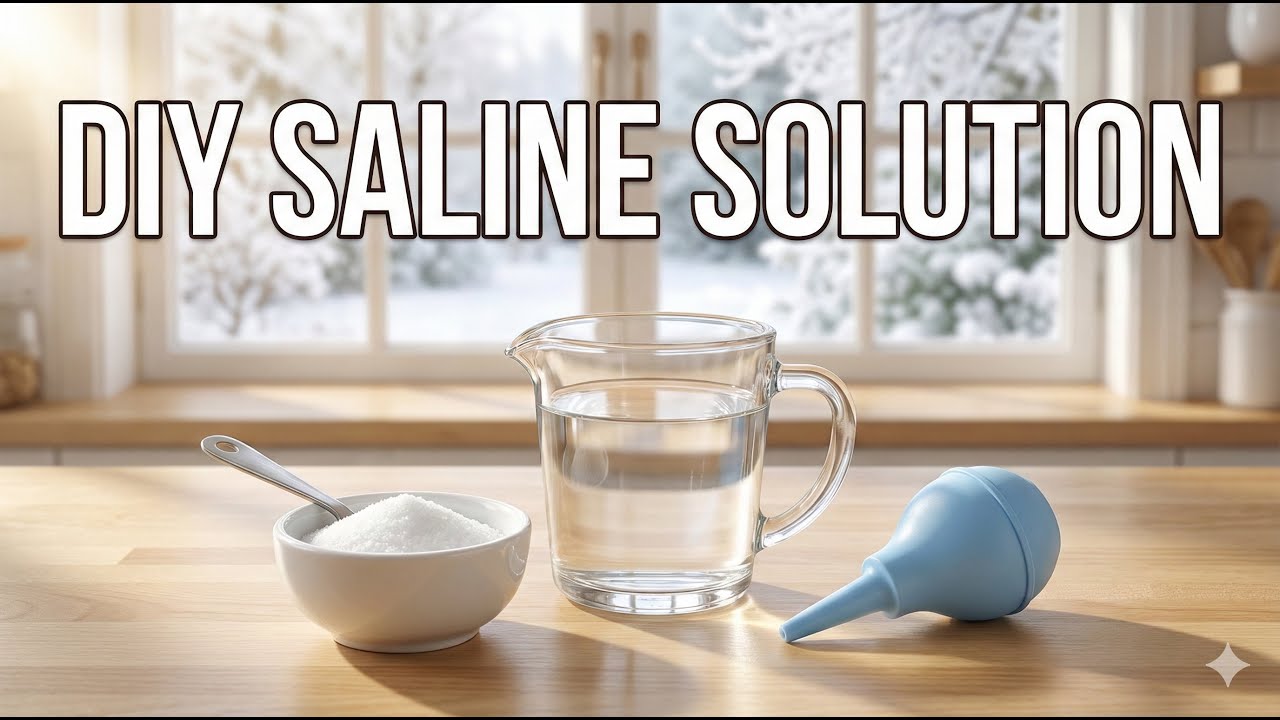 How to Make Saline Solution at Home (Runny Nose Relief) - YouTube
Storage Is a Simple Affair
Homemade saline doesn’t have preservatives, so it’s like that leftover guacamole—good for a day or two in the fridge. After 24 hours, toss it. Label it with a piece of tape if you’re organized; otherwise, sniff it. If it smells like anything other than “vaguely damp,” it’s gone bad. You don’t want to be the person who snorts expired water.
I once kept a batch for a week because I was feeling lazy. Let’s just say my nose staged a protest that involved a lot of sneezing and regret. Fresh is best, my friend. Make only what you need, like you would for a single-serving pancake.
The Grand Finale of Self-Reliance
There’s something oddly satisfying about fixing a minor problem with stuff you already own. You feel like McGyver, but with less chewing gum and more boiled water. The next time your allergies hit during a Netflix binge, you won’t panic—you’ll just boil some water, wink at the salt shaker, and get to work.
And if you mess up? No big deal. Your nose will forgive you, and you’ll have a funny story about the time you accidentally made a saline solution that tasted like the Atlantic Ocean. We’ve all been there. Now go forth and snort with confidence.
/how-to-make-saline-solution-608142_V2-01-5c8a85d1c9e77c0001a925f9.png&description=How+To+Make+Normal+Saline+Solution+At+Home)