Does Still Water Have Brain Eating Amoeba

So, you’re chilling by a lake, dipping your toes in the cool, still water, and a tiny thought creeps in: “Wait… does this have brain-eating amoeba?” It’s a fair question, and...

So, you’re chilling by a lake, dipping your toes in the cool, still water, and a tiny thought creeps in: “Wait… does this have brain-eating amoeba?” It’s a fair question, and honestly, it sounds like something out of a sci-fi movie, right? Like, how could a blob in the water possibly munch on your brain?
Let’s untangle this mystery. The infamous “brain-eating amoeba” is actually a microbe called Naegleria fowleri. It’s not a zombie villain from a horror flick—it’s a single-celled organism that lives in warm, freshwater environments like lakes, rivers, and hot springs. Still water, especially when it’s warm (think 80°F and above), is its happy place.
But can it really eat your brain?
Here’s where it gets both cool and freaky: technically, yes, it can cause a rare infection called primary amebic meningoencephalitis (PAM). But here’s the chill pill—it’s incredibly rare. We’re talking like, fewer than 10 cases a year in the entire U.S. You’re more likely to get struck by lightning while winning the lottery.
Must Read
The amoeba doesn’t just jump at you, either. It only causes trouble if water forces it up your nose—like when you dive, jump, or get water splashed deep into your nostrils. Swallowing it? Totally fine. Your stomach acid annihilates it.
Think of it this way: the amoeba is a shy, warm-water lurkers. It’s not hunting you; it’s just vibing in the sediment, eating bacteria. But if you give it a free ride up your nasal highway, it might get confused and trigger a panic in your immune system.
Why still water gets the bad rap
Still water—like a stagnant pond or a warm, shallow lake—is perfect for Naegleria fowleri because it heats up easily. Moving water, like a river or ocean, is often too cold or salty for it. So, if you’re swimming in a chlorinated pool or the ocean, you’re basically immune. The amoeba can’t survive in salt or chemicals.
 Brain Eating Amoeba Locations
But here’s the twist: even in still water, the risk is almost non-existent for most people. Out of millions of swimmers every year, only a handful get sick. It’s like worrying about a shark in a backyard paddle pool—possible, but really not worth losing sleep over.
What’s actually cool about this little bug?
Let’s geek out for a sec. Naegleria fowleri is a thermophile, meaning it loves heat. It thrives in warm water and dies in cold. Scientists study it because it’s a master of adaptation—it can change from a harmless cyst to a swift-swimming flagellate in minutes. Talk about a transformation!
Also, it’s a natural predator of bacteria. In a weird way, it’s doing its job in the ecosystem, keeping bacterial populations in check. You could almost call it a tiny, underappreciated janitor of the water world. Just don’t let it clean your sinuses.
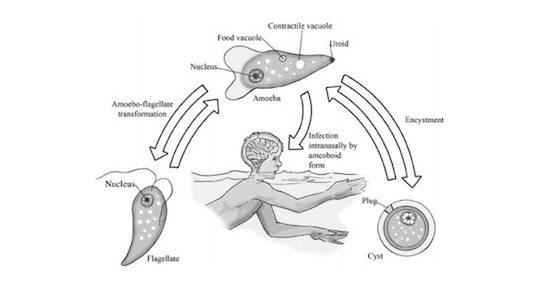 Brain Eating Amoeba Locations
So, should you fear still water?
Look, the answer is a solid no—with a side of common sense. If you’re swimming in a warm, stagnant pond, just avoid forcing water up your nose. Use a nose clip, or keep your head above water. That’s it. No exotic rituals needed.
And for the record, you’re far more likely to get sick from a bad hot dog at a picnic than from this amoeba. Still water is not a death trap; it’s just home to billions of microorganisms, both friendly and quirky. Most of them are on your skin right now, doing nothing but chilling.
So next time you’re at a calm lake, don’t let the “brain-eating” hype ruin your vibe. Nature is weird and wonderful, and this little amoeba is just one of its fascinating oddballs. Enjoy the water, be smart, and remember: you’re a giant, and it’s just a speck.
Stay curious, not scared. And maybe don’t snort lake water—for a bunch of reasons.
