How Does Ice Maker Work In A Refrigerator

Ever stood in front of your fridge, listening to that mysterious clunk and rattle from the freezer door, and wondered, “How does that little machine actually make ice?” It fee...
Ever stood in front of your fridge, listening to that mysterious clunk and rattle from the freezer door, and wondered, “How does that little machine actually make ice?” It feels like magic, right? You just press a glass against a lever, and perfectly shaped cubes tumble out like they’ve been waiting for you all day. But trust me, the reality is even cooler than magic—it’s a tiny, silent factory living inside your appliance.
Let’s start with the simplest part: we all know water freezes when it gets cold. But your ice maker isn’t just a tray of water sitting in a deep freeze. Instead, it’s a clever little system that uses mechanical timing and a heating element to create those cubes without you lifting a finger. Think of it as a robot bartender that’s always on duty, but instead of mixing drinks, it only knows how to make one thing: ice.
The Heart of the Operation: The Mold and the Water Valve
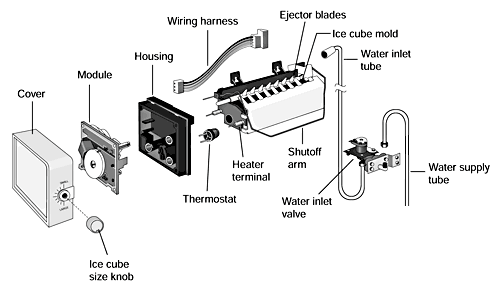
Inside your freezer, hidden behind a plastic panel, sits a metal or plastic mold shaped like a row of tiny ice cube trays. When you close the door after getting a drink, a small water valve opens up at the back of your fridge. It’s like a little hose that takes a sip from your home’s water line and fills the mold with just the right amount—usually about two to three tablespoons per cube.
Must Read
Why so precise? Because if it filled too much, the cubes would freeze into one giant block, and your glass wouldn’t be happy. Then, the freezer’s cold air (usually around zero degrees Fahrenheit) goes to work. In about 90 minutes to two hours, that liquid water turns into solid, crystal-clear ice.
But Wait—How Does It Actually Pop the Ice Out?
Here’s where it gets really clever. Once the ice is frozen, the ice maker doesn’t just wait for you to yank it out. Instead, a small heating coil underneath the mold warms up slightly. This gentle heat loosens the cubes’ grip, so they don’t stick. Then, a little motor-driven arm—called an ejector arm—spins around and scoots each cube out of its pocket.
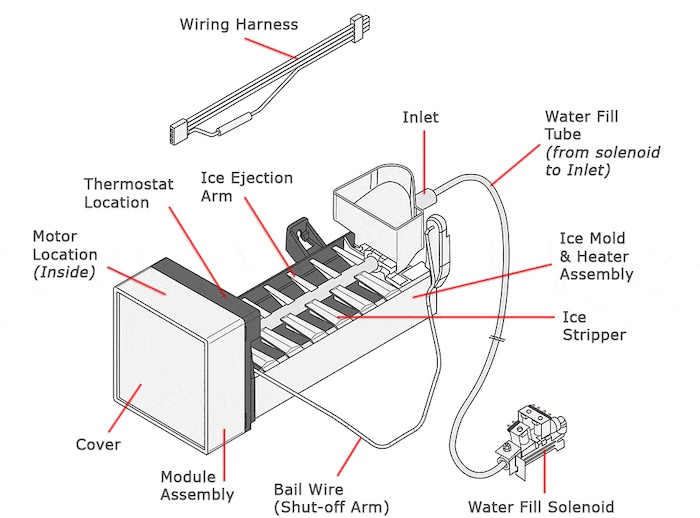 Samsung Bottom Freezer Ice Maker Diagram & Details - Diagram Lens
Imagine a tiny metal finger tickling the bottom of an ice cube tray until the cubes jump out. That’s basically what’s happening! The cubes then fall into a storage bin below, ready for your iced tea or a late-night snack. After that, the arm resets, the water valve opens again, and the whole cycle repeats automatically.
What about the sensor that knows when the bin is full? That’s a simple but genius trick. Some ice makers use a mechanical arm that swings up. When the ice piles high enough, it pushes the arm up, and the machine thinks, “Okay, I’m done for now.” Others use a light beam—if the beam is blocked by ice, it knows the bin is full and stops making more.
Why Is It So Cool (Pun Intended)?
Think about the alternative: a plastic ice tray that you have to wrestle with, run under hot water, and twist until your fingers ache. The ice maker does all that silently, automatically, and while you sleep. It’s like having a tiny, patient worker who never complains and never takes a coffee break. Pretty cool for a gadget that costs less than a fancy dinner out, right?
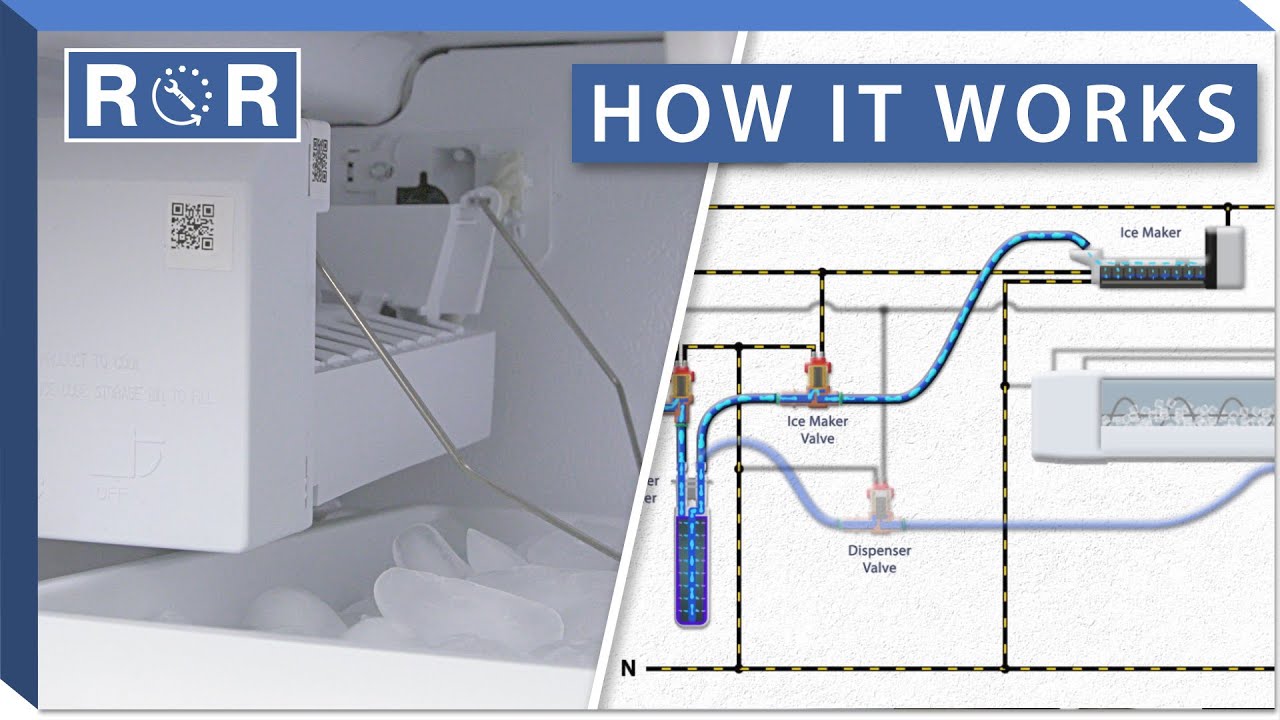 How Does The Ice Maker Work On A Lg Refrigerator at Saul Carroll blog
Have you ever noticed that ice from a fridge tastes a little weird sometimes? That’s because the filter matters. Most modern ice makers draw water through a built-in filter, trapping chlorine, dirt, and odd flavors before the water freezes. So your ice isn’t just frozen—it’s purified frozen. Fancy, huh?
The “Crushed” vs. “Cubed” Mystery
On fancier models, you can choose crushed or cubed ice. That lever you push doesn’t just open a chute. For crushed ice, a small spinning blade inside the chute chops up the cubes as they fall. It’s like a miniature blender that only runs for a second. For cubes, the blade stays still, and the ice slides down whole. Simple engineering, but it feels like a luxury feature at a party.
So next time you hear that satisfying clunk-clunk, remember: it’s not just ice. It’s a precise dance of water, heat, and mechanics happening inside your fridge, all for the simple joy of a cold drink. Isn’t everyday technology just the best?
