How Much Salt Should A Water Softener Use

You know that feeling when you wash your hands and they feel clean, not like you just scrubbed them with the ghost of last week’s dish soap? That’s soft water. But keeping it...
You know that feeling when you wash your hands and they feel clean, not like you just scrubbed them with the ghost of last week’s dish soap? That’s soft water. But keeping it soft is like feeding a hungry, grumpy pet. The question everyone asks, usually while staring at a giant bag of salt pellets in the hardware aisle, is: how much salt should it eat?
The Goldilocks Zone of Salt
Here’s the simple truth: a water softener doesn’t need a lot of salt, but it needs enough. Think of it like adding salt to pasta water. Too little, and your noodles are sad. Too much, and you’ve ruined dinner. For a typical household, that sweet spot is two to four 40-pound bags every six to eight weeks.
But your softener isn’t a set-it-and-forget-it machine. It’s more like a moody teenager. It uses salt only when it regenerates—that’s the fancy term for when it flushes out the hard minerals it has trapped. If you feed it too much salt, you’re just flushing money down the drain—literally.
Must Read
The real trick is not to overfill the brine tank. You know that old sweater you keep in the back of your closet that you’ll “definitely wear this winter”? Don’t treat your salt tank like that. Keep the salt level around half to three-quarters full. No need to pack it to the brim.
Why High Efficiency Means Low Salt
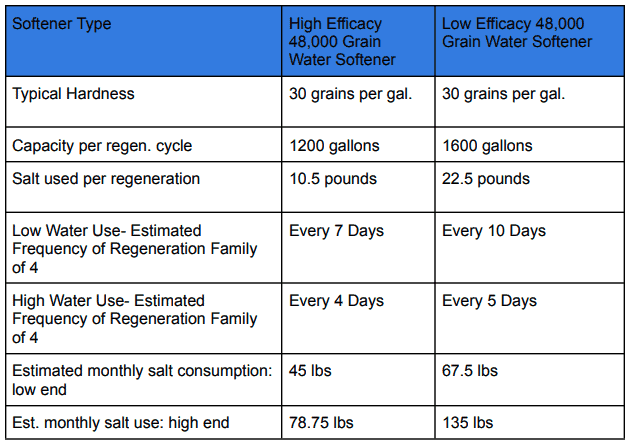
If you’ve got a newer, fancy softener—what they call a high-efficiency unit—it’s like a hybrid car. It sips salt rather than guzzling it. These systems use metered regeneration. That means they track how much water you actually use, like a fitness tracker for your plumbing.
For these models, you might only add salt once every two months or even less. It’s almost disappointing—you buy the salt, and then you just look at it sitting there in the garage. But your wallet will thank you later, especially when you’re not buying bags every other week like you’re running a salt lick for deer.
The key here is checking the brine tank. Don’t just toss in salt and hope for the best. Lift the lid. Is the water level right? Is the salt bridging? (That’s when salt cakes into a hard crust—like the top of a crème brûlée that nobody asked for.)
 How Much Salt Should I Put in My Water Softener?
The “Just a Scoop More” Trap
Here’s a personal confession. I once added salt to my softener every single time I walked by the laundry room. “Just a scoop,” I’d whisper, like I was feeding a stray cat. Big mistake. My water turned weirdly slippery, my dishes had spots, and my salt bill was higher than my coffee habit.
Over-salting causes brine waste. That’s the softener equivalent of a sugar crash. The system gets confused, starts dumping extra salt out the drain, and your water gets “too soft.” Yes, that’s a thing. It feels like you can never rinse soap off your hands. You’ll find yourself sliding across the shower floor like a penguin.
So, set a schedule. Put a reminder on your phone: “Check softener salt every 4 weeks.” If you have to write it on a sticky note and put it on the fridge next to the kids’ art, do it. Future you will high-five present you.
What About Those Tiny Settings?
Every softener has a little dial or digital menu that asks for your water hardness. This is the number that controls how much salt you use. Get it wrong, and you’re either wasting salt or letting hard water sneak through. Call your local water utility—they’ll tell you the hardness. It’s usually between 10 and 15 grains per gallon.
 Water Softener Salt: How Much, What Kind, and How Often
If you have iron in your water, you need more salt. Iron is like that friend who leaves a mess at your house and then asks for a snack. It clogs up the resin beads faster, so your softener has to work harder and regenerate more often.
My neighbor once set his softener to “extra soft” because he wanted to “feel the luxury.” He ended up adding salt every week. His water tasted like a sea breeze. Don’t be my neighbor. Be the cool, collected homeowner who checks the salt like they check their tire pressure—occasionally, but with confidence.
The Bottom Line on the Brine
You don’t need a degree in chemistry to nail this. The rule is simple: use enough to keep the tank from going empty, but not so much that you’re building a salt mountain. Most people aim for about a 40-pound bag per month for a standard family of four.
If you’re still guessing, buy a simple salt monitor—a little float that tells you when you’re low. It’s the same concept as the “low washer fluid” light in your car, but for your basement. That little buddy can save you from the horror of running out of salt mid-shower, which is the true definition of a bad hair day.
So here’s your action plan: go look at your softener right now. Is it half full? Perfect. Is it completely dry? You’ve got work to do. Is it packed like a suitcase for a two-week trip? Scoop some out. Your softener doesn’t need a salt bath—it just needs a healthy snack. And you, my friend, have earned the right to enjoy water that doesn’t fight your soap. Now go wash your hands. They feel amazing, don’t they?
