How Much Water Does Reverse Osmosis Waste

So, you’re thinking about a reverse osmosis (RO) system. Maybe you’re sick of that weird tap water taste. Or you’ve seen those fancy under-sink filters on Instagram. But then...
So, you’re thinking about a reverse osmosis (RO) system. Maybe you’re sick of that weird tap water taste. Or you’ve seen those fancy under-sink filters on Instagram.
But then you hear a rumor. “RO waste is crazy,” whispers a neighbor. “It dumps four gallons for every one you drink!” Suddenly, your green conscience starts sweating.
Let’s grab a coffee—or, you know, a glass of filtered water—and chat about this. Is the waste a total dealbreaker? Or just an overblown myth?
Must Read
The Honest Truth: How Much Water Are We Talking?
Okay, deep breath. That “four to one” ratio? It can be true. For every gallon of delicious, pure RO water, older systems might send three or four gallons down the drain.
Yikes, right? But here’s the playful kicker: modern RO systems have gotten a serious glow-up. Newer models with a permeate pump or a high-efficiency membrane often hit a 2:1 ratio, or even 1:1.
So, you aren’t necessarily stuck in the 1990s of water waste. The tech has evolved faster than your phone’s battery dies. Almost.
Why Does It “Waste” Water in the First Place?
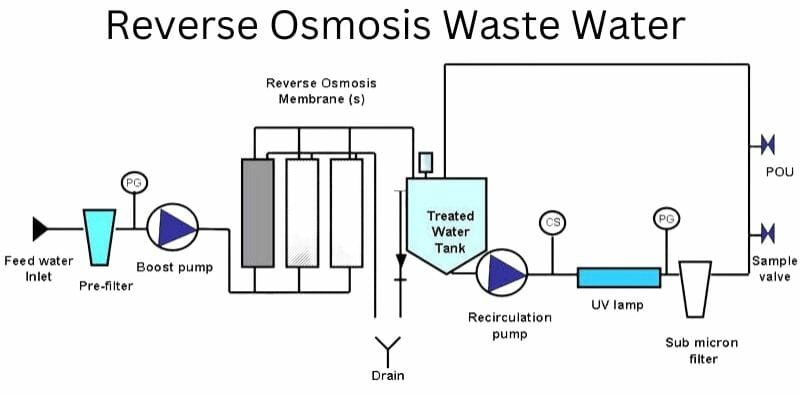
Think of the RO membrane as that super-strict bouncer at a club. It only lets the hottest, purest water molecules through. The rest—the rejected stuff with minerals and junk—gets kicked out.
That “waste” water isn’t dirty. It’s brine—just slightly more concentrated tap water. You could water your lawn with it. (Though some plants might get salty and judge you.)
It’s a necessary rinse. If the bouncer didn’t flush the rejects away, the membrane would clog up faster than a teenager’s phone storage. So, the waste keeps your good water flowing.
Let’s Get Real: Is It Actually a Big Deal?
Here’s where your inner eco-warrior gets to chill out. Compare RO waste to… I don’t know, a shower. A 10-minute shower uses about 20 gallons of water.
 Does Reverse Osmosis Waste Water? - Guide to RO Water Waste
Your RO system makes maybe 5 gallons of drinking water a day. At a 3:1 ratio, that’s 15 gallons of waste. You’re casually showering more water than your filter wastes! Does that make you feel better? It should.
Or think about watering your lawn. A single session with a sprinkler can dump 100 gallons. Suddenly, your RO system looks like a thirsty mouse, not a water-guzzling elephant.
The Real Waste Pitfall (It’s Not What You Think)
The actual water waste? That’s when you run the tap for 30 seconds waiting for your water to get cold. That’s a pure, treated water—poof, gone.
Or when you’re washing dishes and let the hot water run. Or that leaky toilet flapper that silently wastes 200 gallons a month.
See? The RO “waste” is a drop in a leaky bucket. Your habits waste far more water than any filter ever could. Don’t let the figures bully you.
Can You Rescue That “Waste” Water?
Oh, totally. This is where the fun starts. You can redirect the drain line to a big bucket. Use that brine water for your houseplants (the ones that like minerals), or for mopping the floor.
Some clever folks plumb it into their toilet tank. Your toilet, that porcelain throne, doesn’t care if it gets “reject” water. It just flushes cheerfully.
 Why Does Reverse Osmosis RO System Waste So Much Water
Or, you can buy a system that recycles the brine back into your hot water heater. That’s next-level, but hey, you do you, eco-champion.
Before You Panic, Check the Receipt
Most cities in the US treat water for pennies per gallon. Your RO waste might cost you an extra $2 a year. Yes, two dollars. That’s less than a single fancy latte.
So, do you care more about the idea of waste, or the reality of it? If you live in a drought zone like Arizona or California, yes—be mindful. Repurpose that reject water.
But if you live in the Pacific Northwest where it rains so much you have webbed feet? Let your RO system do its thing. The clouds will fill your empty bucket.
The Bottom Line (Without the Preaching)
Reverse osmosis does waste water. That’s a fact. But the amount is wildly exaggerated by people who don’t do the math.
Newer systems are so efficient you’ll barely notice. And you’ll be drinking water that’s cleaner than anything from a plastic bottle. Plastic waste? That’s a real monster.
So, here’s my coffee-chat verdict: Buy the damn filter. Save the plastic, save your taste buds, and if you feel guilty, use that reject water on your ficus tree. It’ll thank you. Your water bill won’t even flinch.
Now go refill your mug. Life’s too short to obsess over a few gallons that would’ve just hit the drain anyway. Cheers.
