How To Treat Well Water For Iron Bacteria

So, you’ve got that weird, slimy, reddish-orange goo in your toilet tank or sink drain? You might be dealing with iron bacteria—nature’s way of reminding you that your well wa...

So, you’ve got that weird, slimy, reddish-orange goo in your toilet tank or sink drain? You might be dealing with iron bacteria—nature’s way of reminding you that your well water is alive and kicking.
Don’t panic. It’s not dangerous to your health, but it sure is gross and can clog up your pipes faster than a toddler with a sippy cup of glue.
Think of iron bacteria as tiny, microscopic party animals that love iron and oxygen. They eat the iron in your water, then leave behind that lovely rust-colored slime as their “thank you” gift.
Must Read
The first step is to confirm you’ve got them and not just regular rust. Check for that orange, stringy gunk, a weird smell (like rotten eggs or cucumber), or a metallic taste.
If your water looks like it’s been filtered through a rusty pipe after sitting for a bit, you’re probably hosting a bacterial rave. Time to kick those freeloaders out.
Step One: The Shock Treatment – Chlorination (The Nuclear Option)
The most common way to nuke iron bacteria is with good old household bleach. This is called shock chlorination, and it’s exactly as dramatic as it sounds.
You’ll mix a strong bleach solution, pour it down into your well, and let it sit for 12 to 24 hours. Think of it as a very aggressive spa day for your well.
Then, you flush every single faucet in your house until the bleach smell is gone. Warning: Your laundry might smell like a swimming pool for a week. Wear dark clothes, just in case.
It’s effective, but it’s not a permanent fix. The bacteria are stubborn little survivors and often come back for a sequel. Think of it as a reboot, not the final movie.
Step Two: The Mechanical Bouncer – Filtration Systems
For a more permanent solution, you need a bouncer that keeps the bacteria from ever getting inside. Enter the physical filtration system.
A greensand filter or a manganese greensand filter works like a super-powered sponge. It oxidizes the iron and then traps the bacteria along with it.
You can also use a cartridge filter with a very fine mesh (1 to 5 microns). That’s like using a sieve small enough to catch a flea. It works, but you’ll be changing cartridges constantly.
Another cool option is a chlorinator or hydrogen peroxide injection system. It automatically adds a tiny bit of disinfectant to your water before it enters the house. No more manual bleach baths!
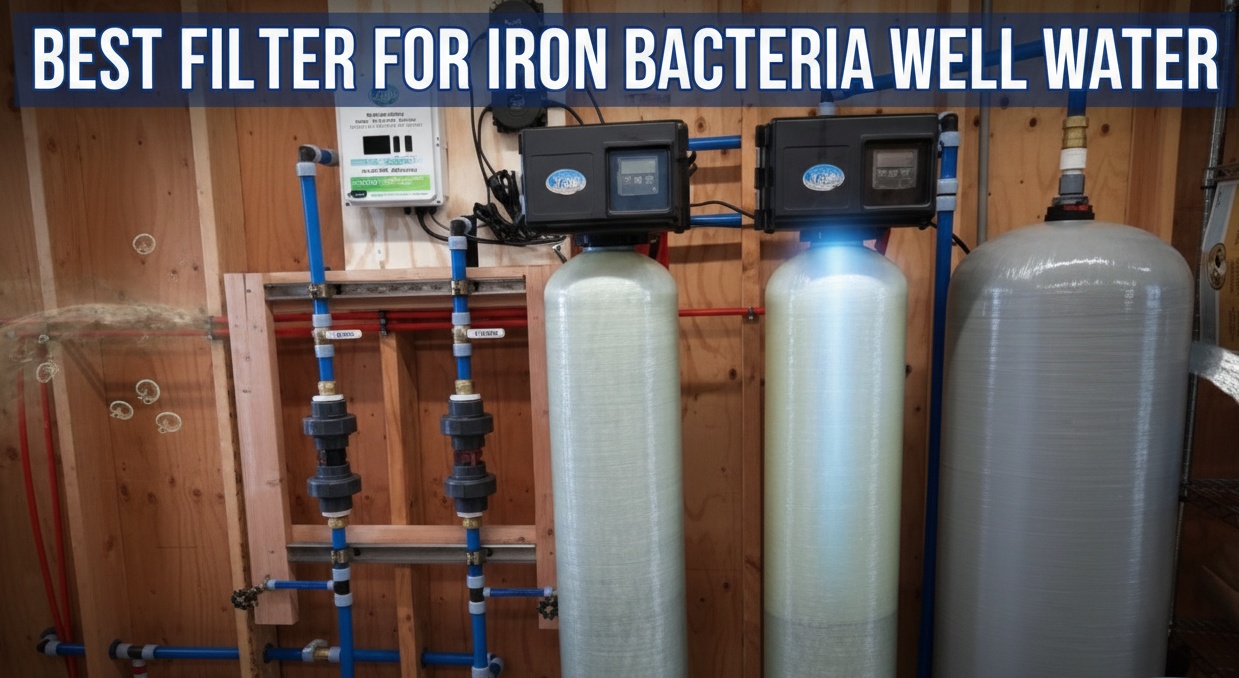 Best Filter for Iron Bacteria Well Water in 2026 at Home – Plumbing Ways
Step Three: The UV Light – The Invisible Saber
If you want to get fancy and avoid chemicals, try an ultraviolet (UV) light system. It’s basically a lightbulb that zaps bacteria into oblivion.
Water flows past a special UV lamp, and the light scrambles the bacteria’s DNA. Poof—they can’t reproduce, and you get clean water. It’s like a tiny, aquatic light saber.
But—and this is a big but—the water has to be very clear first. UV light can’t penetrate through mud or rust. So you must filter out the iron and sediment first.
Think of it as the final security checkpoint at the airport. If the water is cloudy, the UV scanner gets confused and the bacteria sneak through. Don’t let that happen.
Step Four: Prevention – Keep the Party from Starting Again
Once you’ve evicted the iron bacteria, you want to make sure they don’t throw a welcome-back party. That means regular maintenance.
Test your well water every year for bacteria, iron levels, and pH. A little knowledge is like a security camera for your plumbing.
Also, keep your well cap sealed tight. If a leaf, a bug, or a mouse gets in, it can introduce new bacteria. Your well is not a compost bin, okay?
And for the love of all things clean, don’t store anything near your well like fertilizer, gas, or old paint cans. That’s like inviting bacteria to a buffet.
Quick Tips for the Lazy (or Busy) Person
If you’re in a hurry, a simple bleach shock is your cheapest bet. Just do it in the spring and fall, like changing your smoke alarm batteries.
If you’re handy, a $500 DIY injection system can work wonders. If you’re not handy, call a pro—it’s worth it to avoid a basement flood.
 Bacteria In Well Water
You can also try a magnetic water conditioner, but science is very skeptical about those. It’s like putting a magnet on your engine to save gas—sounds good, but probably doesn’t work.
The Secret Weapon: Patience
Treating iron bacteria is rarely a one-and-done deal. You might have to repeat a shock treatment or adjust your filter settings. That’s okay.
Think of it as a relationship: you need to stay on top of it. Ignore it, and the slime comes back. Give it attention, and you’ll have clear, great-tasting water.
And hey, even if you mess up, your water won’t hurt you. It’s just annoying. Like a roommate who leaves dirty socks everywhere, but can’t actually hurt you.
When to Call in the Pros
If you try everything above and the slime is still throwing a party, it’s time for a professional. They have industrial-strength solutions and fancy equipment.
A licensed water treatment specialist can do a coliform and iron bacteria test to identify the exact strain. Yes, there are different strains—bacteria are like ice cream flavors, but gross.
They might recommend a continuous chlorination system or a reverse osmosis unit for your drinking water. That’s the big guns.
And if you’re really unlucky, they might have to pull the well pump and scrub it down. That’s like surgery for your well. Expensive, but effective.
So there you have it: the complete guide to evicting iron bacteria from your well. You can shock, filter, zap, or scrub your way to clear water.
Remember, you’re not just fighting slime—you’re taking back your home from tiny, boring party crashers. You are the hero of your own well!
Now go pour yourself a glass of clean, clear, bacteria-free water. You’ve earned it. Just make sure it’s not still warm from the incident. Cheers!
