How To Add A Water Softener To Your House

Let’s be honest: your tap water might be trying to kill your plumbing. Not with poison, but with minerals. That white crust on your faucet? That’s calcium and magnesium throwi...
:max_bytes(150000):strip_icc()/installing-a-water-softener-2718669-FINAL-1-ee8de137dcf84b5db1e28f84a7dec11b.png)
Let’s be honest: your tap water might be trying to kill your plumbing. Not with poison, but with minerals. That white crust on your faucet? That’s calcium and magnesium throwing a rave inside your pipes. You, my friend, have hard water. It wrecks your appliances, turns your soap into sad little suds, and leaves your hair feeling like straw. It’s time to fight back with a water softener.
You Are Basically Living with Jurassic Park Plumbing
Hard water is full of dissolved rock—literally. It’s as if someone ground up an entire cave and dumped it into your well or city supply. Over time, that rock builds up inside your water heater, reducing its efficiency by up to 30%. That’s like paying for a full tank of gas but only getting a three-quarter tank. Surprising fact: just one inch of scale buildup forces your heater to burn 40% more energy to heat the same water. Suddenly, that softener sounds like a retirement fund for your appliances.
Step One: Buy the Right Beast
You can’t just grab any softener from the “big box of lies” (a.k.a. the hardware store). You need to know your water hardness. Order a test kit or call your municipal water office. If your water is over 10 grains per gallon, you’re in the danger zone. If it’s over 20 grains, you’re basically drinking gravel. Get a unit that can handle your household size and your water’s mean streak. A cheap, undersized softener is like bringing a squirt gun to a wildfire.
Must Read
Now, pick your poison: salt-based or salt-free. Salt-based softeners are the heavy hitters—they actually remove the minerals. Salt-free systems “condition” the water but don’t really soften it. They’re like putting a band-aid on a broken leprechaun. For real results, go with salt-based. Your shower will thank you by not screaming at you.
Step Two: Find Its Forever Home
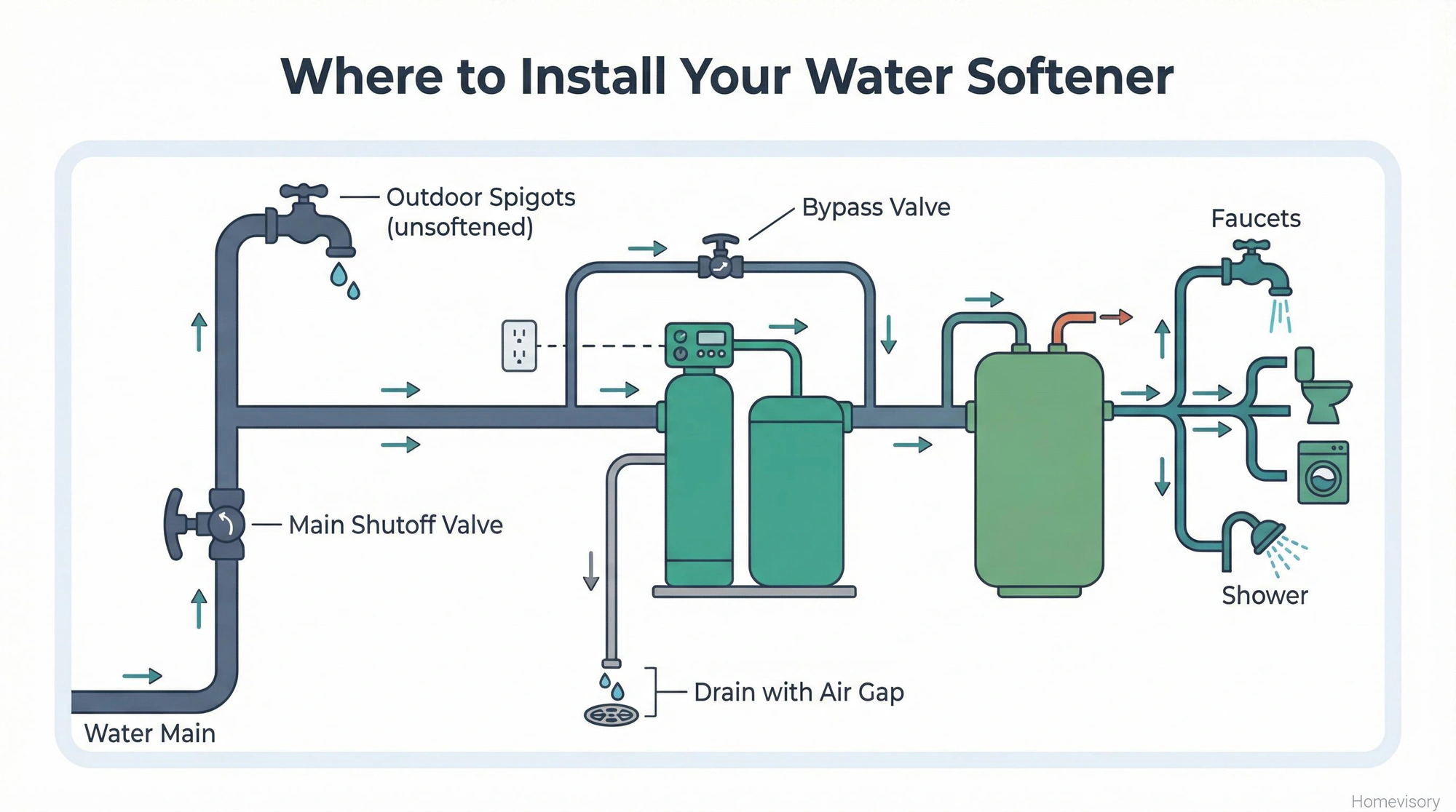
Water softeners are not tiny. They’re about the size of a small fridge that has given up on life. You’ll need a spot near your main water line, before the water heater, with access to a drain and an electrical outlet. Basements, garages, or utility closets are prime real estate. Avoid the living room—guests will think you’re running an illegal chemistry lab. And do not put it outside unless you enjoy carrying a hairdryer to it in January. Surprising fact: a softener uses about 50 gallons of water per regeneration cycle. That sounds wasteful, but it’s way less than the 500 gallons you’d waste waiting for hard water to heat up enough to wash your hands.
 How to Install a Water Softener: Sizing & Setup Guide
Step Three: The Moment of Plumbing Truth
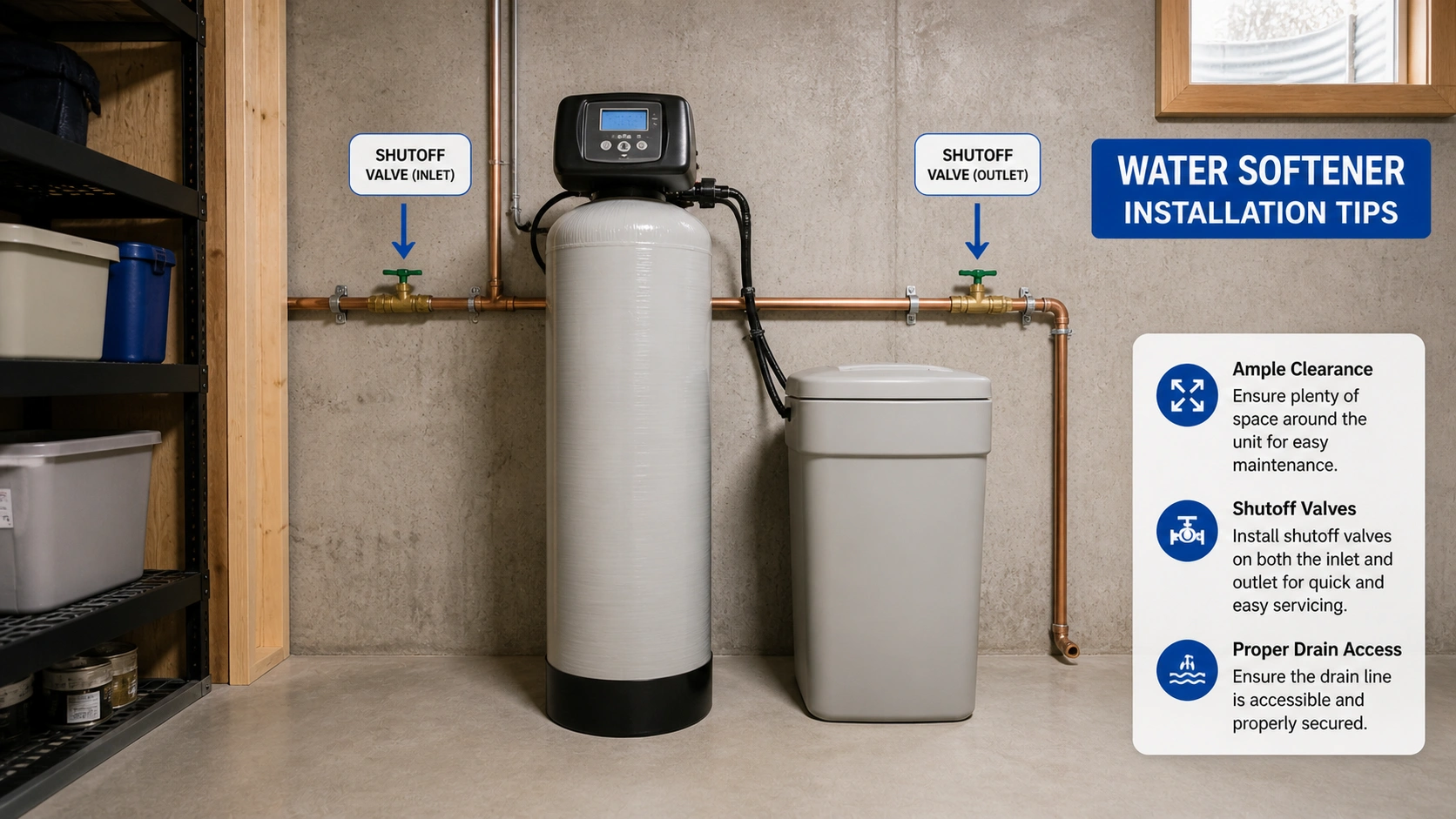
Shut off your main water valve. This is the part where you become a plumber—or at least, a person with a pipe wrench and a prayer. Cut into your main water line using a pipe cutter. You’ll feel like a surgeon, but with more cursing. Install a bypass valve (seriously, don’t skip this). It lets you isolate the softener for maintenance without turning your house into a dry desert. Connect the inlet and outlet pipes to the softener head. Most units have arrows—follow them like a treasure map. If you hook it up backwards, water will just laugh at you.
Now, connect the drain line. This little hose carries the nasty brine away. You can run it into a floor drain, a utility sink, or even outside if you’re feeling rebellious. But don’t dump it on your prized rose bushes—the salt will turn them into crispy sticks. Finally, plug the unit into a grounded outlet. If you don’t have an outlet nearby, now is the time to invent one. Or hire an electrician. Don’t use a extension cord unless you enjoy residential fires.
 How to Install a Water Softener: Step-by-Step Guide | Home Water Softener
Step Four: Baptize Your New Machine
Pour water into the brine tank—about four gallons. Add a bag of water softener salt. Do not use table salt; it’s like feeding your pet hamster a cheeseburger. The salt is the secret sauce. It cleans the resin beads inside the softener that actually trap the minerals. Without salt, you just have a very expensive water holder. Turn the water back on, and open a cold faucet outside or in the basement. Let it run for a few minutes to flush any air and pipe gloop. You’ll hear gurgling noises. That’s normal. It’s not a monster. Probably.
Step Five: Program the Beast
Your softener has a control panel that looks like a calculator from 1987. Set the current time, then set the hardness level you measured earlier. Most units also let you schedule regeneration. Do it at 2 a.m. so you don’t have to hear the water-sucking symphony. If you miss this step, your softener might regenerate while you’re in the shower, blasting you with cold brine water. That feels exactly like being slapped by a fish. Surprising fact: some modern softeners have Wi-Fi. Yes, your salt dispenser can now argue with your thermostat.
Enjoy the Silky Aftermath
Give it 24 hours. Then take a shower. You will feel like your skin has been replaced with baby angel wings. Your dishes will no longer look like they have eczema. Your water heater will thank you by lasting an extra five years. The only downside? You’ll miss the satisfying crunch of hard water crystals. Just kidding—no one misses that. Go forth and soften, my friend. Your pipes didn’t sign up for a rock collection.
:max_bytes(150000):strip_icc()/installing-a-water-softener-2718669-FINAL-1-ee8de137dcf84b5db1e28f84a7dec11b.png&description=How+To+Add+A+Water+Softener+To+Your+House)