How To Find A Water Leak In Your House Uk

Let’s be honest, nobody wakes up thinking, “I hope I find a leak today.” It’s about as appealing as finding a mouldy sandwich at the back of your fridge. But ignoring a hidden...
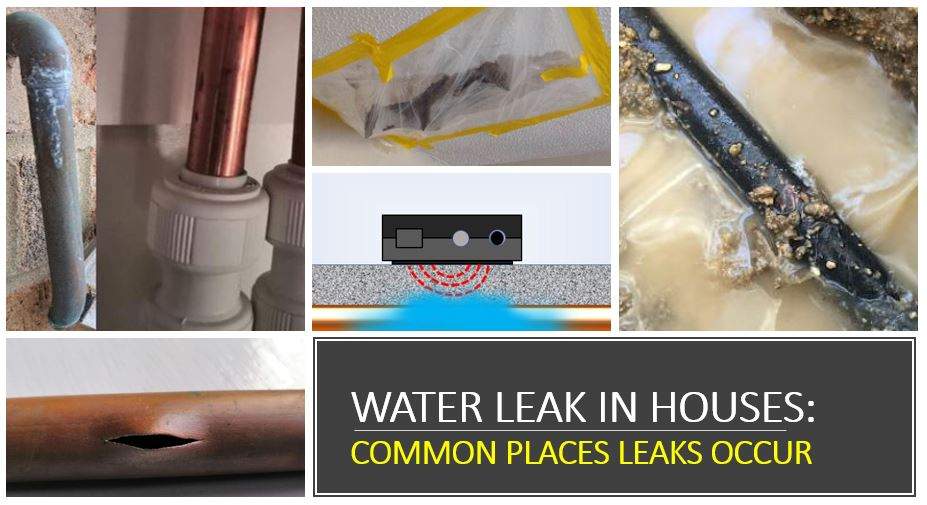
Let’s be honest, nobody wakes up thinking, “I hope I find a leak today.” It’s about as appealing as finding a mouldy sandwich at the back of your fridge. But ignoring a hidden drip is like ignoring that weird noise your car makes—it only gets worse, and a lot more expensive. Plus, a sneaky leak can bump up your water bill faster than you can say “British weather.”
So, why should you care? Well, a small drip can waste enough water to fill a bathtub every week. And in the UK, where we already pay through the nose for utilities, that’s literally money trickling down the drain. Your wallet will thank you for being a leak detective.
Start With Your Ears (And Eyes)
First, put down your phone and just listen. Turn off the telly and the washing machine. Can you hear a faint hissing, like a very quiet snake having a nap? That could be water escaping from a pipe.
Must Read
Next, look for the obvious clues. Are there any damp patches on your ceiling that look like a map of a tiny island? What about that bit of wallpaper that’s starting to peel like sunburnt skin? These are your house’s way of waving a little white flag.
Don’t forget the floors. If a patch of laminate feels spongy underfoot, or your wooden floorboards are starting to look like a rippled chocolate bar, you’ve got a problem. A wet carpet that won’t dry out is another big, soggy clue.
The Magic Meter Trick
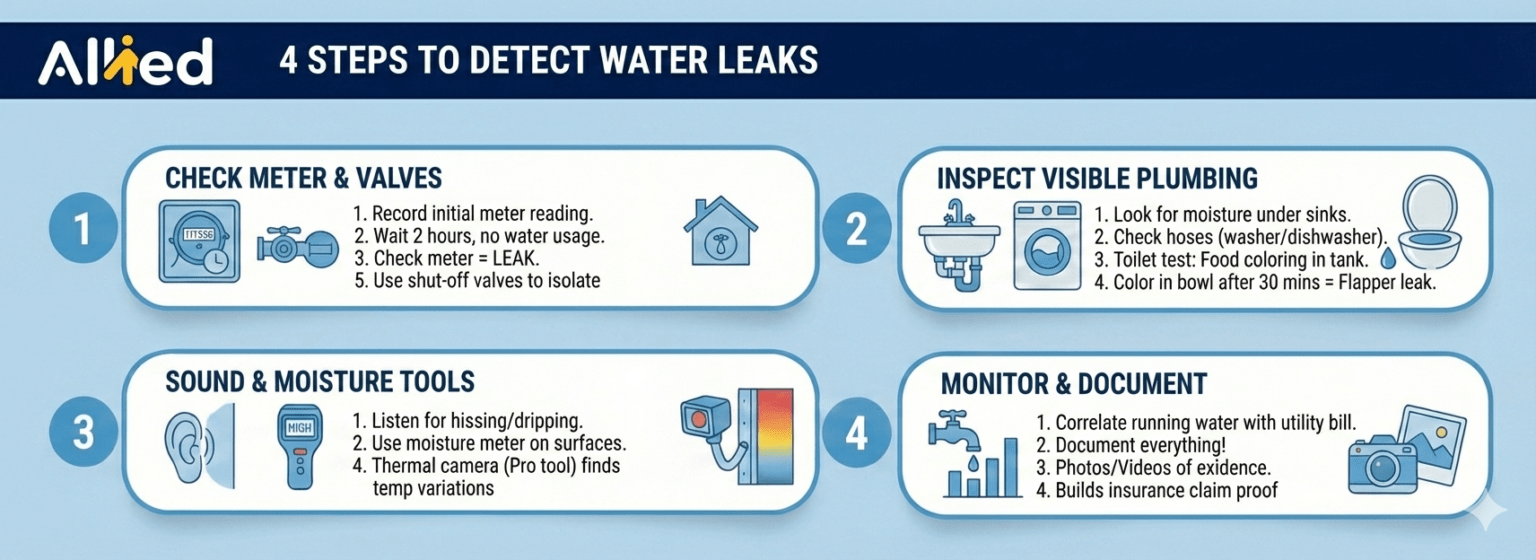
Here’s a party trick that actually saves you money. Find your water meter—usually a little box outside your house, often near the pavement. Lift the lid (gently, like you’re opening a treasure chest) and check the little dials or digital numbers.
Now, make sure every tap in your house is turned off, and that the dishwasher and loo have finished their business. Wait for about 20 minutes. If the meter numbers have changed, you’ve got a leak somewhere. It’s like catching a ghost in the act.
 How to Find Water Leaks in House: A Practical Guide for Homeowners
If you don’t have a meter, look at your water bill instead. A sudden spike of, say, £30 more than last month isn’t the universe punishing you—it’s probably a silent dribble costing you a fortune. Time to investigate.
Check The Usual Suspects
The toilet is usually the prime suspect. Lift the lid off the cistern and listen. Hear a gentle trickle? That’s your loo crying silently. Pop a few drops of food colouring into the tank—if the colour seeps into the bowl without you flushing, you’ve got a leaky flapper valve.
Next, feel around under your kitchen sink. Grab a torch and look for damp cardboard or rust near the pipe joints. Same goes for the bathroom vanity—check the little pipes that connect to the taps. A single drop every second adds up to a lot of lost water.
Don’t skip the outdoor tap. Even in rainy Britain, a dripping garden hose connection can waste gallons. If you spot a greenish stain on the wall outside, that’s limescale from a tiny leak—your house is basically crying rust.
When In Doubt, Get Techy
If your detective work comes up empty, grab a moisture meter from a DIY shop—they cost about a tenner. It’s like a stud finder but for wetness. Run it along skirting boards and walls; it’ll beep if it finds hidden dampness, like a metal detector at the beach.
 How to Find a Water Leak | Expert Tips & Detection Guide
Another low-tech trick: read your water meter before bed, then again first thing in the morning when nobody has used any water. If the numbers crept up overnight, you’ve got a stealth leak that operates while you sleep. Creepy, but fixable.
Know When To Call The Pros
Sometimes, the leak is hiding in the walls or under the concrete floor. If you’ve checked everything and still hear that ghostly hiss, it’s time to call a plumber. They have special microphones and thermal cameras that see behind plaster—like a superhero with a plumbing license.
Don’t try to be a hero yourself. Breaking open a wall to find a leak can turn a £100 problem into a £1,000 repair. A good plumber will find the leak without making your living room look like a demolition site.
Remember, a small leak today is a big headache tomorrow. Your house is basically a giant plumbing system wrapped in bricks. Treat it with a bit of care, and it won’t surprise you with a soggy ceiling while you’re watching Love Island.
So grab a torch, listen closely, and maybe save that extra £50 for a nice takeaway instead of a water bill. You’ve got this!
