Does Reverse Osmosis Remove Nanoplastics

So, you’re standing in the kitchen, staring at a glass of water, and suddenly a terrifying thought bubbles up: Are there invisible plastic ninjas swimming in there? Yes, my fr...
So, you’re standing in the kitchen, staring at a glass of water, and suddenly a terrifying thought bubbles up: Are there invisible plastic ninjas swimming in there? Yes, my friend, those are nanoplastics—tiny, malevolent specks smaller than a virus, hiding in your tap water like microscopic party crashers. And now you’re asking: can my fancy reverse osmosis (RO) system boot them out? Grab a seat, because this is about to get weird, wonderful, and surprisingly scientific.
First, Let’s Meet the Villain: Nanoplastics
Nanoplastics are plastic bits so small—less than 1,000 nanometers across—that they make the head of a pin look like a football stadium. They’re the ghost of every water bottle you ever tossed, haunting your hydration. Scientists have found them in Arctic snow, human placentas, and probably your neighbor’s suspiciously optimistic “mineral water.” But here’s the kicker: they’re not just gross; they might carry toxic hitchhikers like heavy metals or pesticide residue. Think of them as Uber drivers from hell.
What Even is Reverse Osmosis, and Does It Have Superpowers?
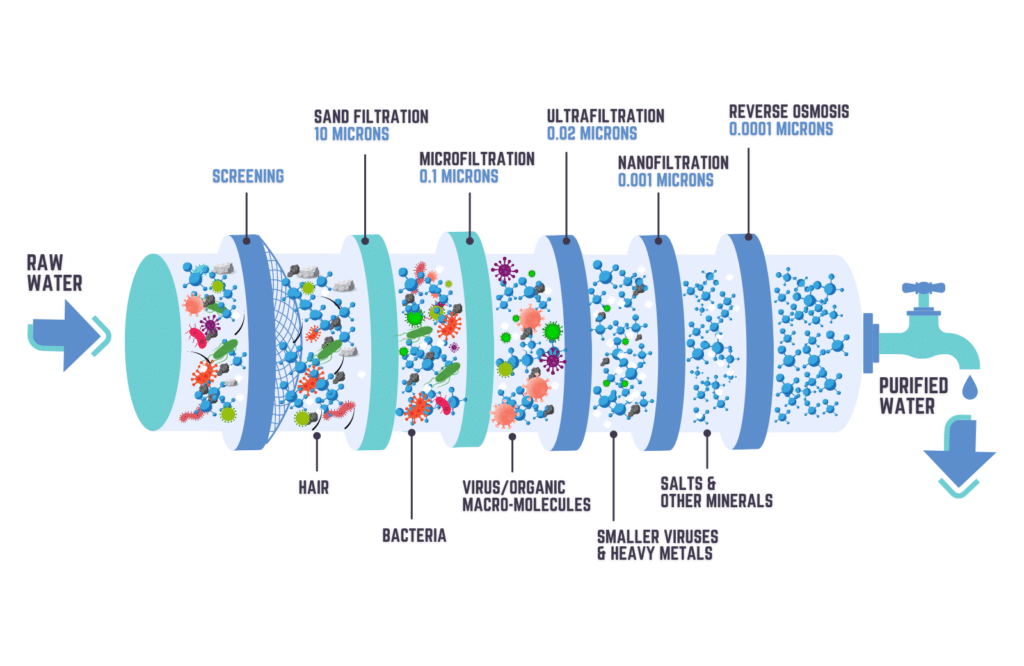
Reverse osmosis is the bouncer of your water filtration world. It shoves water through a semi-permeable membrane with holes so tiny—about 0.0001 microns—that only water molecules can squeeze through (plus a few lucky gases). Everything else—salts, bacteria, even some viruses—gets bounced to the curb. So naturally, you’d think: “Nanoplastics? Pfft, those tiny jerks are no match for my RO system!” And you’d be… mostly right.
Must Read
Hold your applause. The truth is reverse osmosis is an absolute champion at removing nanoplastics—but it’s not a miracle worker. Studies (yes, actual scientists in lab coats, not just Reddit forums) show that RO can remove over 99% of nano-sized particles, including plastics. But here’s the catch: that percentage depends on your system’s quality, maintenance, and whether you’ve accidentally fed it a bag of glitter (don’t do that).
The Nitty-Gritty of How It Works (Without the Boring Tests)
Imagine you’re a water molecule trying to crash a VIP party at a club with a microscopic door. The door is the RO membrane. Nanoplastics are the obnoxious guys in inflatable dinosaur costumes—they get stuck, but sometimes a tiny leg or tail sneaks through. That’s because nanoplastics aren’t perfectly round; they’re jagged, flexible, and clingy like ex-boyfriends. High-pressure water forces the good stuff through, but a few plastic fragments might deform and slip past.
 A osmose reversa remove microplásticos?
But don’t panic. Most RO systems also have pre-filters (activated carbon or sediment blocks) that grab bigger plastic bits before they even reach the membrane. That’s like having a bouncer at the parking lot AND the front door. So, unless your water is literally flowing through a landfill, your chances of drinking a nanoplastic smoothie are slim. Like, “winning the lottery twice” slim.
But Wait—What About the “Removed” Plastics?
Here’s the hilarious irony: RO doesn’t destroy nanoplastics; it just concentrates them into a brine that gets flushed down the drain. So you basically sent those plastics on a vacation to your local sewage plant. They’ll eventually end up in rivers, lakes, or your friend’s pool. Thanks, science! It’s a bit like sweeping dirt under the rug—technically cleaner in one spot, but the planet still has a mess.
 Does Reverse Osmosis Remove Microplastics & PFAS? – Crystal Quest Water
Some newer systems add an “upflow” design or UV light to break down plastics, but those cost as much as a small car. If you’re on a budget, just know that standard RO still makes your water safer than tap, and certainly less creepy than that bottle you left in your car for three summers.
Should You Buy an RO System for Nanoplastics? (The Honest, Caffeinated Truth)
If you’re a hypochondriac with disposable income—or a scientist who names their water filter “Hank”—then yes, get an RO system. It’s the gold standard for removing everything from lead to microplastics to that faint taste of regret. But if you’re a normal person who just wants cleaner water without feeling like you’re preparing for the apocalypse, a good carbon filter (plus a Brita) will handle 90% of your nanoplastic anxieties. Remember: nanoplastics are everywhere, but so is fun, and you can’t filter out joy.
One final surprise: studies estimate we ingest about a credit card’s worth of plastic every week—mostly from dust, food packaging, and air. Your water is actually the least of your worries. So relax, pour a glass of filtered water, and raise it to the tiny plastic ninjas that are definitely still plotting world domination. Just maybe not in your cup.
