What Is The Purpose Of Fluoride In Water

Ever taken a sip from the tap and wondered, “Wait, is there something extra in here besides H2O?” You’re not alone. The short answer is yes, in many places, there’s a tiny, ca...

Ever taken a sip from the tap and wondered, “Wait, is there something extra in here besides H2O?” You’re not alone. The short answer is yes, in many places, there’s a tiny, carefully measured guest: fluoride. It’s not a flavor enhancer or a secret government plot—it’s actually a pretty cool bit of science aimed at your teeth.
Think of fluoride as a tiny bodyguard for your enamel. Every time you eat or drink, bacteria in your mouth throw a party and produce acid that attacks your teeth. Fluoride steps in to help rebuild that weakened enamel, like a construction crew fixing a pothole before it becomes a crater.
So, what’s the big idea?
The main purpose is simple: prevent cavities. It’s not magic, but it’s close. When fluoride is in your water, it’s like giving your teeth a constant, low-level shield throughout the day.
Must Read
Remember that feeling of regret after a super sugary soda? That acid bath is bad news. Fluoride fights back by remineralizing your teeth, making them stronger and more resistant to decay. It’s like putting a raincoat on your smile before a storm.
How did this even start?
Back in the early 1900s, researchers noticed something wild. In certain communities, people had brown spots on their teeth—but almost no cavities. The culprit? Naturally high levels of fluoride in the local water. Scientists realized that a very specific, lower dose could give you the cavity protection without the staining.
So, in 1945, the U.S. started adding tiny amounts to public water supplies. It’s been called one of the top public health achievements of the 20th century, right up there with vaccines. Pretty neat for a mineral you can’t see or taste, right?
 Florida Fluoridation | Florida Dental Association
But is it safe? Let’s get real.
You’ve probably heard people worry about it. And sure, like anything, too much of a good thing can be a problem. If you swallowed a whole tube of toothpaste, you’d have a bad day. But the amount in water is extremely low—about 0.7 parts per million, which is like one drop in a giant swimming pool.
Major health organizations, from the CDC to the World Health Organization, have given it a thumbs-up for safety when used at these levels. It’s not turning your brain to jelly or your bones to chalk. It’s just a tiny mineral helper, working on your teeth.
Why not just use toothpaste?
Great question! Toothpaste is fantastic—you should definitely keep using it. But it only touches your teeth for a few minutes. Water is with you all day. It sips into the nooks and crannies of your mouth, providing constant, gentle protection.
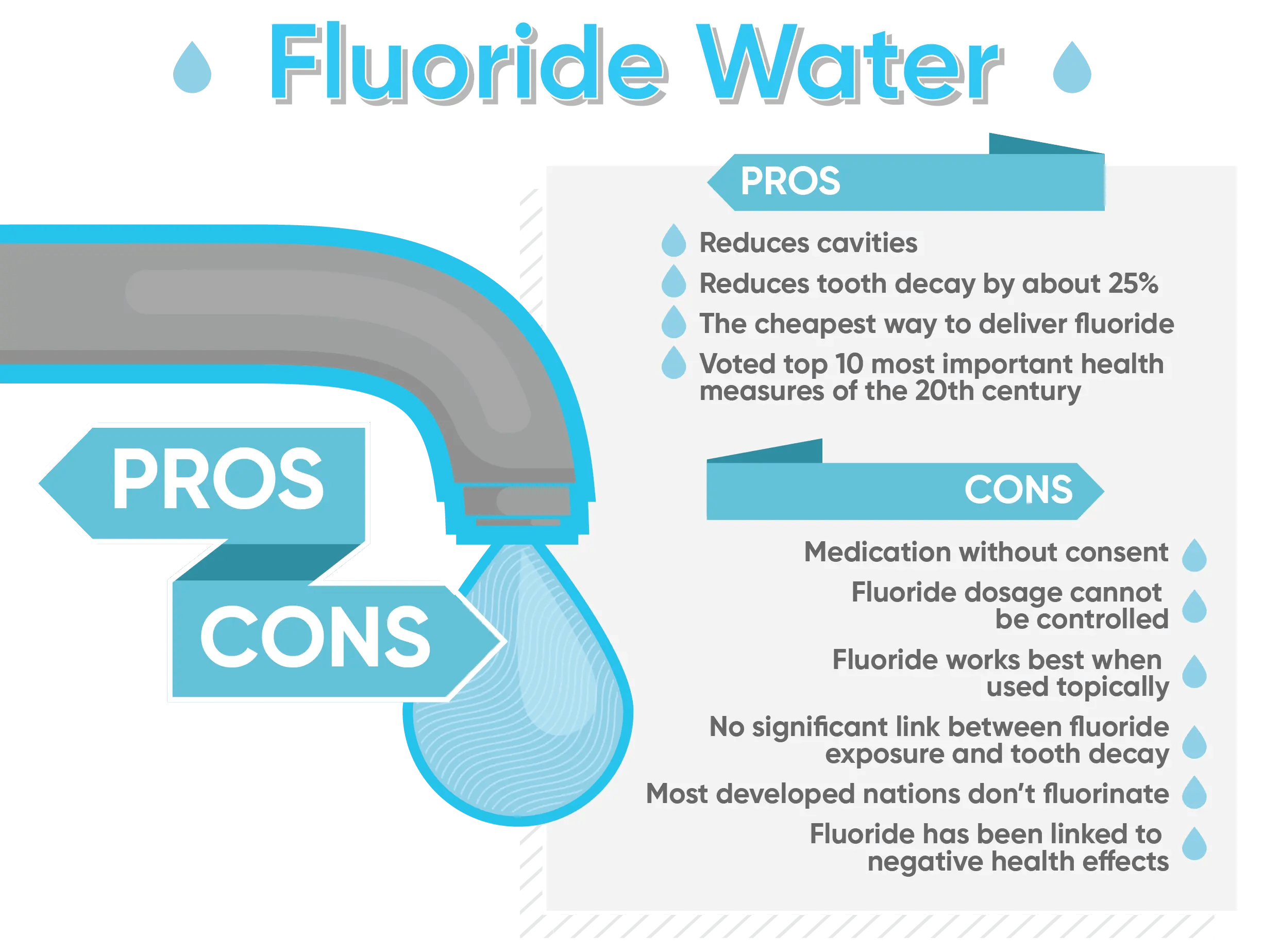 Is Fluoride in Water Good or Bad? | Culligan Quench
Think of toothpaste as a power-wash, and fluoridated water as a drizzle that keeps the garden damp all day long. You need both for the best results. Plus, not everyone can afford regular dentist visits or good toothpaste. Water fluoridation helps level the playing field for everyone, rich or poor.
The chill verdict
So, the purpose of fluoride in water isn’t to be mysterious or scary. It’s a simple, elegant public health tool. It’s about giving your teeth a fighting chance against the sugar and acid in our modern diet.
Is it necessary for everyone? Not if you live in an area with naturally high fluoride or you’re super diligent with dental care. But for millions of people, it’s a quiet, invisible ally. Next time you grab a glass of tap water, give a little nod to that tiny mineral hero—it’s working hard to keep your grin strong and cavity-free.
