How To Treat Iron Bacteria In Well Water

Let’s talk about the slime. Yes, that orange-brown goo oozing from your faucet. It’s not an alien invasion. It’s iron bacteria—tiny rust monsters having a pool party in your w...

Let’s talk about the slime. Yes, that orange-brown goo oozing from your faucet. It’s not an alien invasion. It’s iron bacteria—tiny rust monsters having a pool party in your well.
They don’t bite. But your hair will look like a dirty penny. And your laundry? It’ll feel like sandpaper.
The good news? You can fight back. And it’s actually pretty fun to outsmart these microscopic troublemakers.
Must Read
Wait, What Exactly Is Iron Bacteria?
Imagine the grossest science experiment. Fill a jar with rusty water, swamp slime, and leftover coffee grounds. Stir it. Now picture that living inside your pipes.
Iron bacteria love iron. They eat it for breakfast. In return, they leave behind a stinky, orange goo that clogs everything.
Surprise fact: they can survive without oxygen. They are the ultimate basement-dwellers. Apocalypse? They laugh at it.
The Sneaky Signs You’re Infested
Your water looks like iced tea. Tastes like pennies. Smells like a wet dog’s breath.
You find slimy orange clumps inside your toilet tank. It’s like a horror movie starring a mutant cheese puff.
Worst part? The slime forms biofilm. It’s a tiny city for bacteria, complete with skyscrapers of rust. They hold elections there. You don’t want this.
Why You Should Care (Besides the Gross Factor)
Iron bacteria won’t make you sick. But they will turn your water pressure into a pathetic dribble. Your water heater? It’ll clog up faster than a teenager’s phone battery.
They also love to corrode metal. Pipes, well screens, pumps—they eat them slowly. It’s a B-movie villain with a taste for plumbing.
The kicker: they’re everywhere. In soil, in lakes, in your neighbor’s yard. They’re just waiting for an open well to crash.
Step 1: Identify the Jerks
Fill a glass with water. Let it sit for an hour. If you see rainbow scum or orange flakes, bingo.
Try the famous test: dump a few drops of bleach into a jar of the water. If it turns deep orange, you’ve got iron bacteria. They blurt out their presence like a guilty toddler.
Professional testing is smart. But the home tests are hilarious party tricks. Show your friends. They’ll be amazed you know this.
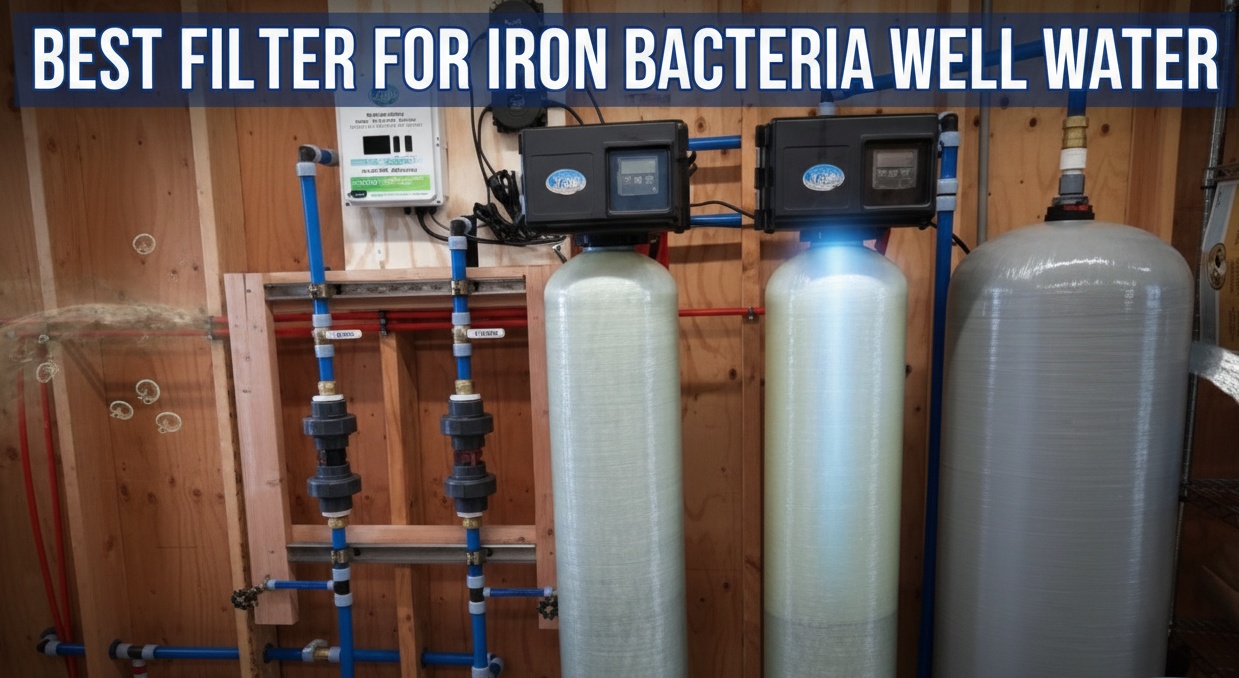 Best Filter for Iron Bacteria Well Water in 2026 at Home – Plumbing Ways
Step 2: The Physical Beatdown
Shock chlorination is the heavy hammer. You pour a massive dose of bleach down the well. It’s like a nuclear bomb for biofilms.
But be warned: it’s messy. You’ll have to run hoses for hours to flush the dead slime. Your yard will look like a zombie apocalypse.
Do this annually. It’s your well’s annual shower. Not fun, but necessary.
The Surgeon’s Approach: Physical Scrubbing
Call a well pro to scrub the inside of your well casing. They use brushes and power tools. It’s like a dental cleaning for your water source.
Some guys use high-pressure water jets. It’s satisfying. Imagine power-washing a filthy sidewalk, but underground.
This alone won’t fix it. But it buys you months of peace.
Step 3: The Chemical Ninja Moves
Hydrogen peroxide is a gentler killer. It breaks down into water and oxygen. No chlorine smell. Your family won’t gag.
Another trick: phosphates. They bind with iron, forming a coating that bacteria cannot grip. It’s like greasing a pole so raccoons can’t climb.
But use these carefully. Too much phosphate, and algae blooms happen. You don’t want a green swimming pool in your well.
Step 4: The Filtration Fortress
Install a whole-house filter. First, a sediment filter. It catches the orange clots before they ruin your faucets.
Then a chemical feed system. It pumps chlorine or peroxide into the water before it enters your house. Constant protection. Like a bouncer at a club for slime.
Or go high-tech with an aerator. It blasts air into the water, oxidizing iron and straining it out. It’s loud. But it works like a charm.
 Does Boiling Water Kill Iron Bacteria at Olivia Quinn blog
The Ultimate Weapon: UV Light
Ultraviolet light kills everything. Bacteria, viruses, slime—they get zapped. It’s like a tanning bed for water. But water must be clear first.
Combine UV with a filter. You create a one-two punch: catch the gunk, then kill the survivors. Your water becomes a shiny, uninviting fortress.
Pro tip: even UV needs maintenance. Clean the bulb yearly. Otherwise, it’s just a fancy nightlight.
The Quirky Stuff That Actually Works
Some people use chlorine pellets dropped down the well monthly. It’s like a slow-release Tylenol for bacteria.
Others swear by oxygen generators. They pump compressed air into the well. Bacteria hate oxygen like vampires hate garlic. They die, or they flee.
One guy told me he dropped a dead goldfish down his well. Unclear if that works. Don’t try it.
Why This Is Actually Fun
You’re a detective. You’re a demolitions expert. You’re a chemist—with bleach and rubber gloves. It’s hands-on science you can taste (don’t taste the bleach).
Plus, you get to use words like “biofilm” and “oxidation” at dinner parties. People will think you’re a genius. Or a weirdo. Win-win.
Best part? Once you beat them, your water is crystal clear. You’ll pour a glass and stare at it. You earned that clarity.
The Final Truth
Iron bacteria are like bad habits. They’re hard to kill, but not impossible. You just need a plan, patience, and a sense of humor.
Remember: your well is a dark, damp ecosystem. Treat it like a pet. Feed it clean water. Give it a bath once a year. Don’t let slime politicians hold elections.
Now go. Examine your toilet. Sniff your laundry. Then laugh, because you know exactly what to do. Slime beware.
