How To Test If Water Softener Is Working

So, the other day, my roommate, Dave, poured himself a glass of water, took one sip, and made a face like he’d just bitten into a lemon. “This tastes like a rock licked a penn...

So, the other day, my roommate, Dave, poured himself a glass of water, took one sip, and made a face like he’d just bitten into a lemon. “This tastes like a rock licked a penny,” he declared. I laughed, but it got me thinking: is our fancy new water softener actually doing its job?
Turns out, you can’t just install one of these magic boxes and forget about it. They break, they clog, and sometimes they just give up—like a teenager asked to do chores. If your water feels slippery or your soap doesn’t lather, you might be living a lie. Let’s fix that.
The Soap Test: Your First Line of Defense
Grab a clear water bottle—reuse a plastic one, don’t be fancy. Fill it halfway with tap water from your kitchen sink.
Must Read
Now, add three drops of liquid dish soap—not detergent, just plain soap. Cap it and shake it like you’re at a concert. If you see a tall, fluffy pile of bubbles that stays put for a few seconds, congrats: your softener is working.
But if you get a thin, sad layer of suds that disappear faster than your motivation on a Monday… uh-oh. That’s hard water leaving mineral residue, and your system might be asleep at the wheel. Ironic, right? More soap should mean more suds, but hard water kills the party.
The Slippery Hand Trick
Here’s a weird one, but it works: wash your hands with soap, then rinse them. Do they feel a little slick, almost like you didn’t rinse well enough? That’s softened water.
Hard water leaves your skin feeling “squeaky clean”—which actually means a thin film of soap scum is still there. Soft water feels silky because it’s not depositing minerals. If your hands feel like sandpaper after washing, something’s off.
Trust me, your skin knows. I once spent a week at a friend’s cabin with hard water, and my hands felt like I’d been fighting a cactus. Not the look I was going for.
The Stain Detective Work
Look at your glassware next time it dries. Are there white, chalky spots or a rainbow film? That’s calcium and magnesium staying behind—the enemy of soft water.
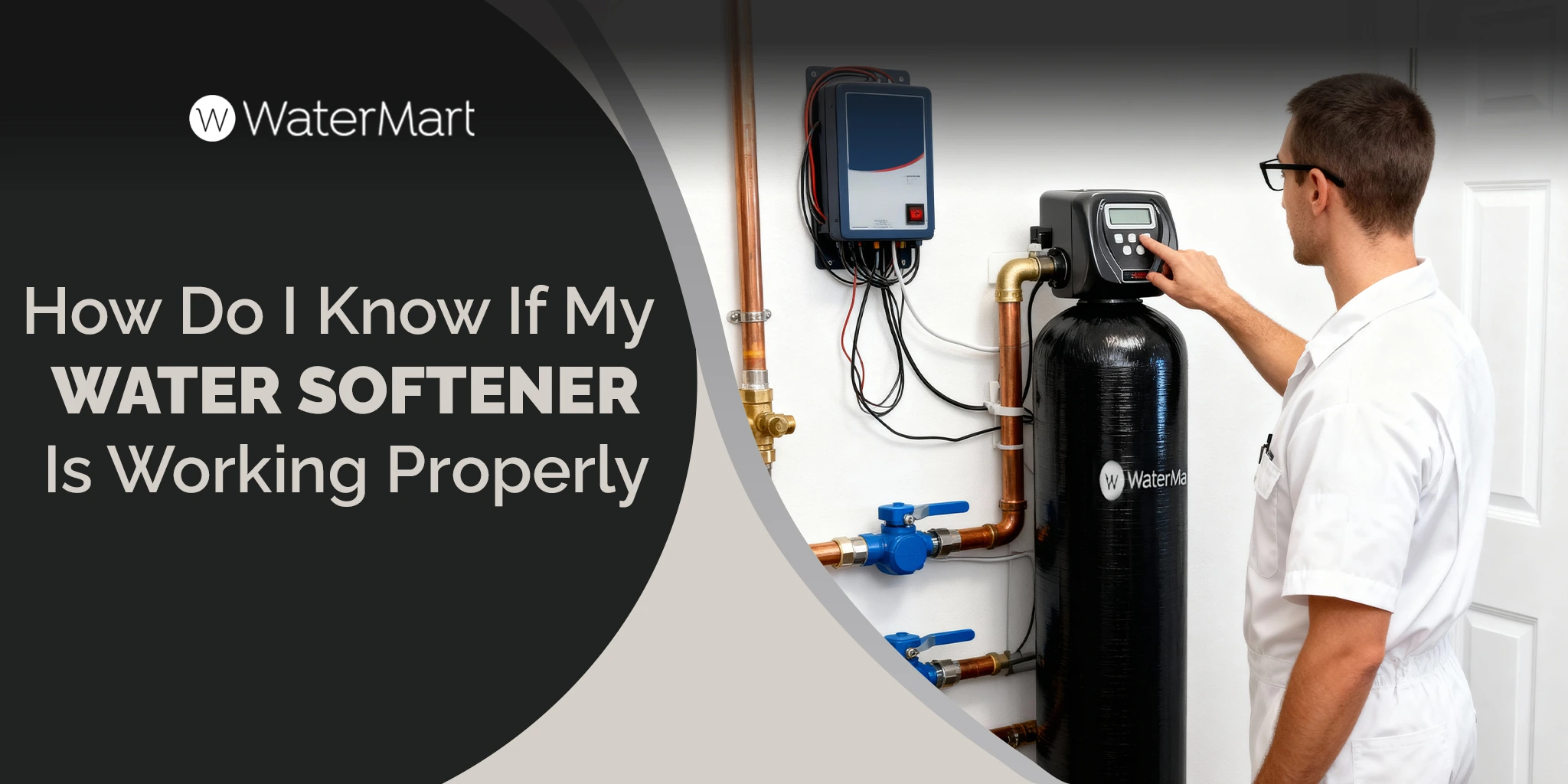 How do I know if my water softener is working properly?
If your shower doors look like a foggy mess of white crust, that’s a red flag. Soft water should leave glass and dishes sparkling clean, not looking like a science experiment. I call this the “ghost of minerals past” test.
Now, check your faucets and showerhead. Hard water builds up that white, crusty stuff around the aerator. If you see it piling up fast, your softener might be bypassing or just low on salt.
The Salt Check (Yes, You Have to Do This)
Pop open the brine tank—the big plastic bin next to your softener. Is the salt level at least half full? If it’s empty or looks like a swamp of mushy salt, your system can’t regenerate.
Also, look for a “salt bridge”—a hard crust of salt that forms a ceiling over the water. Tap it with a broom handle; if it sounds hollow, you’ve got a bridge. It’s like your softener is trapped in a salt cave, unable to do its job.
And here’s the ironic kicker: you can have tons of salt but if it’s not dissolving, your water stays hard. I once overlooked this for three months. My water was basically fighting me.
Test Kits: When Your Gut Isn’t Enough
If you’re still unsure, buy a water hardness test strip for like ten bucks at the hardware store. Dip it in tap water and compare the color to the chart.
Soft water should show 0 to 1 grain per gallon. If it reads 5, 10, or higher, your softener is ghosting you. It’s the most direct answer, but let’s be real—you probably lost the instruction manual months ago.
 How To Test Water Softener Is Working at Elaine Stetler blog
Another pro tip: test the water before and after the softener. If the after sample is harder than before, you’ve got a plumbing bypass issue. That happened to my neighbor, and he’d been washing his cars with hard water for a year. Oops.
The Flow Meter Trick
Most modern softeners have a little display that shows your water usage. If it hasn’t changed in a week, your system might be stuck in regeneration mode or just not counting.
You can also listen: when it regenerates, it should suck and gurgle like a dying whale around 2 a.m. If you hear nothing for a week, it’s probably broken. I set an alarm once just to catch it—and caught my cat staring at the machine like it was possessed.
Finally, if your water tastes metallic or smells like rotten eggs, that’s a whole different monster. That could mean bacteria or iron issues, but it’s rare for a working softener. Usually, it just means your system needs a good cleaning or a new salt type.
Wrapping It Up (Literally, with a Glass of Water)
Here’s the thing: testing your water softener is not rocket science. It’s about being nosy with your own home. If your soap suds are tall, your hands feel slick, and your glasses sparkle, you’re probably golden.
But if you’re still suspicious, grab a test strip and shut up your doubts. I’d rather you be a little paranoid than drink water that tastes like Dave’s lemon-rock cocktail. He never did figure out his system—until I found the salt bridge.
So go ahead, shake that bottle, feel your own hands, and stare at your shower door. Your water softener can’t hide from you—not anymore.
