What Does Boiling Water Do To Tap Water

So there I was, at 2 AM, staring at a half-empty glass of tap water like it was a personal betrayal. My throat was scratchy, my head was pounding, and the only thing between m...

So there I was, at 2 AM, staring at a half-empty glass of tap water like it was a personal betrayal. My throat was scratchy, my head was pounding, and the only thing between me and hydration was that faint whiff of chlorine—you know the one. I boiled it, waited impatiently, and took a sip. And I thought: Did I just fix this water, or did I ruin it? Turns out, boiling tap water is both simpler and weirder than you’d think. Let’s talk about what’s actually happening in that kettle.
The Great Disinfectant Dance
First, let’s get the obvious out of the way: boiling kills living things. Bacteria, viruses, protozoa—they all throw a tiny microscopic party until the water hits 212°F (100°C), and then they’re done. For most tap water in developed countries, this is overkill since your water plant already handled that. But if you’re on a private well or your pipes are older than your grandma’s sofa, boiling is your safety net.
Here’s the kicker: boiling does not remove chemical contaminants like lead, pesticides, or industrial runoff. In fact, it can make them more concentrated because some water evaporates, leaving the bad stuff behind. Irony, much? You’re boiling to “clean” the water, but you’re actually brewing a stronger batch of impurities. Oof.
Must Read
The Chlorine Ghost
That pool-like smell in your tap water? It’s usually chlorine or chloramine, added to keep your water safe from germs during its journey to your glass. Boiling is a pro-level trick to banish that flavor. As the water heats, the chlorine turns into a gas and floats away—poof, gone. You’ll taste the difference almost immediately, like someone lifted a chemical veil.
But here’s the hidden plot twist: if your water has chloramines (a longer-lasting cousin of chlorine), boiling won’t kick them out as fast. You’d need to boil for 20 minutes or more. And honestly, who has that kind of patience at 2 AM? Not me. I just let it cool and pretend I’m fancy.
 Does Boiling Tap Water Purify It? What Boiling Really Removes—and What
What About the Minerals? (Spoiler: Nothing Dramatic)
You might have heard someone say, “Boiling kills the minerals.” Let’s clear that up: boiling does not remove calcium, magnesium, or iron. These minerals are dissolved solids that laugh at heat—they stay put no matter how hard you boil. The only change is that you’ll sometimes see a white crust at the bottom of your kettle—that’s limescale, not a science experiment gone wrong.
So if you’re drinking boiled tap water, you’re still getting all the natural minerals your body might like. And if you don’t like them? Sorry, you’re out of luck. A filter is your only escape pod there.
The pH Prank
Boiling also messes with the water’s pH balance, but it’s a minor tweak. When water boils, it loses dissolved carbon dioxide, which makes it slightly less acidic. So boiled water can be a tiny bit more alkaline—think of it as the water’s mood shifting from “slightly grumpy” to “calmish.” It won’t cure your acid reflux or turn you into a wellness influencer, but it’s a fun fact for your next dinner party.
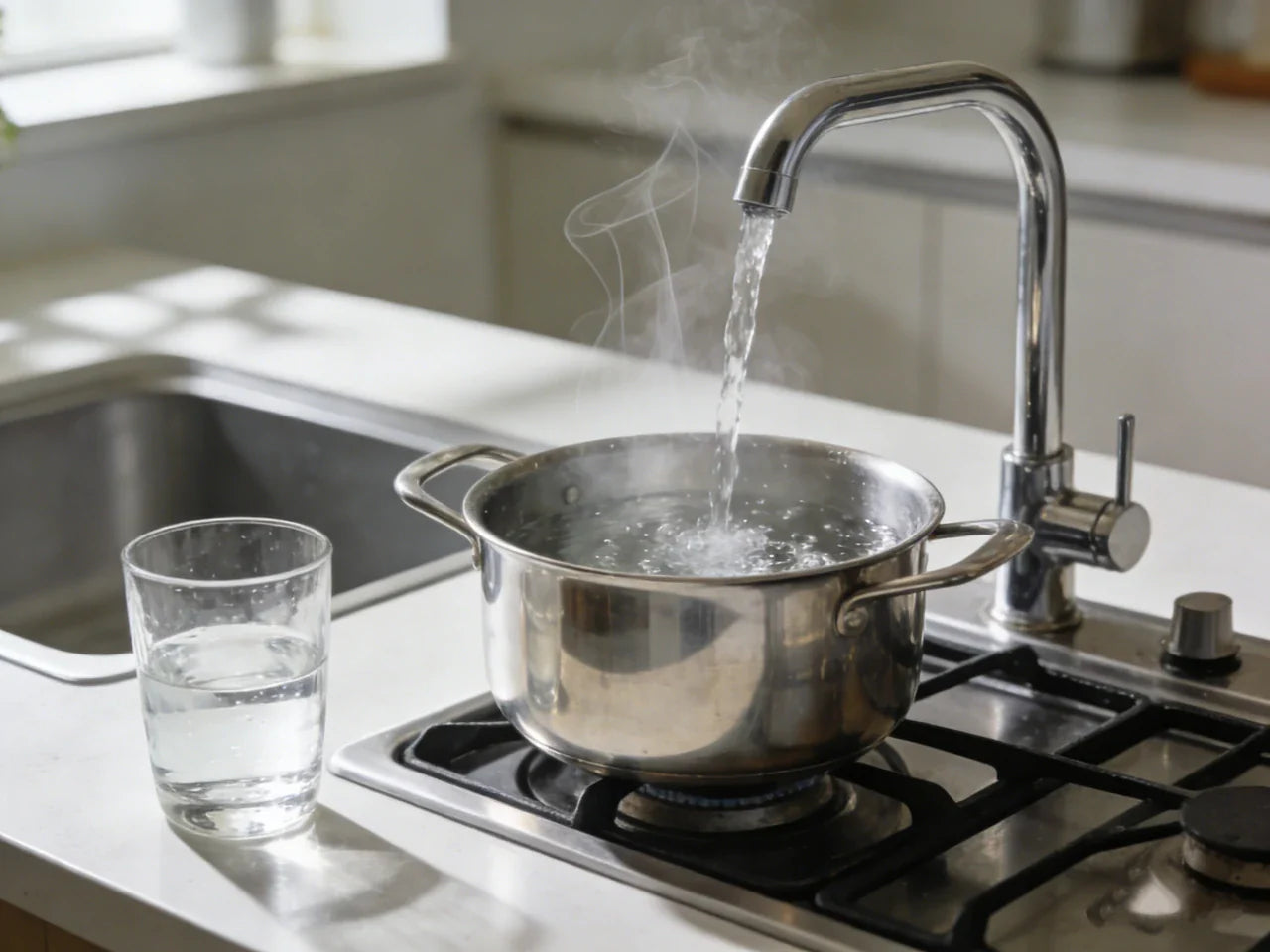 Does Boiling Tap Water Purify It? What Boiling Really Removes—and What
And let’s be real: you’re not boiling water to become a chemist. You’re doing it because you want the water to taste less like a swimming pool or because you’re paranoid about that weird pipe noise in your basement. Totally valid.
The Grand Conclusion (No Lab Coat Required)
So what does boiling water actually do to tap water? It kills the living things you don’t want, says goodbye to the chlorine smell, and leaves the minerals exactly where they are. It won’t turn toxic water into a health potion, but it will give you peace of mind—and a much better-tasting glass. That’s a win in my late-night hydration book.
The takeaway? Boil when safety is iffy or when you hate that chemical aftertaste. Don’t boil thinking you’re a superhero against lead or arsenic. And if you’re ever confused, remember: you’re just one heat cycle away from knowing if your tap water is friend or foe. Just don’t forget to let it cool before you chug. Trust me on that one. I learned the hard way, and my tongue still holds a grudge.
