What Does Grain Mean For Water Softener

You’ve probably seen the word grain on a water softener box and thought, “Am I shopping for bread or a home appliance?” It’s a fair question. In the world of water treatment,...

You’ve probably seen the word grain on a water softener box and thought, “Am I shopping for bread or a home appliance?” It’s a fair question. In the world of water treatment, grain isn’t about wheat or oats—it’s the unit of measurement for hardness removal. Think of it as the softener’s fuel tank capacity for capturing calcium and magnesium.
The technical definition isn’t scary. One grain per gallon (GPG) equals about 17.1 milligrams of hardness minerals per liter of water. For reference, your tap water is “hard” if it clocks over 7 GPG. That’s the moment your soap stops lathering and your coffee maker starts looking like a mineral castle.
Here’s a fun fact: the term “grain” comes from the barleycorn, an ancient unit of measurement. Yes, the same barley used in beer. So technically, every time you size a softener, you’re channeling a medieval brewer. Cheers to that.
Must Read
Why Grain Count Actually Matters
Your water softener’s grain capacity tells you how much hardness it can remove before it needs to regenerate—that’s the mechanical nap where it flushes out the collected minerals. A 30,000-grain unit can handle about 30,000 grains of hardness before saying, “I’m full, let me reset.” It’s like a tiny mineral recycling plant living under your stairs.
Here’s the lifestyle math: a family of four with very hard water (say 20 GPG) will drain a 30,000-grain system in about a week. Size too small, and your softener regenerates daily like a needy houseplant. Size too large, and you waste salt and water. It’s the Goldilocks dilemma of home maintenance.
Most modern softeners let you adjust settings based on your household size and water hardness. You can get a test kit for under $20 at a hardware store—or call your local utility, which might tell you the GPG for free. It’s the data your skin and dishes have been begging for.
Practical Tips to Nail Your Grain Size
Rule of thumb: multiply your household’s daily water use (about 80 gallons per person) by your hardness in GPG. Then multiply that number by seven for a week’s worth of reserve. That’s your minimum grain capacity. For example, a family of four at 10 GPG needs roughly 22,400 grains.
Don’t forget iron. If your water has iron (that rusty stain on the tub), add 5 GPG to your hardness number for every 1 ppm of iron. Iron is the party crasher of water chemistry—it acts like extra hardness and wears out your softener faster.
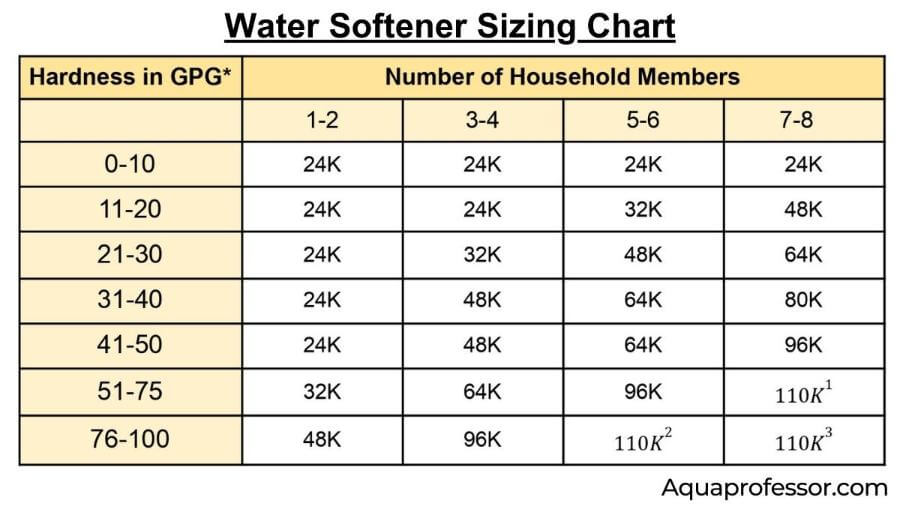 Water Softener Grain Size Calculator at Jaclyn Glenn blog
Buy a system that gives you 20% more capacity than your calculation. That buffer ensures you’re never caught off guard during a holiday guest invasion or a laundry marathon. Oversizing slightly is smart; undersizing is a pain in the pipes.
The Cultural Reference You Didn’t Expect
Remember that scene in The Martian where Matt Damon grows potatoes on Mars? That’s you, but with salt and water. Your softener is your survival tool—grain capacity is your food supply. Fail to plan, and you’ll be scrubbing hard water scale off your showerhead with vinegar and determination.
Also, think of Marie Kondo here. She’d ask: “Does your water spark joy?” Hard water doesn’t. It leaves spots, dulls hair, and makes detergent work twice as hard. You’re not just buying a machine—you’re buying smooth skin and effortless dishes. That’s the real ROI.
Fun little fact: the first water softeners were invented in the early 1900s and used zeolite, a volcanic mineral. Today’s systems use resin beads that act like tiny magnets for hardness. The science hasn’t changed much, but the marketing has—now it’s all about “smart” regeneration and Wi-Fi connectivity.
When to Regenerate: A Lifestyle Decision
Most modern softeners regenerate based on water usage, not a timer. This is a game-changer. It means your system only flushes when it’s actually tired, saving salt and money. Look for a “demand-initiated” model—it’s the Netflix algorithm for water treatment.
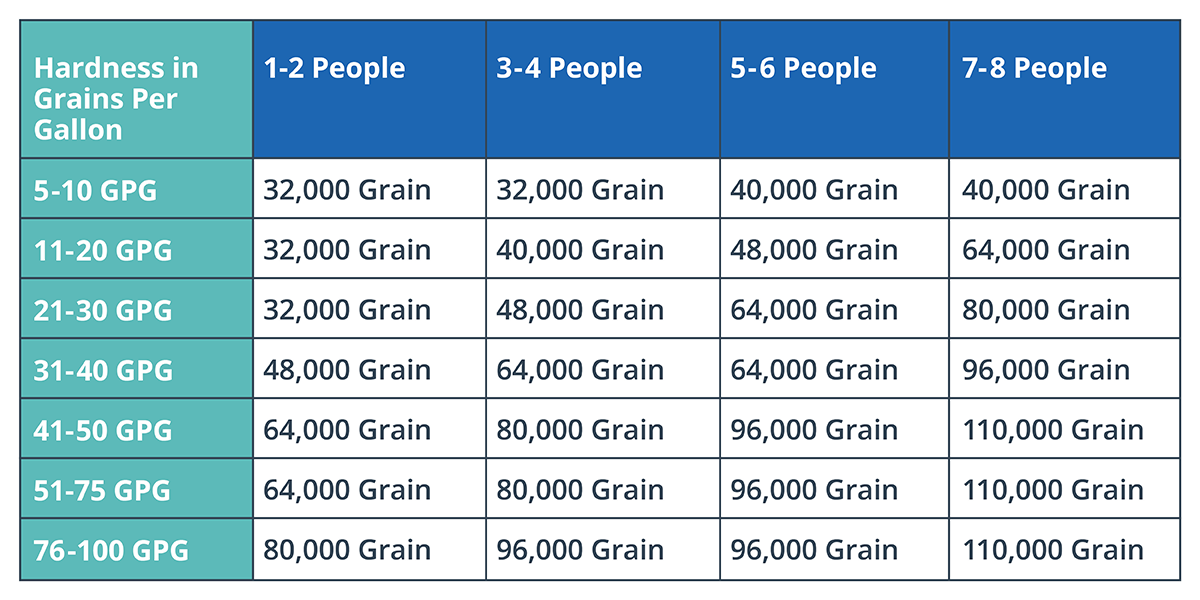 How to Size a Water Softener: Sizing Chart and FAQs | Aquasana
If you have an older unit, set regeneration for early morning, like 2 a.m. That way, you won’t hear the whooshing sound while binge-watching your show. It’s the towel-over-the-bathroom-door trick for white noise—simple, effective, and nobody knows it’s happening.
One more tip: keep an eye on salt levels. Refill when it’s below 25% full. Think of it like topping up your gas tank before a road trip—you never want to run out mid-journey. A half-hour check every month saves you from a mineral-crusted water heater.
The Reflection: What Grains Mean for Your Morning
Imagine your morning routine without hard water. Your shampoo lathers like a cloud. Your coffee tastes like it was brewed by a barista. Your glassware dries spotless. That’s the grain-optimized life. It’s not about the machine—it’s about the feel of clean.
Every grain of hardness your softener removes is a tiny victory for your skin, your appliances, and your sanity. You don’t need to be a chemist to appreciate that. You just need a system that matches your rhythm.
So next time you see “30,000 grains” on a product page, smile. You now know it’s not bread. It’s the promise of softer mornings and brighter glasses—a quiet upgrade to the everyday. And that’s worth a toast (made with soft water, naturally).
