What Does Grain Mean On Water Softeners

So, What’s the Deal with “Grain” on a Water Softener? You’ve finally decided to fight the good fight against hard water. You’re standing in the aisle, staring at a water soft...

So, What’s the Deal with “Grain” on a Water Softener?
You’ve finally decided to fight the good fight against hard water. You’re standing in the aisle, staring at a water softener, and then you see it: “30,000 Grain Capacity.” Your brain immediately jumps to breakfast. Are you supposed to feed this thing oatmeal? Should you be buying a toaster for your basement? It’s a perfectly normal moment of confusion. Let’s be honest: putting a home appliance on a “grain” diet sounds like something out of a weird infomercial.
The good news? There are zero oats involved. The “grain” is just a unit of measurement—specifically, it measures how much hardness the softener can remove before it needs to take a salt bath. Think of it like the fuel tank in your car. A 10,000-grain softener has a tiny tank, and a 40,000-grain model is the big SUV that can drive across the country without stopping.
The Real-Life Chemistry (Without the Boring Lab Coat)
Hard water is basically water that’s been on a mineral bender. It’s full of calcium and magnesium, which it picks up from traveling through limestone and chalk. These minerals are the party guests that leave rings in your bathtub, make your soap refuse to lather, and turn your hair into a crunchy, tangled mess. You know that feeling when you’re rinsing conditioner and your hair feels like straw? That’s the chalk and calcium doing you dirty.
Must Read
Your water softener is the bouncer. It uses little resin beads that are coated in sodium (salt). As the hard water flows through, the beads grab the calcium and magnesium and exchange them for the sodium. The “grain” number tells you how many of these mineral jerks the bouncer can kick out before he needs a break. It’s like saying your bouncer can handle 30,000 “rude guests” before he needs to go refill his coffee.
How Big of a Softener Does Your House Need?
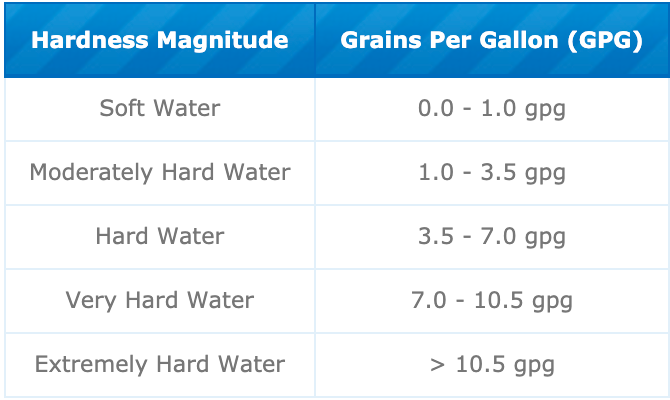
This is where the math gets a little silly, but it’s actually easy. You need to figure out your daily hardness grain load. First, get a water test kit or call your city—most people have water between 7 and 15 grains of hardness per gallon. That’s like knowing how spicy the salsa is before you take a bite. Then, you multiply that number by the gallons of water your household uses daily (roughly 80 gallons per person, because between showers, laundry, and that one kid who fills the bathtub to the brim, we use a lot of water).
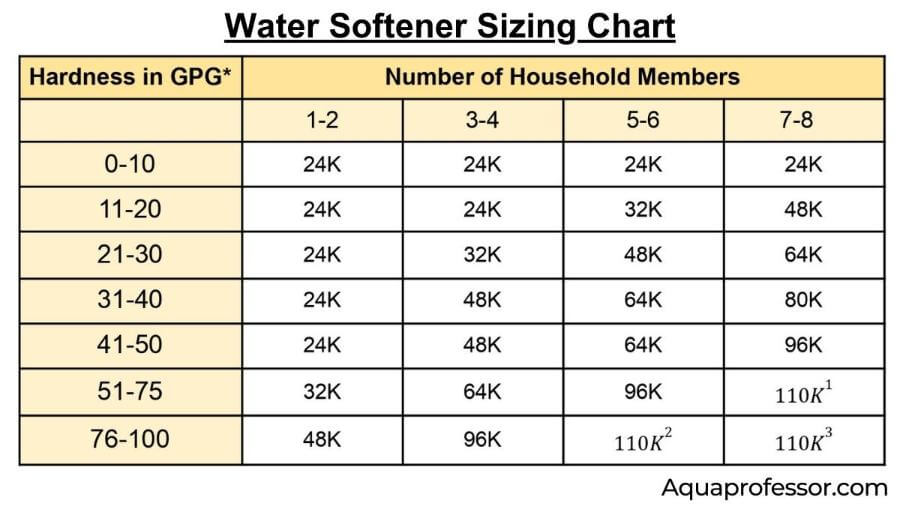 Water Softener Grain Size Calculator at Jaclyn Glenn blog
For a family of four with 10-grain water, that’s 4 people x 80 gallons x 10 grains = 3,200 grains of hardness every single day. That’s a lot of mineral jerks. You want a softener that can handle at least three days’ worth of this nonsense without begging for mercy. So, you’d look for a system that’s at least 30,000 to 40,000 grains. Otherwise, you’ll be refilling salt like you’re a zookeeper at feeding time.
The Classic “Oversized” Mistake (We’ve All Done It)
I know what you’re thinking: “More grains = better, right?” It’s the same logic that makes you buy the jumbo bag of chips at the store. But with water softeners, bigger isn’t always better. If you buy a massive 80,000-grain softener for a small apartment, it will take forever to use up its capacity. The resin beads will sit there for weeks, getting all funky, and you’ll end up with a slimy, bacterial reservoir in your basement.
A softener that’s too big is like buying a king-size bag of salad for one person. By the time you get to the bottom, it’s a sad, brown mess. You want the softener to regenerate (flush itself with salt brine) fairly often—like every few days or once a week. This keeps the resin beads fresh and the bouncer happy. Otherwise, you’re basically asking a lazy bouncer to let in any mineral off the street.
 Certiflow Water Softeners
What a “Grain” Actually Feels Like in Your Shower
When you get the right grain size, life changes. The first sign is the squeaky clean feeling. You step out of the shower, and your skin feels like it just got a spa treatment instead of a battle with chalk. Your soap actually foams up like a commercial, and your dishes come out of the dishwasher sparkling, not looking like they have a case of the measles. It’s the small victories that make you grin like an idiot while folding a towel that isn’t stiff as a board.
The best part? Your hair stops feeling like scouring pads. You’ll run your fingers through it and think, “Wait, is this my hair?” It’s softer, shinier, and doesn’t require a gallon of conditioner to function. It’s the kind of win that makes you want to call your mom and tell her about your new water, even if she thinks you’ve joined a weird cult.
The Bottom Line (No Math Test Required)
So, when you see “grain” on a water softener, just remember: it’s the capacity to remove hard water jerks. Don’t overthink it. You’re not farming wheat; you’re choosing a tank size for a bouncer. Match it to your household size and water hardness, and you’ll be living the soft-water dream. Your dishes will be spotless, your laundry will be fluffy, and you’ll finally understand why people with soft water have that smug, hydrated smile. Go get that velvety water. You’ve earned it.
