How Does Ice Maker In Freezer Work

So, How Does That Ice Maker in Your Freezer Actually Work? You know, it’s one of those magical kitchen gadgets we completely take for granted. You open the freezer, hear a sat...
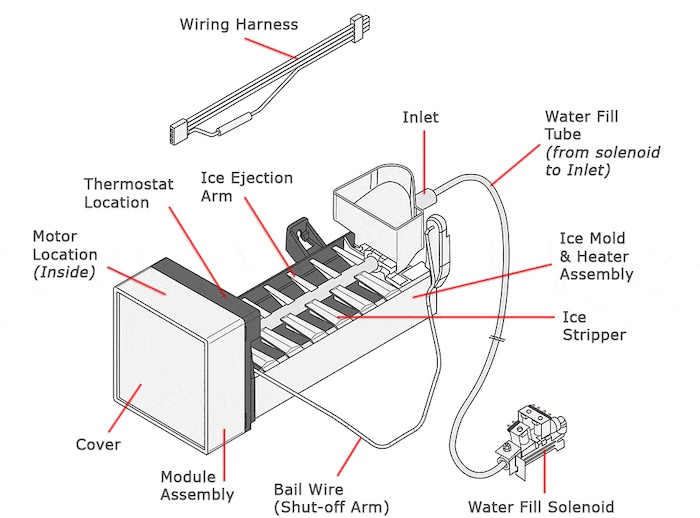
So, How Does That Ice Maker in Your Freezer Actually Work?
You know, it’s one of those magical kitchen gadgets we completely take for granted. You open the freezer, hear a satisfying clunk, and suddenly you have a waterfall of ice cubes. Magic? Nope. It’s actually a tiny, clever factory hiding in the cold.
Let’s be real: if we had to fill those plastic trays every day, we’d probably just drink warm soda. Thank goodness for the ice maker, our silent hero of summer parties and late-night iced coffees.
The Secret Life of an Ice Cube (A Timeline)
First, you need to understand the brain of the operation: the control module. This little chip is basically the boss, telling every part what to do and when. It’s not a big deal, until the ice stops coming—then it’s a crisis.
Must Read
It all starts when you close the freezer door. The ice maker’s water valve gets the signal to open for about seven seconds. Seven seconds—that’s it. Any longer and your ice tray would overflow and create a frozen glacier.
The water rushes through a small tube and fills the ice mold, which is just a fancy plastic tray with little pockets. This mold sits patiently, waiting for the freezer’s cold air to do its job. It’s like a spa day, but for water.
Freezing: The Waiting Game
Now, the freezer does its thing, dropping the temperature below 32°F. The water in those pockets starts to freeze from the outside in. This takes about 90 minutes, depending on how often you open the door to stare at leftovers.
But here’s where it gets clever. The ice maker has a thermostat that monitors the temperature of the mold. Once it gets cold enough (usually around 5°F to 15°F), the thermostat flips a switch. It’s like the ice saying, “Okay, I’m solid. Let’s get me out of here.”
If you’ve ever heard a gentle hum from your freezer, that’s the soundtrack of science. The thermostat just activated the ejector motor. Time to party.
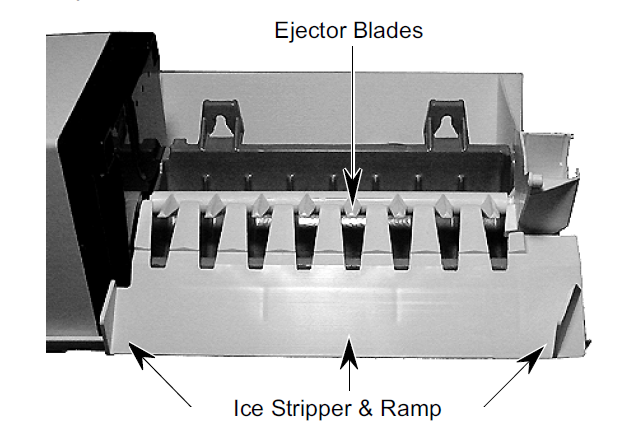 How Does a Refrigerator Ice Maker Work? | A Practical Explanation from
The Big Release: Rock and Roll
Here comes the fun part. The control module powers up a heater that sits under the ice mold. Wait, a heater in a freezer? Yes! It warms the metal just enough to loosen the cubes’ grip. It’s like giving them a tiny warm bath for a few seconds.
Then the ejector motor starts turning a shaft with little plastic fingers. These fingers rotate and scoop the cubes right out of the pockets. They look like tiny, plastic claws, and they are ruthlessly efficient.
The cubes get pushed up and over the front of the mold, where they tumble downward. Clink, clink, clink—that’s the sound of summer being saved. If you don’t smile at that sound, you might be a robot.
The Bucket and the Arm: A Delicate Relationship
Your ice cubes don’t just fall into the abyss. They land in a storage bin in the freezer drawer. This bin has a big, plastic arm (the “shut-off arm”) that acts like a bouncer at a club.
As the ice piles up, it eventually pushes the arm upward. Once that arm reaches a certain angle, it hits a switch that pauses the whole process. The freezer stops making ice because, well, the party is full. No more cubes allowed.
When you grab a handful for your drink, the arm drops back down. That signals the machine: “Hey, we have room! Make more ice, please!” It’s the most polite feedback loop in your kitchen. “More ice, sir? Absolutely.”
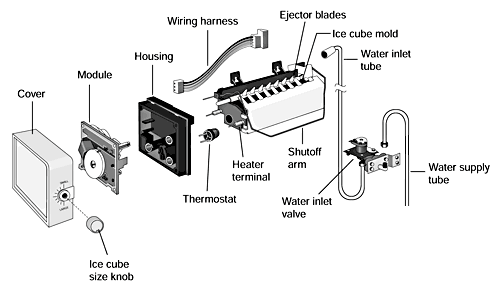 DIY Ice Maker Repair
Common Glitches (And Why They’re Not Your Fault)
Sometimes, the ice maker acts like a grumpy teenager. It might stop working because the water line is frozen. That’s usually because your freezer is too cold (below 0°F). Chill out, freezer. Literally.
Other times, the cubes come out as a weird, hollow shell. This happens when the water didn’t fill the mold completely, often due to a low water pressure. Your ice is just crunchy air. Not ideal for a cocktail.
And then there’s the dreaded ice bridge—where the cubes freeze together into one giant block. Usually, this means your freezer temp is too warm, so the cubes melted slightly then refroze. It’s like a frozen alliance you didn’t ask for.
The Uplifting Conclusion: You’ve Never Been Alone
So, the next time you hear that joyful crash of ice falling into your cup, remember the tiny, heroic machine inside your freezer. It waited, warmed, scooped, and stopped itself—all for you. For your lemonade. For your whiskey. For your post-workout water.
Isn’t that beautiful? In a world that feels chaotic, you have a loyal, little appliance that never complains. It just makes ice, over and over, like a frozen love poem to your thirst.
Go ahead, grab a cube. That’s a piece of tiny, personalized engineering. And you deserve every single clink. Cheers to you and your magical freezer friend. You’re doing great.
