How Does A Private Water Well Work

So, you’re thinking about a private water well, or maybe you just inherited one with that charmingly quirky old house. Let’s be honest: it sounds a bit like magic—you drill a...
So, you’re thinking about a private water well, or maybe you just inherited one with that charmingly quirky old house. Let’s be honest: it sounds a bit like magic—you drill a hole in the ground, and suddenly, water appears. But it’s actually less like sorcery and more like a very long, very dedicated straw that your house sucks on.
The Underground Reservoir (It’s Like a Giant, Soaky Sponge)
First, you need to understand where the water lives. It’s not a big, dark cave with a lake inside (though that would be cooler). It’s an aquifer: layers of sand, gravel, or porous rock that act like a giant, soaky sponge underground.
Rainwater has been slowly filtering down through the earth for years—sometimes decades—getting naturally cleaned along the way. By the time it reaches your well, it’s passed through a very efficient, very slow dirt-based Brita filter.
Must Read
Think of it as nature’s own tap, just buried a bit deeper than your kitchen sink. You’re not inventing water; you’re just borrowing it from the sponge.
The Well Itself: A Hole with Homework
Your well is basically a big pipe—usually six inches wide—drilled straight down into that sponge. It’s not a hole you could fall into, thank goodness; the top is capped with a sanitary seal.
Below the ground, that pipe has small slits or perforations near the bottom, called the screen. This allows water to seep in while keeping gravel, sand, and tiny rocks out—like a very strict bouncer at a club.
So, the well isn’t just a hole; it’s a frustrated plumbing project designed to let water in, but keep everything else out. It’s a hole with homework.
The Pump: The Unsung Hero (Or the Villain of Your Story)
This is where the action happens. Gravity alone won’t push water up 200 feet to your bathroom. You need a pump—specifically, a submersible pump that sits right inside the well, underwater.
Imagine a small, sealed motor—like a futuristic can of beans—that spins a little propeller. It pushes water up the pipe at constant pressure, forcing it into your house’s internal plumbing.
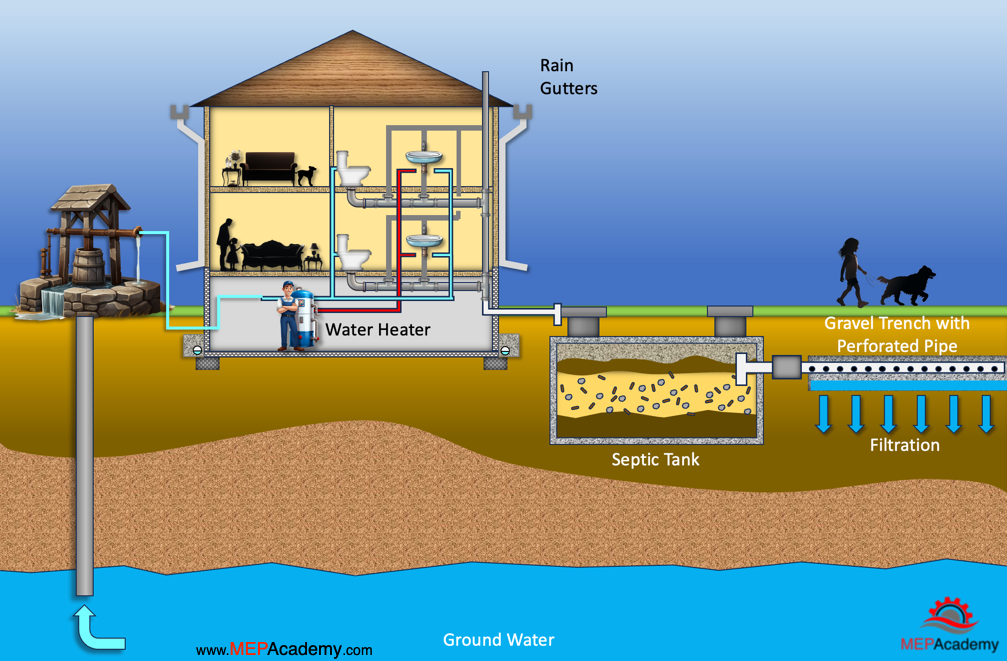 How your House Plumbing Works - MEP Academy
When you turn on the faucet, you’re not just opening a valve; you’re summoning the pump. It’s like calling a very loyal, slightly annoying robot that lives in a dark hole.
The Pressure Tank: The Water Cushion
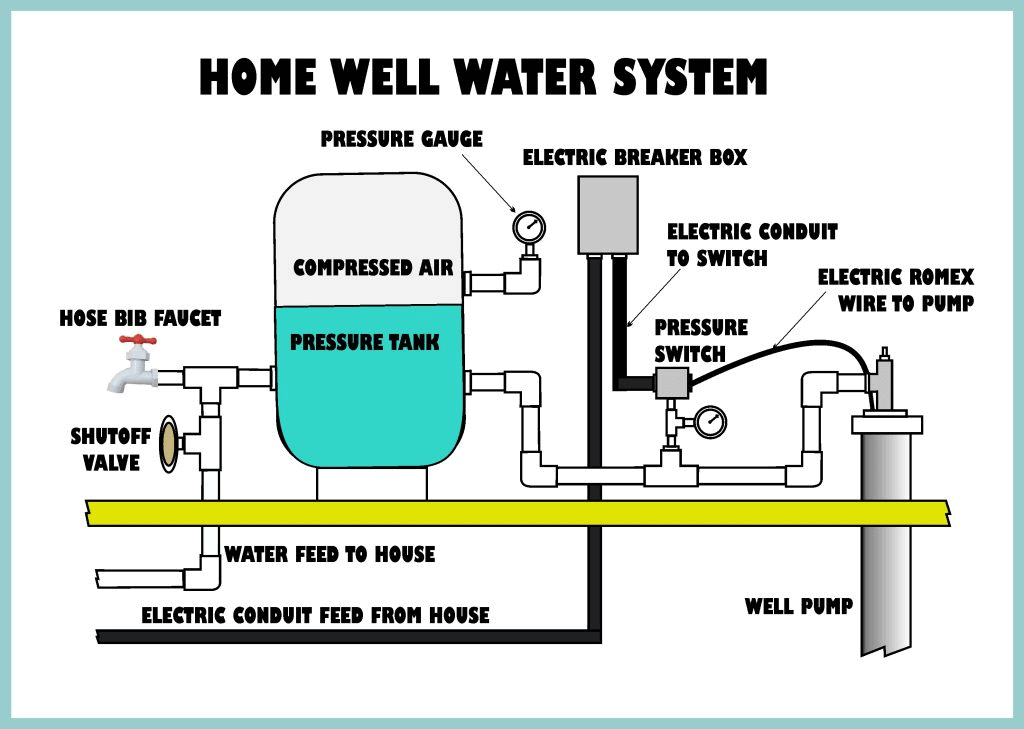
If the pump ran every time you flushed the toilet, it would burn out faster than a stressed-out cat. That’s where the pressure tank comes in—a silver tank, about the size of a large scuba cylinder, usually in your basement.
This tank holds a pocket of compressed air that acts as a cushion. When the pump pushes water into the tank, it compresses the air, storing the pressure.
So when you turn on the faucet, the air pushes the water out first, giving you full pressure without the pump starting right away. It’s like having a butler who fills a bucket for you, then hands it over when you ask.
How It Flows Through Your House (The Journey of a Lifetime)
Once the water leaves the pressure tank, it travels through a main water line—often copper or PEX—to every faucet, toilet, and shower in your home. This is where city water and well water part ways completely.
With city water, you pay a bill and the water just shows up, like a delivery driver. With a well, every drop is a personal achievement that came from your land, your pump, and your patience.
You become intimately aware that the water for your morning coffee came from a hole in your backyard, not a reservoir in the next county. It makes the coffee taste slightly more victorious.
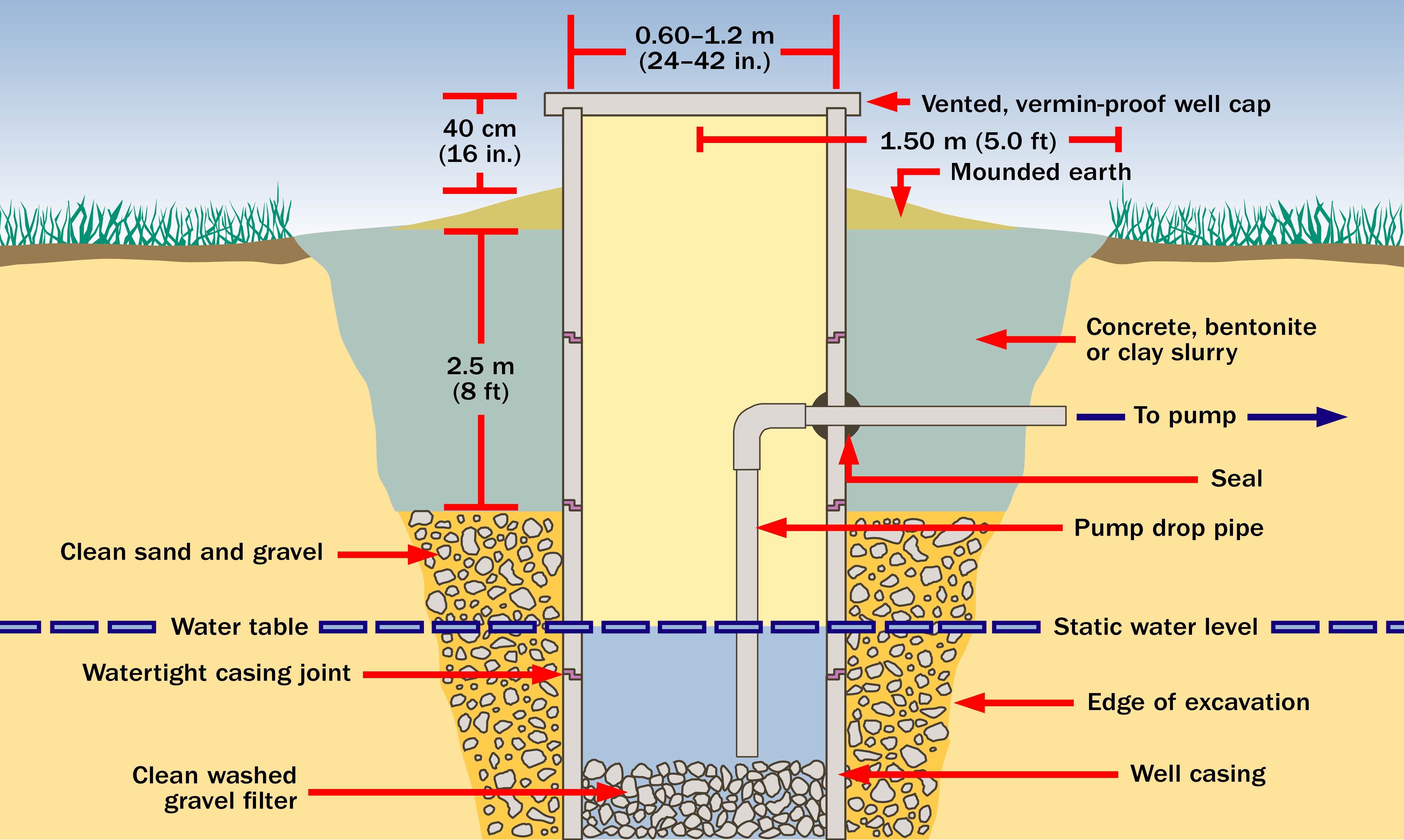 Groundwater Well And Pump
The Realities: The “Fun” Parts You Didn’t Sign Up For
Now, let’s be real. Well water isn’t all romance. You’ll become an expert on hard water—mineral deposits that turn your shower glass into a frosted nightmare.
You’ll learn to dread the phrase “sediment in the well,” which means you might flush a toilet and get a glass of tea-colored water. It’s usually harmless, but it looks like you’ve dug up a marsh.
And if the power goes out? No power = no pump = no water. You become very grateful for a camping stove and a neighbor with a pool. It’s a humbling experience.
The Reward: Why People Love It (The Unfair Advantage)
But let’s talk about the upside. First, your water bill is essentially zero—just the cost of electricity to run that pump. That’s like getting free refills on life.
Second, well water usually tastes incredible. It’s naturally cold, mineral-rich, and free of the chlorine taste you get from city pipes. You’ll start bragging about your water at parties.
Finally, you own your water source. No municipal restrictions, no drought-based watering bans for your lawn. It’s a small slice of water independence—like being a tiny, damp republic.
So, how does a private water well work? It works because nature filters it, a motor pumps it, a tank stores it, and you treasure every drop. And when you hear the pump kick on after a long shower, you smile. You know exactly who’s doing the work.
