What Is The Ph Value Of Pure Water

So, picture this: I’m at a friend’s barbecue, and someone—let’s call him Dave—pulls out a fancy water-testing kit. He dips a strip into a glass of tap water, squints, and anno...
So, picture this: I’m at a friend’s barbecue, and someone—let’s call him Dave—pulls out a fancy water-testing kit. He dips a strip into a glass of tap water, squints, and announces, “This is way off from pure water’s pH.” I freeze, hot dog halfway to my mouth. What pH? He’s talking like everyone knows the secret number. You’ve probably been there too, nodding along while secretly thinking, Isn’t water just… wet?
The Simple Answer (and Why It’s a Bit of a Lie)
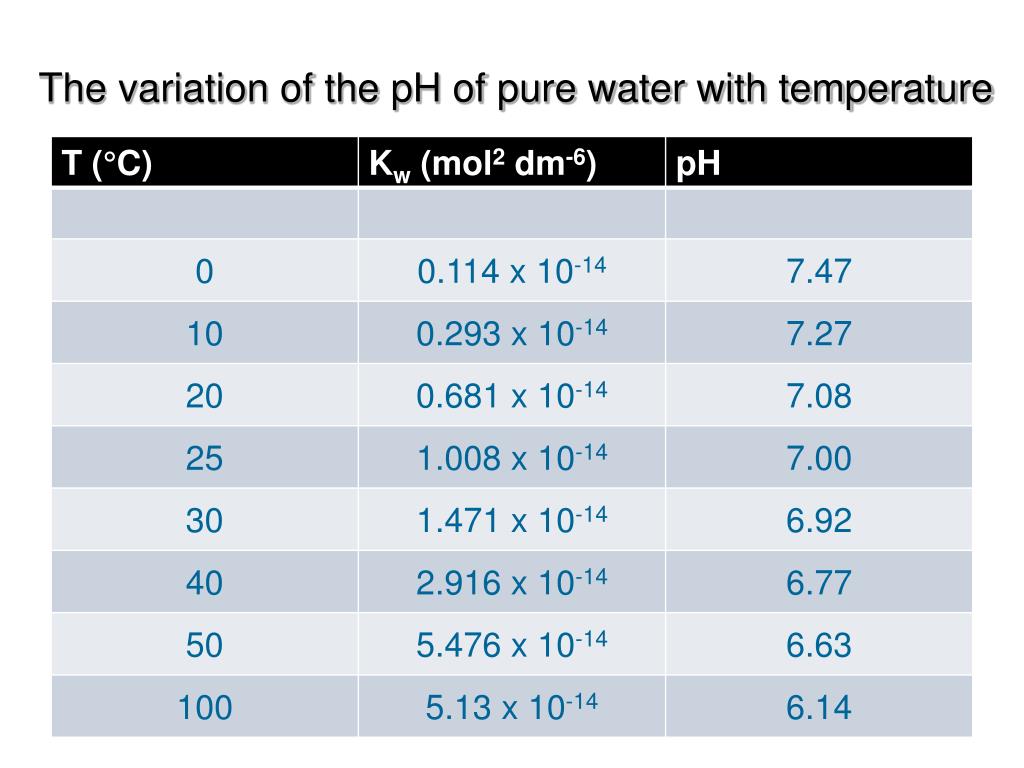
Okay, let’s cut to the chase: pure water has a pH of 7 at 25°C (room temperature). That’s the “neutral” spot on the scale—smack-dab between acidic (like lemon juice) and basic (like bleach). Sounds simple, right?
But here’s the ironic twist: you will almost never find pure water in real life. That bottle of “spring water” you’re sipping? It’s got minerals. Rain? It picks up CO₂ from the air, turning slightly acidic (pH ~5.6). So Dave’s test strip was probably right—tap water never hits that perfect 7.
Must Read
Why 7, though? Pure water has equal amounts of H⁺ (hydrogen) and OH⁻ (hydroxide) ions. Think of it as a perfectly balanced dance floor where no ion outnumbers the other. That’s neutrality—the chemical definition of “chill.”
But Wait—Temperature Messes Everything Up
Here’s where it gets fun (and a little cruel). If you heat pure water, its pH drops. What?! Yes—at 50°C, pure water’s pH is about 6.6. That doesn’t mean it’s suddenly acidic; it just means the ions are shaking harder. The “neutral” pH shifts with temperature.
So if you’re boiling water for pasta and someone says, “Check the pH!” you can laugh. Pure water at 100°C has a pH around 6.1. Still not acidic—just warm and wobbly. Science is a troll sometimes.
 P H Water Diagram
To make things even weirder: pure water is also a terrible conductor of electricity. That’s because free-floating ions are rare. But add a pinch of salt? Boom—conductivity spikes. So don’t try to power your phone with a glass of H₂O.
Why Does This Even Matter? (Or: How Not to Sound Like Dave)
You might ask: “Should I care about my water’s pH?” Honestly, for drinking? Not really. Your stomach acid has a pH of about 2, so it laughs at any tiny shift in your glass. I’ve seen people freak out over “alkaline water” costing $5 a bottle—meanwhile, their coffee is pH 5 and no one bats an eye.
The real importance of pH 7? It’s a baseline for science. Labs use it to calibrate meters. Chemists rely on “pure water at 7” as a reference point—like a musical tuning note. Without it, we’d lose our minds comparing acids.
 What is the pH value of pure water? - YouTube
And here’s a fun party trick: if you leave pure water exposed to air, it starts absorbing carbon dioxide from the room. Within hours, its pH drops to 5.5–6. That’s right—your “pure” water becomes slightly carbonic acid just by breathing on it. Nature is both lazy and brilliant.
The Takeaway (with a Wink)
So, next time someone flexes with a test kit, you can casually say: “Pure water is pH 7 at 25°C, but that’s basically a unicorn.” Most water you drink is around 6.5 to 8.5—and that’s perfectly fine. Your body doesn’t care.
Dave from the barbecue? He later admitted his kit expired in 2019. We laughed, drank our slightly-acidic lemonade, and moved on. Stay hydrated, stay skeptical, and never trust a pH strip past its expiration date.
Oh, and one more thing: never, ever try to make “pure water” at home by distilling it. It tastes flat and sad. Real life is about the minerals, the carbon dioxide, the mess. pH 7 is beautiful in theory—but give me a slightly acidic, mineral-rich sip any day.
