How To Do Backwash In Water Filter

Let’s be honest: your water filter isn’t exactly the rock star of your kitchen appliances. It sits there, quietly doing its job, probably hidden under the sink like a shy teen...

Let’s be honest: your water filter isn’t exactly the rock star of your kitchen appliances. It sits there, quietly doing its job, probably hidden under the sink like a shy teenager at a family reunion. But every now and then, it needs a little spa treatment called backwashing. Think of it as the filter’s version of a deep, satisfying sigh after a long day.
What Even Is Backwash? (And Why Should You Care?)
Backwash is just a fancy word for flipping the flow of water through the filter. Instead of water going in one direction and leaving crud behind, you reverse it. It’s like shaking out a rug instead of just wiping your shoes on it.
If you skip this, your filter gets lazy. It clogs up, starts working twice as hard, and eventually throws a little tantrum in the form of dirty water or low pressure. Nobody likes a cranky filter.
Must Read
Think of it this way: your filter eats tiny particles for breakfast. Backwash is its way of saying, “Excuse me, I need to use the restroom.” Polite filters do this on a schedule. Yours is probably waiting for you to notice.
The Setup: Your Filter’s Secret Handshake
First, find your filter’s control valve. It usually looks like a chunky lever or a plastic knob that’s been ignored since you moved in. It’s the unsung hero lurking behind a pile of cleaning supplies.
You’ll also need a drain line—basically a hose that leads to a floor drain or a bucket big enough to hold a small fish tank. Pro tip: do not use your neighbor’s prize-winning petunias as a drainage test spot. I learned that the hard way. The petunias did not appreciate the rusty, gritty surprise.
Also, have a glass jar handy. You’ll want to check if the water runs clear afterwards. It’s like checking the mirror after a haircut—except the haircut is full of mud and you’re hoping it stops looking like swamp juice.
Step 1: Shut Off the Water (Yes, Seriously)
Locate the inlet valve—usually a blue or red handle near the filter. Turn it off. If you forget this step, you’ll get a face full of pressure and a floor that suddenly looks like a modern art installation titled “Oops.”
Some filters have a bypass lever that lets you keep water running elsewhere. Great for when you need to wash your hands mid-process. But don’t trust it with your life. I once bypassed the bypass and spent an hour mopping.
Double-check by opening a faucet slightly. If water dribbles out like a tired sigh, you’re good. If it gushes like a comedy movie fire hydrant, you messed up.
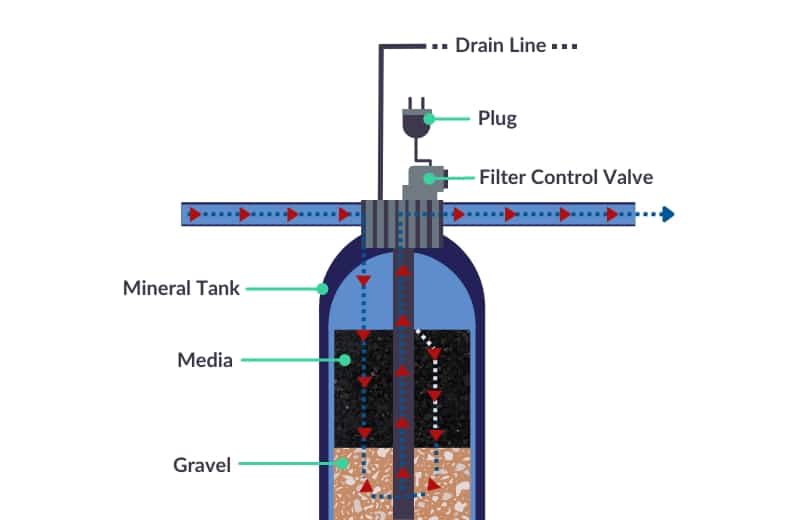 Backwash Filter Basics 101 (Diagram Included) | Water Filter Guru
Step 2: Turn the Knob to “Backwash” (Feels Like a Secret Code)
On your valve, you’ll see positions like “Filter,” “Backwash,” “Rinse,” and “Closed.” Turn it to “Backwash” slowly. It might feel like you’re cracking a safe. Do it with confidence—pretend you’re a spy.
Now open the drain line if it has a valve. You should hear a gurgling sound, like a giant drinking the last of a milkshake. That’s the filter flushing out trapped sediment, iron, sand, and the ghost of that weird coffee you spilled last month.
Let it run for 2 to 5 minutes, or until the water in your jar looks like normal tap water instead of iced tea from a muddy puddle. If it still looks like weak coffee, give it another minute. Filters are stubborn that way.
Step 3: The Rinse Cycle (The Filter’s Cool-down)
After backwashing, turn the knob to “Rinse”. This re-settles the filter media (the gravel or sand inside) and flushes away any remaining loose junk. It’s like rinsing your mouth after brushing, but for a water filter.
Run the rinse for 30 seconds to a minute. You’ll see the drain water go from murky to clear. That’s your filter saying, “Okay, I’m ready to be a productive citizen again.”
When the water runs crystal clear, turn the knob back to “Filter”. Close the drain line. You’re almost done—like the last mile of a hike where you can already smell the parking lot.
Step 4: Turn the Water Back On (Slowly. Please.)
Open the inlet valve gradually. If you slam it open, you’ll create a water hammer—a loud bang that sounds like a pipe having a meltdown. Your neighbors will think you’re starting a construction project.
 Water Softener Backwash Guide: Easy Steps for US Homeowners - DIYself.blog
Check for leaks around the valve. A tiny drip is okay but annoying. A puddle? That’s your filter asking for a do-over. Tighten connections like you’re settling a grudge, but don’t Hulk-smash them.
Run a faucet for a few seconds to clear any air bubbles. If the water sputters like a bad comedian, that’s normal. It will calm down.
When to Do This Whole Dance Again?
Most filters need backwashing every 1 to 4 weeks, depending on how dirty your water is. If your water smells like a damp basement or your pressure drops like my motivation on a Monday, do it sooner.
Some filters have automatic backwash timers. They’re the luxury cars of the filter world. But if you’re doing it manually, just pick a day—like “First Sunday of the month, after coffee.” Bribe yourself with a cookie. You’ve earned it.
I’ve marked my calendar with a drawing of a smiling filter. It’s ridiculous, but it works. Also, ignore the calendar for three months like I do, then spend an extra long backwash session apologizing to the filter. It forgives.
The Final Nod
Backwashing is like taking out the trash: annoying, quick, and satisfying once it’s done. Your filter will thank you with clean water, steady pressure, and a silent “thank you” that you’ll never hear. But you’ll feel it.
So next time you see that knob, give it a twist. You’re not just maintaining a filter—you’re having a moment with your home’s unsung plumbing hero. And isn’t that the kind of quirky responsibility that makes adulting feel just a little bit better?
Now go forth and backwash. Your water—and your inner handyman—will nod in approval.
