How Does A Soft Water System Work

So the other day, I’m at my aunt’s place, and she offers me a glass of water. I take a sip, and it tastes… weird. Not bad, just slippery, like the water was wearing a tiny rai...
So the other day, I’m at my aunt’s place, and she offers me a glass of water. I take a sip, and it tastes… weird. Not bad, just slippery, like the water was wearing a tiny raincoat. She laughs and says, “That’s the softener! Isn’t it great? My dishes don’t get spots anymore.” I nodded politely, but internally I was thinking, great for the dishes, maybe, but what did it do to my water?
That’s when I realized most of us have no clue what a soft water system actually does. We just know it makes your soap lather like crazy, and that your shower glass stays clear. But how does it work? Let’s pop the hood on this home miracle worker, shall we? (Grab a coffee—or a hard glass of tap water, if you’re feeling brave—and let’s dive in.)
The Problem: Your Water is “Hard” (And Not in a Cool Way)
First, you need to know why we even bother softening water. It’s because your tap water is basically a mineral cocktail. Specifically, it’s loaded with calcium and magnesium ions.
Must Read
These ions are the culprits behind that white crusty buildup on your faucet and the way your soap refuses to make bubbles. Technically, this is “hard water.” It’s not dangerous to drink (sorry, conspiracy theorists), but it’s a nightmare for your pipes and your laundry. Your clothes come out feeling stiff, as if they’ve been starched by an angry ghost.
The Hero: The Ion Exchange Process
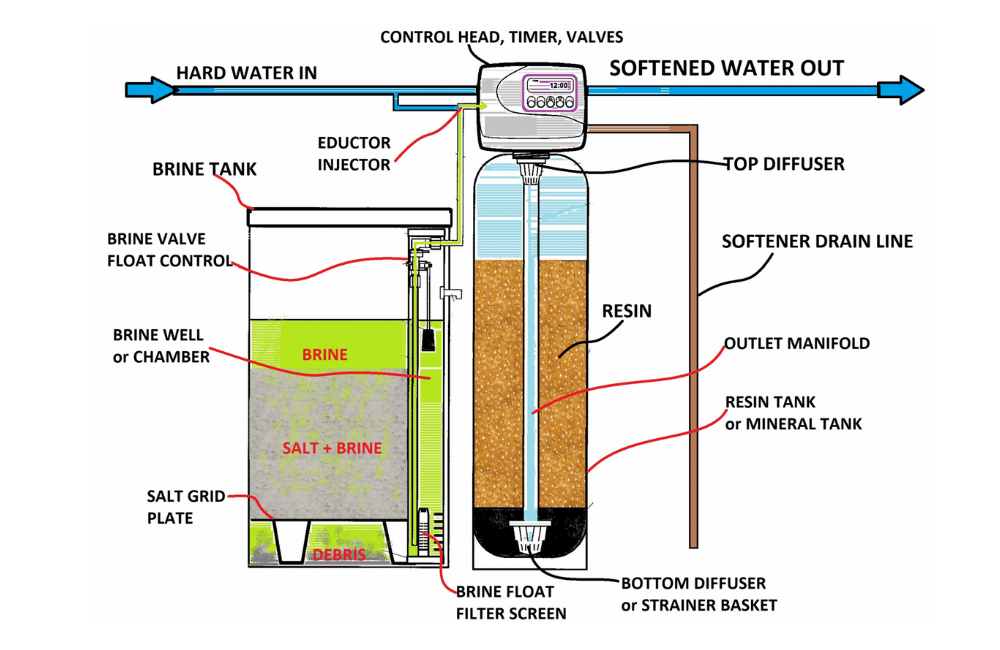
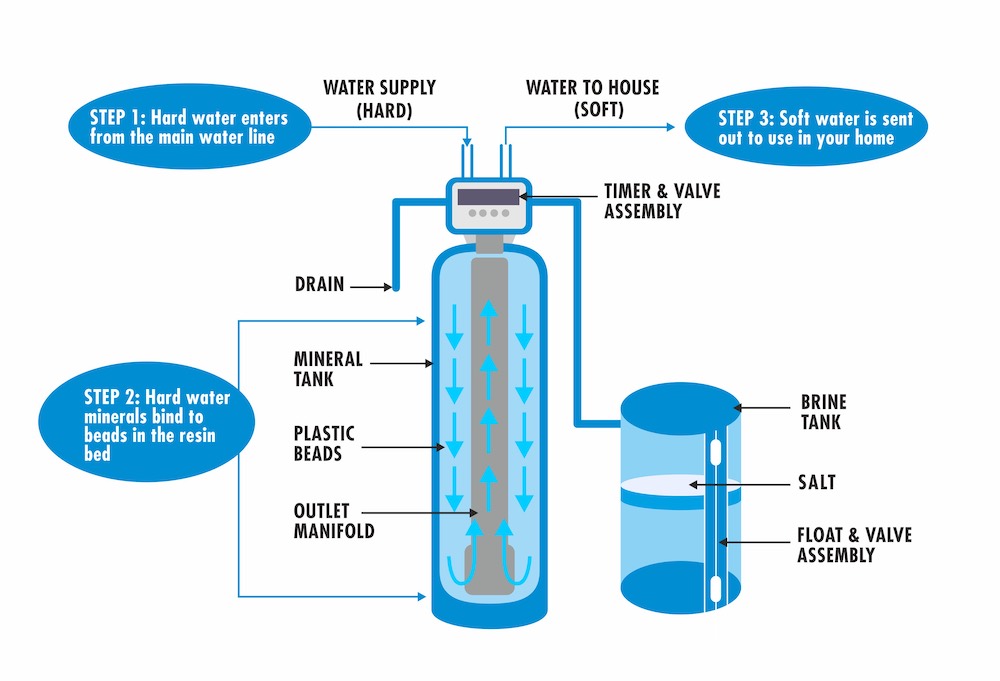
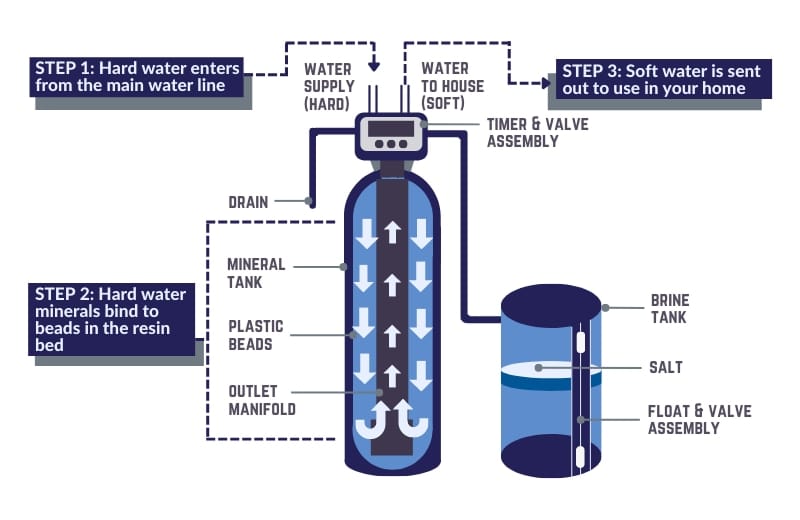
Now, the softener uses a clever trick called ion exchange. Think of it as a high-stakes swap meet for minerals. Inside the system is a tank full of tiny, sticky resin beads.
These beads are coated with sodium ions—basically, table salt. As your hard water rushes through the tank, the calcium and magnesium ions say, “Ooh, shiny!” and grab onto the beads. In return, the beads kick off the sodium ions into the water. So the bad guys get stuck, and the good (soft) guys go out your tap. Magic, right?
But wait—there’s a catch. The resin beads only hold so many calcium ions. After a while, they get full. That’s when the system enters its real party trick: the regeneration cycle. You’ll hear this thing hiss and gurgle in the middle of the night, usually scaring the cat. It sounds like a dying robot, but don’t worry, that’s just the house doing its chores.
 Potassium vs. Sodium Water Softener : Which Is better?
Regeneration: The Late-Night Cleanse
During regeneration, the system flushes the tank with a super-concentrated brine solution (salt water). This salty flood literally rips the calcium and magnesium off the resin beads and washes them down the drain.
Then it rinses the beads, re-coats them with fresh sodium, and the system goes back to being a polite little helper. It’s like the resin beads get a spa day every few nights. Exhausting, but necessary. (Imagine if you had to sweat out your own impurities once a week. Gross.)
The whole process is automatic on modern systems. You just have to keep a bag of salt in the garage. Pro tip: don’t use the fancy pink Himalayan salt for this—your softener isn’t a trendy tea shop. Use standard water softener salt.
But What About the Taste? (The Slippery Feel)
Ah, back to my aunt’s weirdly textured water. That “slippery” feeling is because the sodium ions interfere with the water’s ability to rinse soap off your skin. You literally never feel fully rinsed. It’s not dirty; it just feels… unresolved.
 How Does a Water Softener Work? + System Flow Diagram
Some people love it. Others, like me, miss the slight mineral bite of hard water. The good news is that if you hate the taste, you can install a reverse osmosis system at your kitchen sink. That strips out the sodium and leaves you with nearly distilled water. But that’s a story for another day.
The Irony: Salt is the Star, But Sodium is Minimal
Here’s the ironic part everyone freaks out about: “But isn’t soft water full of salt?” Technically, yes. But the amount of sodium added is trivial—like, less than a slice of bread. If you’re on a strict low-sodium diet for your heart, you might want a bypass line for your drinking faucet.
But for the rest of us? A little splash of extra sodium in our shower water isn’t causing high blood pressure. What is causing problems is that crusty limescale destroying your water heater. A softener can double the life of your appliances. That’s a bigger win than worrying about a pinch of salt.
So, Should You Get One?
Honestly, it depends on how hard your water is. If you live in an area where your shower head looks like a stalactite cave after six months, yes, get a softener. If you’re in a place with naturally soft water, skip it and enjoy your zero-effort lather.
Just know that the system isn’t magic—it’s just clever chemistry dressed up in a steel tank. And it makes your laundry smell amazing. So next time you visit me, don’t be weirded out by the slippery water. Just drink your coffee and appreciate that my pipes aren’t screaming in pain. You’re welcome.
