How Much Is Reverse Osmosis Water

So, you’re standing in the water aisle at the grocery store, staring at a bottle of “Reverse Osmosis Water” that costs more than a gallon of gas. Your wallet just felt a phant...

So, you’re standing in the water aisle at the grocery store, staring at a bottle of “Reverse Osmosis Water” that costs more than a gallon of gas. Your wallet just felt a phantom pain, didn’t it? Relax, put down the fancy jug, and let’s have a chat about what you’re actually paying for—and why your tap water is probably laughing at you.
The Price Tag: A Tale of Two Extremes
First, the hard truth: a jug of reverse osmosis (RO) water at the store can set you back anywhere from $0.99 to $3.99 per gallon. That’s like buying a latte for your faucet. For the same price, you could almost buy a gallon of milk—which at least comes with cow jokes.
But here’s where it gets wild: if you install a home RO system, the cost plummets to 10 to 30 cents per gallon. That’s the same price as a sad vending machine pack of gum, but for water that’s been stripped of everything except molecules-by-choice. Suddenly, you’re the hero of your own hydration budget.
Must Read
Why the Huge Price Difference?
Bottled RO water is mostly paying for the bottle, the truck ride, and the marketing team that convinced you water should taste like a blank canvas. You’re being charged for the drama of a reverse osmosis system chugging away in a factory. Meanwhile, a home unit is just a glorified collection of tubes and filters that you have to remember to change every six months (spoiler: you won’t).
Think of it this way: buying bottled RO water is like hiring a limo to drive you to the mailbox. It works, but you’re paying a lot of people to watch you open a letter.
What Are You Actually Getting for Your Money?
Reverse osmosis water is famously pure—like, “interrogated by a micromanager” pure. It removes 99% of contaminants, including lead, chlorine, and the mysterious “substance” that makes tap water taste like pool water. But here’s the kicker: it also removes good minerals like calcium and magnesium. You’re basically paying for hydro-celibacy.
Is that purity worth it? Only if your tap water tastes like a swimming pool, or if you want to flex on houseguests by offering them “molecularly disinterested” H2O. Otherwise, you’re just drinking expensive emptiness.
 How Much Money Will I Save with a Reverse Osmosis System? | News and
The Unspoken Costs of Going RO
Let’s talk about the hidden price tag. Home RO systems waste a shocking amount of water: for every gallon of pure water you get, the system dumps 3 to 4 gallons down the drain. That’s like buying a pizza and throwing away three slices just to eat the crust. Your water bill will notice.
Also, the filters need replacing every year or two. A set of replacement filters costs anywhere from $50 to $150. If you forget (and you will), your RO water starts tasting like someone cleaned a fish tank with a sock. Surprise!
The Surprising Truth: Tap Water Wins (Mostly)
Here’s the weird part: in most U.S. cities, tap water is already heavily regulated and perfectly safe. The EPA requires municipalities to test for 90+ contaminants. Your tap water is less “dangerous” and more “character-building.” RO water is like a spa for people who think water should have zero personality.
But if you live in an area with old pipes (hello, Flint and rust), RO water becomes a literal life-saver. Then, 30 cents a gallon is a bargain compared to a hospital bill. Context is everything.
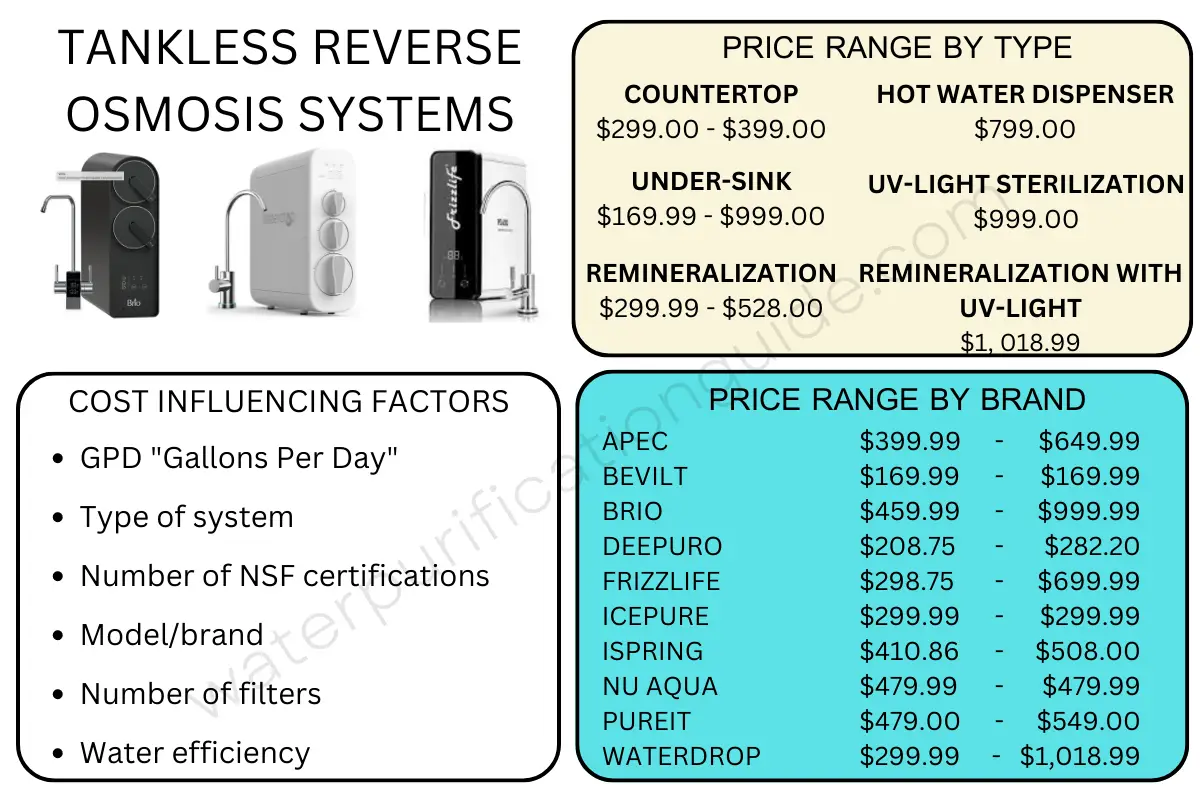 How Much Tankless Reverse Osmosis Systems Really Cost - Water
The Café Verdict: Should You Buy It?
If you’re at a café right now reading this—stop, sip your tap water, and smile. For everyday drinking, a simple activated carbon filter (like a Brita) removes the bad taste for pennies a gallon. It’s the Goldilocks of water: not too naked, not too questionable.
Spend the extra money on something that actually brings joy, like a bag of chips or a lottery ticket. Unless you’re a coffee snob who uses RO water for perfect extraction—then sure, go ahead and buy the pricey jug. Just know your coffee is now more high-maintenance than a houseplant.
The Bottom Line
Reverse osmosis water costs $0.10 to $4.00 per gallon, depending on how much theater you want. Home systems are cheap per gallon but wasteful and fiddly. Bottled RO is a luxury product for people who fear minerals.
In the end, the real cost of RO water isn’t the price—it’s the emotional baggage of worrying about water purity. So fill your glass, take a deep breath, and remember: water is water. Unless it’s from a rusty pipe in a horror movie. Then, maybe splurge on the fancy stuff.
