How Much Is An Average Water Bill

So, picture this: last Tuesday, I got my mail, flipped through the usual junk, and then—bam. There it was. The water bill. My eyes actually bugged out for a second because the...

So, picture this: last Tuesday, I got my mail, flipped through the usual junk, and then—bam. There it was. The water bill. My eyes actually bugged out for a second because the number looked like a small car payment. I stood there in the kitchen, holding the paper like it was a crime scene photo, whispering, “What did I do? Did I leave the hose on for a week?”
Nope. I just… used water. You know, for showers, dishes, and the occasional desperate houseplant drenching. That’s when it hit me: most of us have no clue what “normal” even looks like for a water bill. We just pay it, grumble, and move on. But let’s pull back the curtain, shall we?
The Cold, Hard, Wet Truth
Okay, whip out your phone’s calculator (or just nod along). On average, a U.S. household spends about $40 to $60 per month on water. That’s for a family of four using around 12,000 gallons a year. Sounds like a lot, right? It’s less than your Netflix, Wi-Fi, and coffee addiction combined.
Must Read
But here’s the kicker: that number is a lie—a cute, national average lie. Where you live is the real boss. If you’re in a place like Chicago or Seattle, you might be paying closer to $30. Lucky you. But if you’re in Santa Fe or Tucson? Bend over. Those bills can hit $80 to $100 monthly because water is scarcer than a good parking spot.
And don’t get me started on Sewer fees. Newsflash: you’re paying for the water that goes down the drain too. Sewer charges are often tacked on, doubling your bill. So that “$45” water line? It’s actually a $90 punch in the gut. Fun, right?
What’s Eating Your Wallet?
Let’s break down the bill like a detective. You’ve got a base charge ($10-$15) just for being connected to the pipes. Think of it as rent for the privilege of having a toilet. Then, you pay per gallon used—typically $0.004 to $0.009 per gallon. That’s pennies, but they add up faster than your kid’s summer water balloon fights.
The biggest culprit? Outdoor watering. If you’re the neighbor with the emerald lawn in July, your bill can triple. I’m looking at you, Bob. Next is old toilets. A leaky toilet can waste 200 gallons a day. That’s like flushing $50 down the bowl each month. Fix the flapper, Bob. Please.
 Average Water Bill By State In The Us For 2024 – YWJYT
And then there’s your water heater. It doesn’t show up on the water bill directly, but heating water eats electricity or gas. So a long shower costs you twice: once for the water, once for the heat. Irony is a wet blanket.
How to Stop Bleeding Cash
You don’t need to live like a desert hermit. Start with one simple trick: check for leaks. A dripping faucet can waste 3,000 gallons a year—that’s about $30 extra. Fix it with a $2 washer. Your future self will high-five you.
Second, install low-flow fixtures. Showerheads and faucet aerators cost like $15 and can cut your usage by 30%. That’s the difference between a $60 bill and a $42 bill. Buy yourself a pizza with the savings. You earned it.
Third, wash full loads. Half-empty dishwasher or laundry runs are just money going down the drain. Wait until you have a full basket. Unless you’re running a hotel, nobody needs their socks washed daily. Relax.
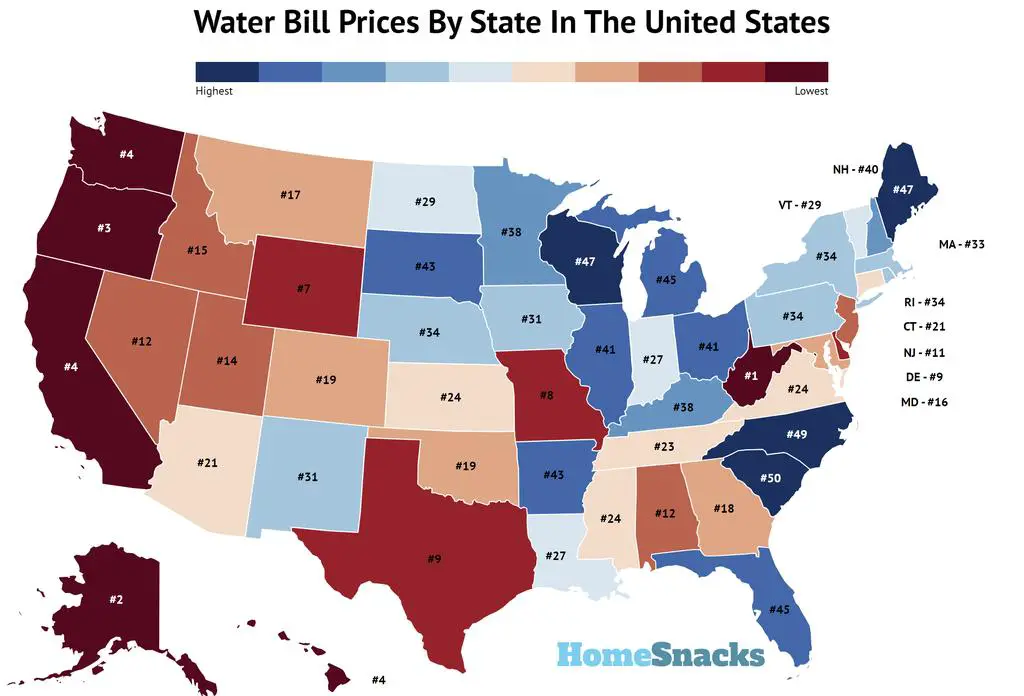 Water Utility Rates By State _ Water Bills By Month – QKCS
The Wild Card: Location, Location, Location
I mentioned this, but it bears repeating. Water bills are local taxes in disguise. In Atlanta, they charge for stormwater runoff—yes, rain tax. In Phoenix, they’ve got tiered pricing that punishes pool fillers. And in parts of Texas? Your bill includes a fee to clean up fracking dust. Seriously.
So, call your city’s utility office. Ask them: “Hey, what’s the average bill here?” They’ll tell you. Or just stalk your neighbors’ trash cans for their bills. I’m joking. Mostly.
To wrap this up: your average water bill is whatever your local water god demands that month. National averages are a nice bedtime story, but your real number depends on your leaky toilet, your lawn addiction, and whether your town decided to build a new reservoir. Expect $40-$100 total (water + sewer). If it’s over $120? Start snooping. Check your meter at midnight. Do a dance. Call a plumber.
Now go drink some tap water. It’s basically free. You’re welcome.
