Does Well Water Contain Fluoride

So, you’ve got well water. Welcome to the club of folks who know exactly where their H2O comes from—usually a pipe buried in the backyard that sounds like a grumpy dinosaur wh...

So, you’ve got well water. Welcome to the club of folks who know exactly where their H2O comes from—usually a pipe buried in the backyard that sounds like a grumpy dinosaur when it kicks on. You’re also probably wondering, “Does my well water have the same fluoride stuff the town puts in their tap?” It’s a fair question, right up there with “Why does my basement smell like a wet rock?” Let’s dig into it, no hard-hat required.
The Short Answer: It Depends on Where You Live
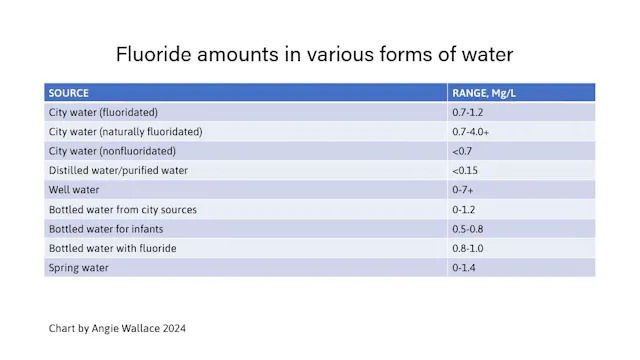
Here’s the thing: fluoride in well water is not a given. It’s entirely up to Mother Nature and the rocks your well punches through. Think of your well as a straw that sips from a giant underground milkshake called an aquifer.
Some aquifers are naturally sweetened with fluoride-rich minerals like fluorite. Others are as neutral as plain toast. You could drill fifty feet away and get wildly different results—it’s the geological version of “your mileage may vary.”
Must Read
The Great Groundwater Lottery
I once helped a buddy test his well in upstate New York. He was convinced his water was “pure mountain dew.” We got the results back, and it had zero fluoride. Meanwhile, my cousin in Texas has well water so loaded with fluoride, it could double as a low-grade dental rinse. It’s like comparing tap water from New York City to a spring in the Ozarks—both wet, both drinkable, but one might put a shine on your teeth.
The only way to know for sure is to test your water. Guessing is for picking a movie on Netflix, not for your family’s enamel. You can order a simple test kit online or call your county extension office—they’re like the DMV for dirt, but friendlier.
Why It Matters (Besides Bragging Rights)
Fluoride is that quiet hero in your toothpaste that fights cavities. Public water systems add it at about 0.7 parts per million—roughly the same concentration as a drop of food coloring in a swimming pool. Well water can have way more or way less. Too much, and you risk dental fluorosis (white spots on teeth—think of it as a polka-dot smile). Too little, and your dentist might start sending you passive-aggressive postcards.
If your well water is low in fluoride, don’t panic. You’re not doomed to a life of root canals. Just ask your dentist about fluoride supplements or use a fluoride mouthwash. It’s like giving your teeth a little love tap—easy, cheap, and way better than drilling holes.
 Fluoride In Your Well Water - Print Version – Idaho Health Tools
The “Organic” Argument (Anecdote Alert)
I had a neighbor who insisted his well water was “chemical-free” because it came from the ground. He was half-right. But guess what? Fluoride is a naturally occurring mineral. It’s in soil, rocks, even some vegetables. So “natural” doesn’t mean fluoride-free—it just means your water is old enough to have its own personality. My neighbor’s water was so hard, it could probably file a tax return. But fluoride? Barely a trace.
The moral of the story: don’t assume “well” means “pure” or “fluoride-free.” It’s a mixed bag, like a box of chocolates where you might bite into a cavity or a cavity-fighter.
How to Test Without Losing Your Mind
Grab a sterile bottle from a hardware store—they’re about the size of a water bottle, but shinier. Follow the instructions like you’re building IKEA furniture, but actually read them. Send the sample to a lab. Most results come back in a week, and you’ll get a neat little report that tells you fluoride levels, plus other cool stuff like arsenic (don’t freak out—it’s usually trace).
Your state’s health department often offers free or cheap testing for things like bacteria and nitrates. Fluoride might cost an extra ten bucks, but it’s cheaper than a dental crown. Plus, you’ll finally have an answer to that awkward question at parties: “So, what’s your water’s deal?”
 Fluoride: What’s new, what’s not, and what do dental patients need to
What If It’s High? Chill Out
If your well water has sky-high fluoride—say, over 2.0 parts per million—you have options. Don’t relocate to the desert. You can install a reverse osmosis system under your sink, which is like a tiny water-wizard that filters out fluoride (and other minerals) with zero magic, just science. It’s about the size of a shoe box and costs a few hundred bucks.
Or you can just buy bottled water for drinking and use the well water for everything else. I knew a guy who did that, and his dogs drank from the tap with zero issues. The dogs had great teeth, though—they chewed bones, so it balanced out.
The Final Sip
Look, whether your well water contains fluoride is a “maybe” wrapped in a “test it and see.” It’s not a disaster either way. It’s just water doing its earthy thing, picking up souvenirs from the rocks it visits. So pour a glass, take a sip, and raise it to your health—and your dentist’s retirement fund.
And if someone asks you about well water fluoride at a barbecue, just smile, nod, and say, “It’s complicated, like my relationship with the local plumber.” That’ll buy you enough time to grab another burger.
