Does Bottled Water Have Chlorine

So, you’re standing in the grocery aisle, staring at a sleek plastic bottle of water. You’ve heard all the hype about “pure” and “natural,” but a tiny question nags at you: do...
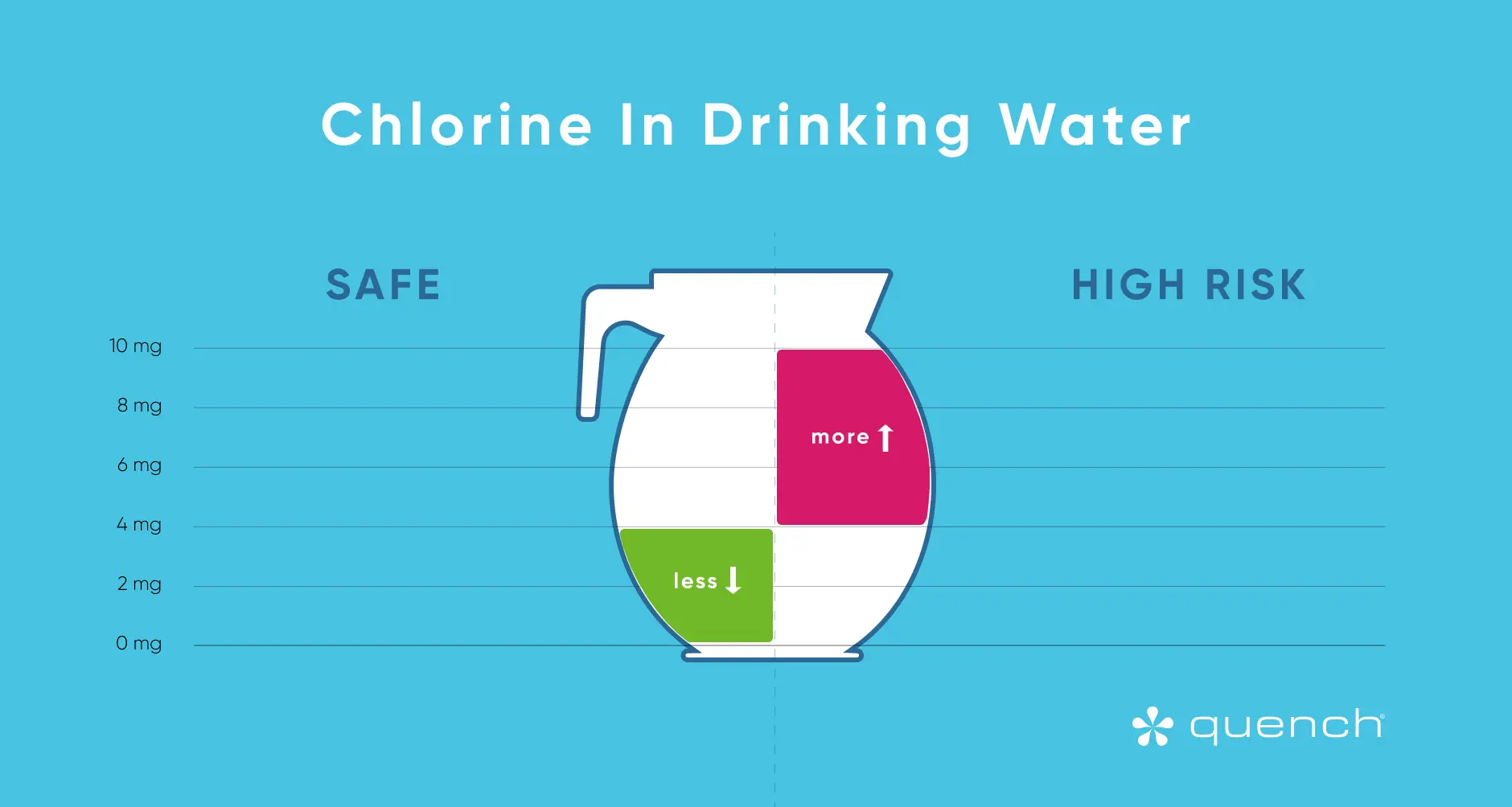
So, you’re standing in the grocery aisle, staring at a sleek plastic bottle of water. You’ve heard all the hype about “pure” and “natural,” but a tiny question nags at you: does bottled water have chlorine in it? You’re not alone in wondering—it’s a sneaky little thought that pops up when you take that first sip.
Here’s the short, friendly answer: most bottled water does not contain chlorine, but it’s not quite that simple. Wait, don’t roll your eyes yet—this is actually way more interesting than it sounds. Let’s dive in like a curious dolphin.
The Tap Water vs. Bottle Water Showdown
First, let’s talk about tap water, because that’s where chlorine usually hangs out. Cities add chlorine to tap water to kill nasty germs—it’s like a tiny, invisible bodyguard for your drinking supply. You can sometimes smell it, especially if you’ve ever taken a hot shower and caught that faint “pool party” scent.
Must Read
Bottled water, on the other hand, is a different beast. Most brands source their water from springs, wells, or even municipal supplies, but they treat it differently. They don’t need chlorine because they use other methods—like ozone, ultraviolet light, or reverse osmosis—to keep it clean. These are like the James Bond of water purification: sleek, high-tech, and chlorine-free.
So, if you grab a bottle of Dasani or Aquafina, you’re probably sipping water that has zero added chlorine. It feels like a small victory, doesn’t it? But wait—there’s a twist.
Why Some Bottled Waters Might Have Chlorine (Surprise!)
Here’s where it gets fun: some bottled waters are just tap water in disguise. Yep, brands like Nestlé Pure Life or store brands sometimes use municipal tap water as their source. They treat it, but they might not remove all the chlorine if it’s already present.
Think of it like baking a cake with store-bought flour—you might still get a tiny speck of bran in the mix. It’s not dangerous, but it’s there. Chlorine levels in these waters are usually super low—often below 2 parts per million, which is less than what’s in your tap water. You’d need a lab to detect it, and your taste buds probably won’t notice.
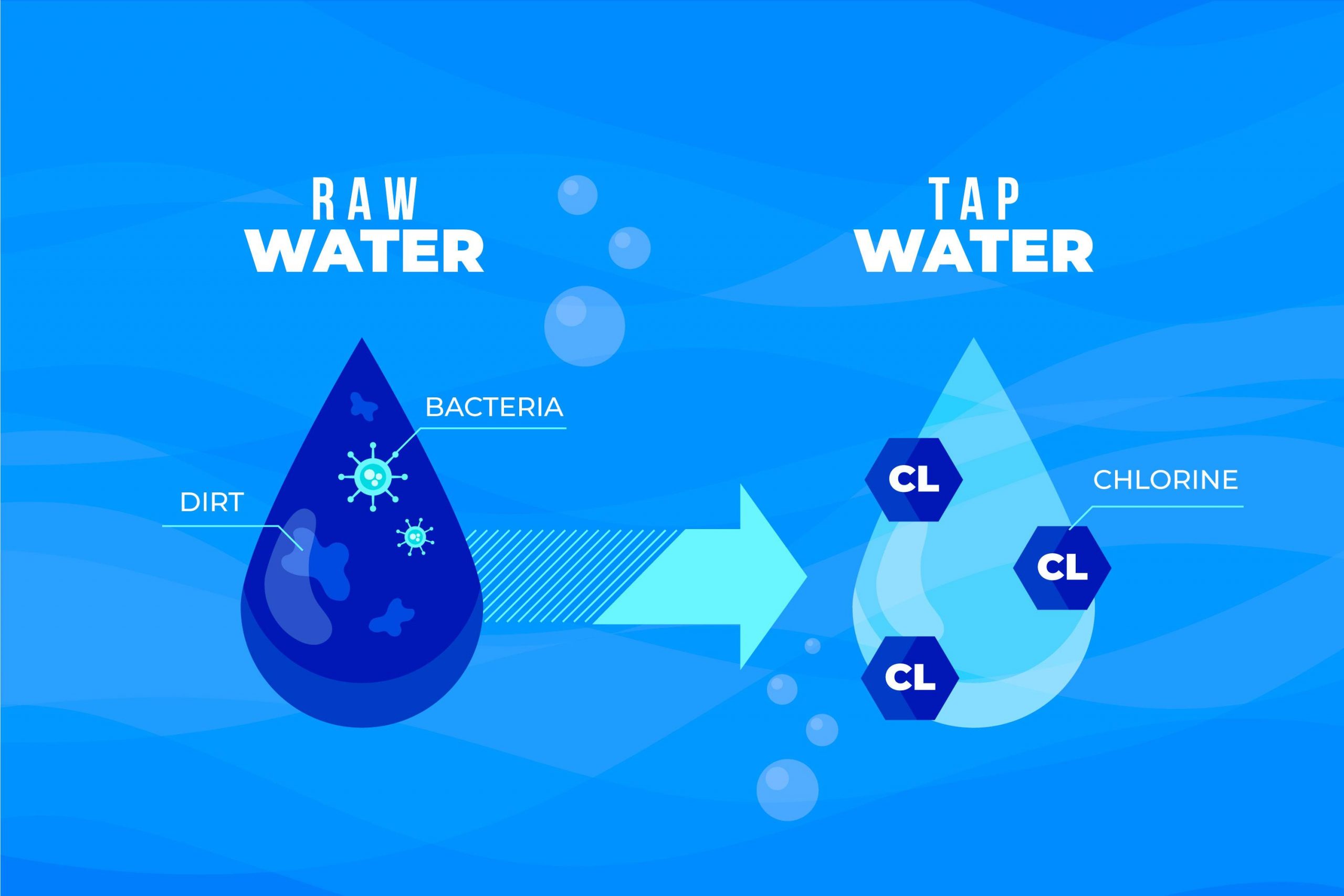 Chlorine in Drinking water – PURE WATER
But here’s the cool part: most premium brands (like Evian, Fiji, or Mountain Valley) come from deep springs or aquifers where chlorine has never even visited. These waters are naturally filtered through ancient rock layers, giving them a unique mineral profile. It’s like comparing a mountain stream to a swimming pool—one is wild and free, the other is just trying to stay clean.
The Real Question: Should You Care?
Honestly, for most of us, a little leftover chlorine won’t ruin your day. Your body is already great at handling it—your stomach acid is way stronger than any pool chemical. But if you’re super sensitive to the taste or smell, you might want to check the label for words like “purified” or “distilled” because those are usually chlorine-free.
Fun fact: some people actually prefer the faint chlorine taste because it reminds them of “clean” water. Wild, right? It’s like how some folks love the smell of gasoline or rain on pavement—our brains are weirdly nostalgic.
And if you’re worried about health? Don’t be. The World Health Organization says chlorine levels in drinking water (tap or bottled) are safe. You’d have to chug a gallon of untreated pool water to feel bad—and that’s more about the other chemicals, not just chlorine.
 Best Bottled Water With Low or No Chlorine - How To Filter
A Fun Comparison: Water as a Social Butterfly
Imagine water molecules at a party. Tap water brings its buddy Chlorine along because—let’s be real—it’s chaotic out there (germs everywhere!). But bottled water is the introvert who filters out the noise and hangs with minerals like calcium and magnesium instead. Some brands even add back tiny amounts of chlorine for “stability,” but it’s like adding a single drop of lemon juice to a whole cake—barely noticeable.
So, next time you twist open a bottle, take a deep breath and ask yourself: Do I smell anything? If not, you’re likely chlorine-free. If you do get a faint whiff, it’s probably not chlorine—it’s just the plastic or the mineral mix playing tricks on your nose.
Bottom Line: Chill Out and Hydrate
Here’s your takeaway: bottled water rarely contains chlorine, and when it does, the levels are laughably tiny. You’re more likely to find chlorine in your morning shower than in that fancy bottle from the gym. So grab your drink, toast to your curiosity, and remember—water is water, and staying hydrated is the real win.
Unless you’re drinking from a garden hose. That’s a different story. But that’s for another post.
