Does Boiling Tap Water Purify It

Picture this: you’re stranded in your own kitchen, staring down a glass of tap water that looks suspiciously like it just came from a crime scene. You remember Grandma’s advic...

Picture this: you’re stranded in your own kitchen, staring down a glass of tap water that looks suspiciously like it just came from a crime scene. You remember Grandma’s advice—“Boil it, and you’ll be fine!”—and you fire up the kettle. But does boiling tap water actually purify it, or are we just making hot, expensive mineral soup?
Let’s start with the good news. Boiling tap water is a rock star at killing microorganisms like bacteria, viruses, and parasites. Most of these little party crashers can’t survive a good, rolling boil for even a minute. Think of it as a sauna for microbes—except they don’t get to leave with a towel; they just disintegrate into oblivion.
The “Bad Stuff” That Laughs at Boiling
Here’s the kicker: boiling does NOT remove chemicals, heavy metals, or dissolved solids like lead, arsenic, or chlorine. If your tap water is carrying a load of toxic souvenirs from old pipes, boiling actually concentrates them. As the water vapor escapes, those nasties stick around like a bad house guest who won’t leave after the party.
Must Read
So if you’re boiling water to remove lead, you’re basically making extra-lead stew—the opposite of purification. And don’t even get me started on microplastics. Boiling might make them more soluble, turning your tea into a cocktail of invisible polymer bits. Yum.
What About Your Kettle’s “White Flakes”?
Ever seen those chalky white flakes floating in your boiled water? That’s calcium carbonate—a mineral deposit from hard water. It’s harmless, but it’s proof that boiling doesn’t remove everything. In fact, it turns dissolved minerals into solid bits that look like snow in your coffee. Great for a winter wonderland, bad for your espresso machine.
In some places, tap water already has chlorine added to kill germs. Boiling can actually vaporize that chlorine, which is a bonus—your water will taste less like a swimming pool. But again, no magic spell for heavy metals or pesticides. You’re just removing the flavor of a pool while keeping the flavor of a landfill.
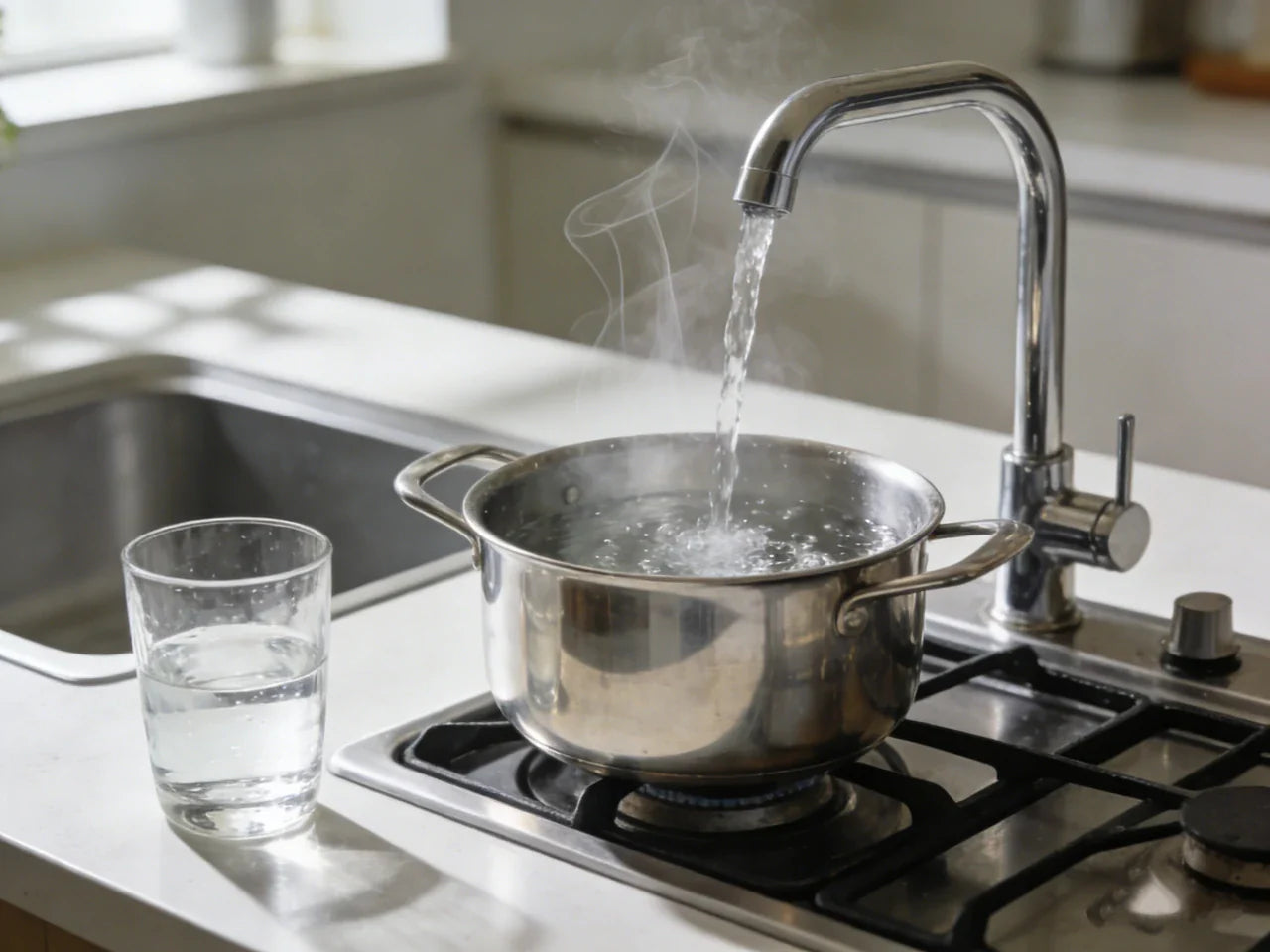 Does Boiling Tap Water Purify It? What Boiling Really Removes—and What
When Boiling IS a Lifesaver
Let’s not trash boiling entirely. If you’re camping and your water comes from a stream that looks like melted raccoon, boiling for at least one minute (or three minutes at high altitude) is your best friend. The U.S. CDC recommends it for emergency situations, like when a hurricane turns your pipes into a biohazard. It’s the gold standard for killing Giardia and Cryptosporidium—two parasites that will make you regret every life choice you’ve ever made.
But for everyday tap water in a modern city? Boiling is overkill unless your local water supply just got a visit from a flood, a sewage backup, or a zombie apocalypse. Most municipal water is already treated and tested. You’re just wasting energy and turning your kitchen into a steam room for no reason.
The Surprising Truth: Boiling Might Make Things Worse
Here’s a wild fact: boiling can increase the concentration of nitrates and fluoride. These chemicals don’t vanish with heat; they just get denser as water evaporates. So if you’re boiling water for your baby’s formula, you could be accidentally giving them a fluoride shot that’s stronger than a dentist’s warning. The American Academy of Pediatrics recommends using cool, fresh tap water (or bottled water) for infant formula, not boiled.
And let’s talk about lead again. If your home has old lead pipes, boiling is like throwing a lead party and inviting everyone to stay. The Environmental Protection Agency warns that boiling doesn’t remove lead—and can actually concentrate it. So that “purified” water you’re sipping? It’s now a lead-heavy, highly concentrated version of what you started with. Cheers?
 Does Boiling Tap Water Purify It? What Boiling Really Removes—and What
So, What Should You Actually Do?
If your tap water is safe to drink already (check your local water quality report), just drink it. Boiling is for emergencies or when you’re trying to impress a friend with a hot beverage. If you’re really worried about chemicals, use a certified water filter—Brita, charcoal, or reverse osmosis. That combo can remove lead, chlorine, and even some pesticides.
And if you’re still paranoid, distillation is the superhero version of boiling: it turns water into steam, then condenses it back into pure H2O. But good luck setting up a distillery in your kitchen without looking like a moonshiner. Most of us don’t have that kind of ambition on a Tuesday.
The Final Sip of Reality
So, does boiling tap water purify it? Only in the microbe-killing sense. For everything else—heavy metals, chemicals, and your ex’s bad karma—you need a different tool. Think of boiling as a bouncer at a club: great at kicking out rowdy bacteria, but useless at removing the smell of cheap perfume and regret.
Next time your kettle boils, ask yourself: “Am I protecting my gut, or just wasting electricity?” If your answer is “I’m making tea,” then boil away. If it’s “I’m trying to save the world from lead,” maybe grab a filter instead. And always, always check the label on your water—because sometime’s, the real purification is knowing when to just buy a bottle of Fiji and call it a day.
