Does Boiling Water Kill Bacteria

So you’re standing at the kitchen sink, staring at a suspiciously cloudy glass of tap water, and you think, “I’ll just boil the living daylights out of this.” But does boiling...
So you’re standing at the kitchen sink, staring at a suspiciously cloudy glass of tap water, and you think, “I’ll just boil the living daylights out of this.” But does boiling water actually kill bacteria, or are we all just wasting electricity and pretending to be chemists? Spoiler alert: Yes, it works—but like a clingy ex, the details are a little more complicated than you remember.
The Science of Sizzle
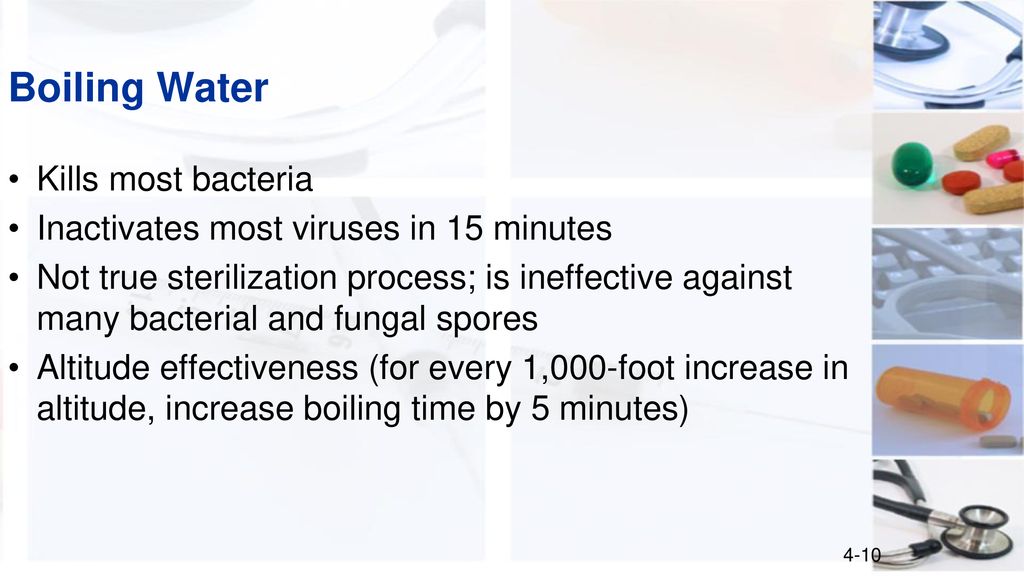
Here’s the short, steamy version: boiling water at 212°F (100°C) is basically a nuclear meltdown for most bacteria. Their proteins denature—think of a chicken egg turning from goo to rubber—and they die a very hot, very final death. Most bacteria can’t survive a full minute at a rolling boil, so your water is safe enough to drink.
But here’s the twist you didn’t order: if you’re camping at 14,000 feet elevation, water boils at a cooler 194°F because the air pressure is lower. That’s like trying to scald a monster with lukewarm bathwater—some hardy bacteria might laugh it off and throw a pool party in your stomach.
Must Read
Time Is a Temperature Tourist
The usual advice from the CDC is to bring water to a rolling boil for one minute, but at high altitudes, you need three minutes. Why? Because science hates fair play. The heat just isn’t as intense up there, so bacteria get a longer goodbye.
But don’t worry—most common waterborne villains like E. coli, Salmonella, and Giardia are total wimps against boiling. Even the CDC’s favorite drama queen, Cryptosporidium, waves the white flag after a few minutes in a hot cauldron. Yes, boiling kills the most stubborn party-crashers, even the ones that survive chlorine.
The One Thing Boiling Won’t Do
Here’s where I drop the mic with a surprise: boiling kills bacteria, but it doesn’t remove toxins. If your water is already full of bacterial poop (yes, that’s a technical term), the heat kills the critters, but those dead bodies and their chemical toxins are still floating in your mug. You’re basically drinking a ghost town.
Also, if your water is swimming in heavy metals like lead or arsenic, boiling will actually concentrate them as steam escapes. So you’re not purifying; you’re just making a toxic soup with a fancy broth. Don’t be that person who boils a pond full of rusty nails and calls it “mineral water.”
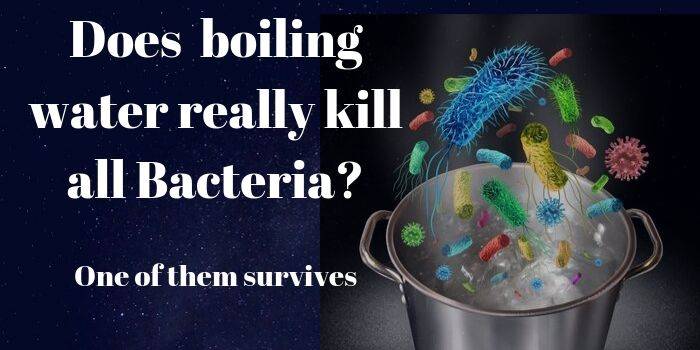 Which Bacteria survive Boiling Water and for How Long?
What About Amoebas and Viruses?
Just when you thought you were safe, enter the amoebas: single-celled jerks that love warm water. Naegleria fowleri, the brain-eating amoeba, is notoriously heat-tolerant—but it cannot survive a proper boil either. However—and this is the fun part—amoebas are more likely to live in warm, untreated water, like a forgotten kiddie pool than your kettle.
Viruses like norovirus? Boiling turns them into a sad, inactive glob. Even the hardy hepatitis A virus throws in the towel at 212°F. The only thing that survives boiling water is your neighbor’s opinion about how to brew tea. That, unfortunately, is heat-proof.
Should You Boil Everything?
Let’s be real: unless you live in a post-apocalyptic world or a trailer park with a rusty well, boiling tap water is overkill. Municipal water systems already kill bacteria with chlorine and filtration. But if you’re hiking, camping, or your plumbing looks like a haunted labyrinth, boiling is your cheapest, most reliable friend.
And here’s a funny fact: you don’t even need to see the water “rolling” for it to work. The instant you see a steady stream of bubbles breaking the surface, the temperature is high enough to kill bacteria. So stop staring at your kettle like it owes you money—it’s doing fine.
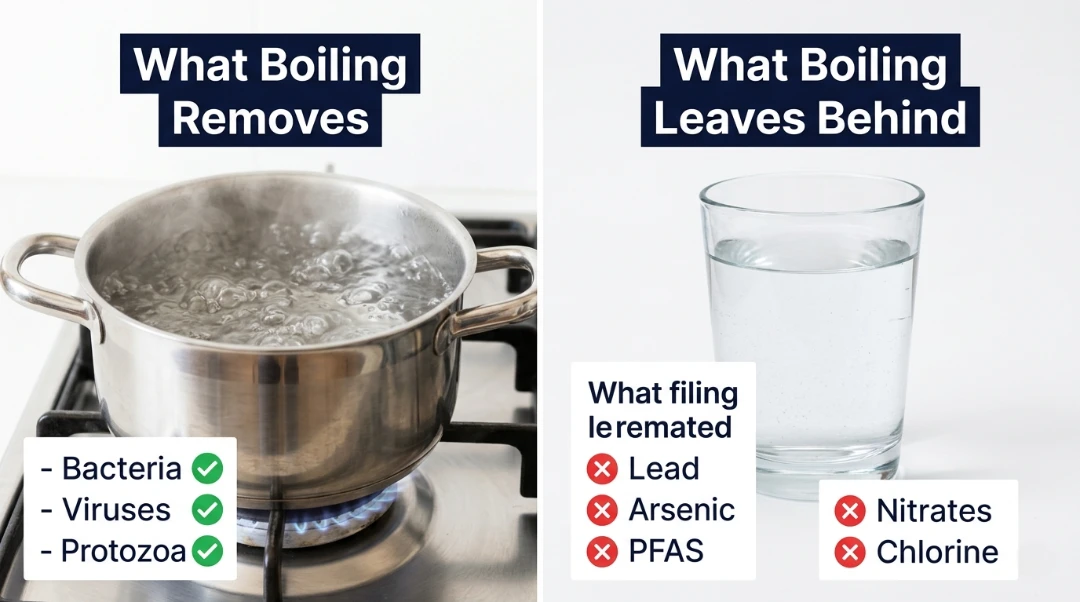 Does Boiling Water Kill Everything? What You Need to Know
The Exaggeration Zone
There’s an old myth that boiling water for ten minutes makes it “extra sterile.” That’s like cooking a steak for six hours because you’re scared of raw meat—you’re just wasting fuel and making everything taste like steam. One minute at a boil is all you need, unless you’re on Everest, in which case congratulations—you have bigger problems than bacteria.
So next time a friend says, “I always boil my water for ten minutes, just to be safe,” you can smile, sip your actual coffee, and say, “Actually, one minute is enough—but I admire your commitment to the performance.” You’ll sound smart, and they’ll wonder if you’re a secret microbiologist.
The Verdict
Boiling water does kill bacteria, yes. It’s the oldest, most underrated hero in your kitchen. But remember: it doesn’t fix toxic chemicals, dead microbe leftovers, or bad taste. Use it when you need to, and don’t over-boil your water like it’s a Thanksgiving turkey.
Now go forth, boil something, and impress your friends with the phrase “thermal denaturation.” They won’t know what it means, but they’ll be weirdly impressed. And if nothing else, you’ll have a perfectly safe cup of tea—which, let’s be honest, is the real victory.
