Does Reverse Osmosis Remove Pfas

Alright, let’s talk about PFAS. You know, those “forever chemicals” that sound like they belong in a sci-fi movie, not your tap water. They’re everywhere—non-stick pans, rain...
Alright, let’s talk about PFAS. You know, those “forever chemicals” that sound like they belong in a sci-fi movie, not your tap water. They’re everywhere—non-stick pans, rain jackets, even that pizza box you just recycled.
So, can you really kick them out of your drinking water? Is reverse osmosis (RO) the hero here, or just another gadget gathering dust? Grab a comfy chair—let’s geek out on this together.
What’s the Deal with PFAS, Anyway?
PFAS stands for per- and polyfluoroalkyl substances—a mouthful, right? Think of them as tiny, stubborn ninjas that refuse to break down in nature or your body.
Must Read
Scientists have linked them to some not-so-fun health stuff, like hormone messing and immune system nagging. That’s why figuring out how to remove them is kind of a big deal.
And here’s the kicker: they’re tiny. Like, smaller than most pollutants. So, will your average sink filter even notice them? Let’s dive in.
Enter Reverse Osmosis: The Bouncer of Water Filters
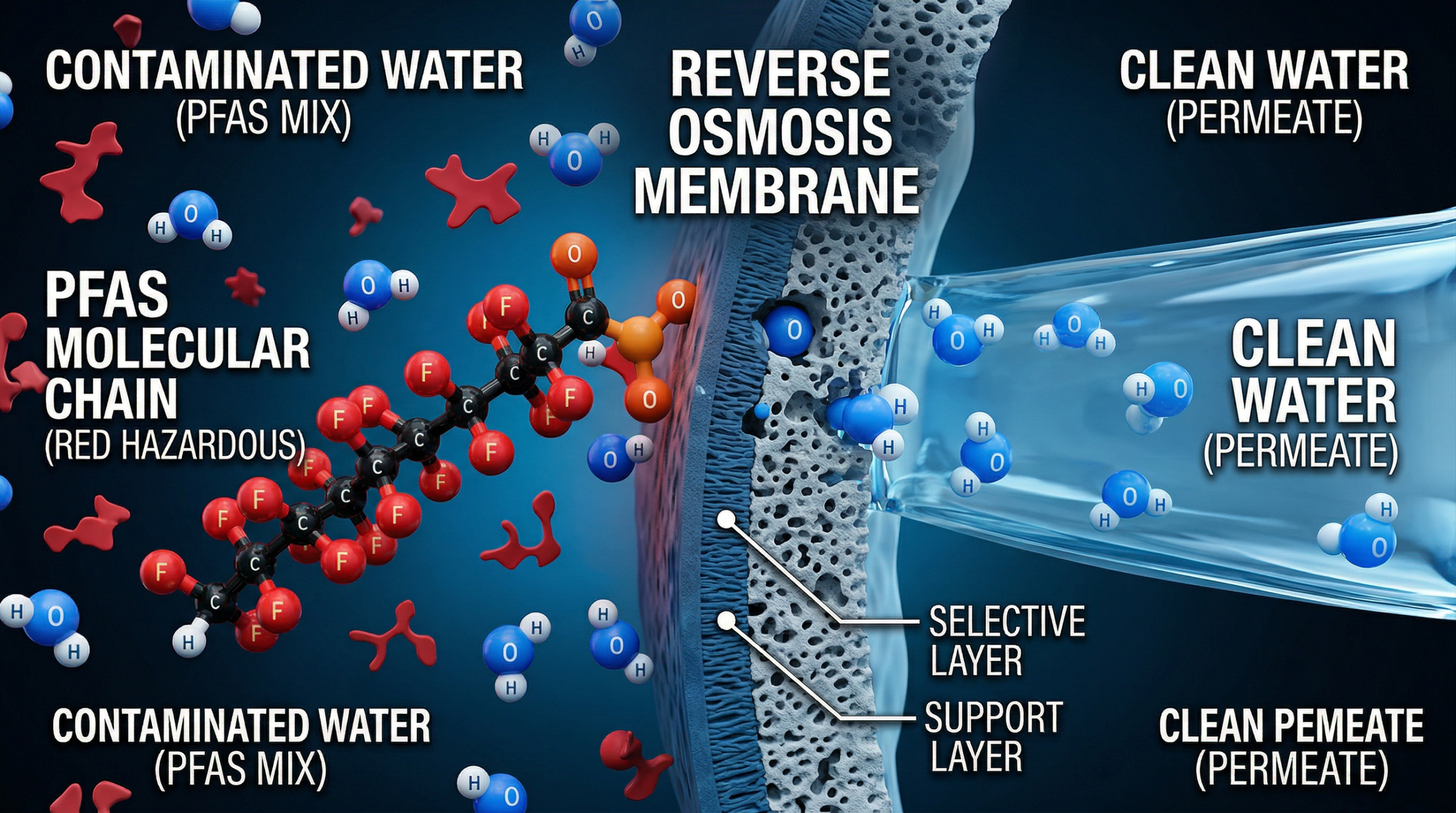
Picture a nightclub where only the coolest molecules get in. Reverse osmosis works kind of like that—it’s a semi-permeable membrane that says, “Nope, not you,” to most contaminants.
Water gets pushed through under pressure, leaving behind salts, metals, and—you guessed it—PFAS. It’s like a velvet rope for your faucet.
But is it magic? Not quite. It’s incredibly effective, but not 100% perfect. Think of it as 99% brilliant—which, honestly, is pretty darn cool.
How Does It Actually Trap Those Forever Chemicals?
RO membranes have pores so small you’d need an electron microscope to see them—roughly 0.0001 microns. For context, a human hair is about 70 microns wide. Yeah, that’s tiny.
PFAS molecules are around 1–2 nanometers, which is still too big to slip through. So the membrane physically blocks them, like a sieve that catches sand but lets water flow.
 Figure 9: How reverse osmosis (RO) removes PFAS from sourc… | Flickr
Plus, RO systems often use activated carbon pre-filters that grab some PFAS before they even hit the membrane. It’s a one-two punch for clean water.
But Wait—Does It Remove All PFAS?
Good question. Studies show RO can remove over 95% of PFAS, including the notorious PFOA and PFOS. That’s a win for your glass of water.
However, those “short-chain” PFAS (the new kids on the block) are a bit sneakier. They’re smaller and sometimes slip past. But RO still outperforms most other home filters, like carbon-only pitchers.
So, is it perfect? Nah. Is it the gold standard for home use? Yes. You’re basically getting lab-grade water for a few bucks a week.
What About the Waste? (Spoiler: It’s Fine)
RO systems do produce “reject water”—the stuff that carries away the PFAS. That’s the dirty water that flushes down the drain. Yep, you’re not drinking that.
Some folks worry about water waste, but modern systems are much smarter. They recycle the reject water for things like watering plants (don’t use it on edibles, though—PFAS don’t play nice).
Plus, a good RO system lasts years. It’s like a faithful water-saving robot that just needs a new filter every 6–12 months. Easy peasy.
So, Should You Get One?
If you’re really worried about PFAS in your tap water, RO is your best bet for home. It’s a bit of an investment (think $150–$500 for a decent unit), but your kidneys will thank you.
 How to Remove PFAS from Water? Can RO Help?
And let’s be real—it’s kind of fascinating how a thin piece of plastic can outsmart chemicals that refuse to decay. Science is wild.
Pair it with a carbon pre-filter and you’ve got a fortress against contamination. Just remember: RO systems need maintenance, so don’t ghost your filters.
What If You Can’t Afford One?
No worries. Distillation and activated carbon blocks (the fancy kind) also remove a decent chunk of PFAS. They’re cheaper and still better than nothing.
Boiling your water? That actually concentrates PFAS—so skip that. Instead, look for granular activated carbon pitchers certified to reduce PFAS (check for NSF/ANSI 53 or 401 labels).
You’re not doomed to forever chemicals. RO is just the coolest tool in the shed—literally, because it uses no heat, barely any electricity, and just pure physics.
The Bottom Line
Reverse osmosis absolutely removes PFAS—like, over 95% of them. It’s not magic, but it’s pretty close to a miracle for your drinking water.
Think of it as a bouncer, a sieve, and a tiny science lab all in one. Your water goes in murky with unknowns, and comes out crisp and nearly pure.
So, next time someone hands you a PFAS-filled raincoat, just smile and pour yourself a glass of RO water. You’ve got the upper hand—and a cleaner glass.
