How Does A Residential Well Work

Imagine you’re at a water park on a hot July day. You don’t think about where all that water comes from—you just expect it to show up. That’s basically how your residential we...

Imagine you’re at a water park on a hot July day. You don’t think about where all that water comes from—you just expect it to show up. That’s basically how your residential well works, except the water park is your backyard, and the crowd is just you trying to brush your teeth.
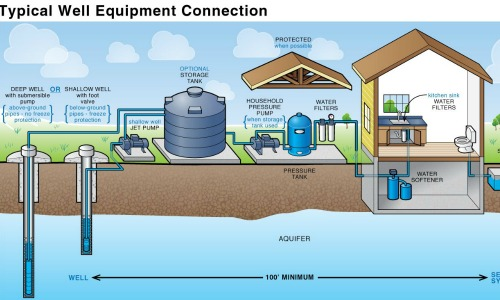
Your well isn’t a magic hole that fills up with a garden hose from the sky. It’s a carefully drilled pipe that reaches down into an underground water reservoir called an aquifer. Think of the aquifer as a giant, soggy sponge hidden fifty to three hundred feet beneath your lawn.
The Drilling: A Really Deep Straw
First, a crew with a massive drill shows up and makes an unholy racket for a day or two. They’re basically shoving a giant, industrial-strength straw into the earth until they hit water. Your neighbors will glare at you, but you’ll be the only one on the block with a private water source.
Must Read
Once they hit the aquifer, they drop in a steel casing (the straw’s outer shell) to keep dirt and rocks from collapsing into your drinking water. It’s like putting a metal sleeve inside your coffee cup so the cardboard doesn’t get soggy. Then they seal the top with a watertight cap to keep bugs, frogs, and lawn fertilizer out.
The Pump: The Heart of the Operation
Down at the bottom of your well, attached to the casing, lives a submersible pump. It’s a motor that sits underwater and acts like a tiny, relentless tractor—pulling water up through the pipe and into your house. If you’ve ever tried to drink a thick milkshake through a skinny straw, you get the idea. The pump works hard.
This pump doesn’t run constantly, thank goodness. It’s triggered by a pressure switch inside your house, which sits in a big metal tank (usually in your basement or crawl space). When you flush the toilet, the pressure drops, and the switch yells, “Hey, pump! Get to work!”
Then the pump kicks on, refills the tank, and shuts off again. It’s like a silent, muscular bouncer—popping in only when the party gets too rowdy.
The Pressure Tank: Your Water Reservoir
You know that tall, blue propane tank next to some houses? A pressure tank looks similar but holds about forty gallons of water and a pocket of compressed air. The air pushes the water through your pipes so you don’t need the pump humming every time you splash a drop.
 An Illustrated Guide to Residential Water Well Systems
Here’s a funny thing—if you ever hear your well pump turning on in the middle of the night, you’re probably “water-poor.” The tank might have a leaky air bladder, or you’ve got a slow-dripping faucet that’s tricking the pump into thinking you just hosted a water balloon fight. That’s when your electric bill gets grumpy.
What About Bad Water?
Your well water comes straight from the earth, which means it can taste like a mineral bath. Some wells pump out water that’s high in iron, turning your bathtub orange. Others have a pinch of sulfur, making your morning coffee smell like a hard-boiled egg (not ideal).
To fix this, you add a water softener or a filtration system. These live in a separate barrel next to your pressure tank. They use salt or a special resin to swap out the nasty minerals for nice, friendly ones. It’s basically a chemistry spa day for every drop that comes into your sink.
The Perks and Quirks of Well Life
Living on a well means you never get a water bill—unless you count the electricity bill for the pump. It also means you have total control over your water quality. No municipal chlorine tang, no weird city-wide shutoffs. You are your own Water Emperor.
But with great power comes great weirdness. Power outages kill your pump, which means no flushing toilets until the lights come back. You’ll become an expert at keeping a stash of gallon jugs under the sink for emergencies. And dry summers? Your pump might start “sucking air,” which sounds like a dying blender and means the aquifer is running low.
 Shallow Water Well Diagram
I once had a neighbor whose well pump died on New Year’s Eve. He spent midnight in his underwear with a flashlight, trying to prime the system. That’s the moment you realize you’re not just a homeowner—you’re a dirt engineer with a muddy hobby.
Little Maintenance, Big Payoff
Most wells only need a yearly checkup: a quick water test for bacteria and a glance at the pressure switch. If you ignore it for five years, the pump might burn out, and that’s a thousand-dollar replacement. Treat it like a pet goldfish that needs a clean bowl every now and then.
Also, test your water every spring—especially after heavy rain. You don’t want to surprise your in-laws with a glass of “rusty mud” when they visit. A simple kit from the hardware store will let you know if your water is more “mountain spring” or “ditch puddle.”
The Big Takeaway
A residential well is a beautifully simple machine: a deep hole, a pump, a tank, and some pipes. It turns a hidden underground lake into your morning shower, your ice cubes, and the perfect pot of pasta water. Sure, it can be finicky, but so is a teenager. At least the well doesn’t complain about your cooking.
So next time you’re brushing your teeth and hear that faint hum from the basement, give a little nod. Your well is working its guts out, pulling a cold, clean sip from a place you’ll never see. And all it asks in return is that you don’t run the hose for four hours straight. Deal?
