How Much Should My Water Bill Be

So, you’ve opened your water bill and now you’re convinced your house has developed a secret second shower that runs only when you’re asleep. Take a breath, put down the pitch...

So, you’ve opened your water bill and now you’re convinced your house has developed a secret second shower that runs only when you’re asleep. Take a breath, put down the pitchfork, and let’s figure out if you’re being robbed by a plumbing gremlin or just paying for all those long, luxurious showers you pretend only last four minutes.
First, the shocking truth: the average American household uses about 300 gallons of water per day. That’s enough to fill a small swimming pool every week, and no, that pool is not for the family dog. It’s for your toilets, your washing machine, and that mysterious 10-minute rinse cycle you do on your “salad bowl” that should probably just be licked clean.
So, how much should you actually pay?
The national median water bill hovers around $40 to $60 per month for a family of four. If you live alone and your bill is $90, you might be watering a secret jungle in your backyard—or you have a leaky toilet that sounds like a tiny, desperate ghost crying every time you flush. Check that flapper valve, my friend.
Must Read
But here’s where it gets weird. Water pricing is like a ransom note from your local utility company. Most charge you a “base fee” just for the privilege of having the pipe, then a tiered rate that punishes you for being too clean. Use less than 4,000 gallons? You’re a hero. Use 10,000? You’re suddenly a water villain paying triple the rate for soaking your lawn like it’s a thirsty celebrity.
The Invisible Leaks That Laugh at Your Wallet
You think you’re careful, but your home is a water-thieving raccoon. A dripping faucet—one drop per second—wastes 3,000 gallons a year. That’s $50 down the drain for zero benefit. Meanwhile, a running toilet can lose 200 gallons a day, which is like flushing a $20 bill every time you pee. Fix that rubber flapper. It costs $5 at the hardware store and saves you the price of a mediocre dinner out.
And let’s talk about your lawn sprinklers. If you water your grass more than 20 minutes a day, you’re not a gardener; you’re a small-scale weather machine. The EPA says landscape irrigation accounts for nearly 9 billion gallons a day in the U.S. That’s enough water to give every American a 7-foot-diameter water balloon. Pop that thought into your head next time you see a neighbor watering at noon in July.
 Average Water Bill In New York City | Explora Madeira
The Wildest Surprise: You’re Probably Paying for Other People’s Water
Your bill often includes “sewer charges” that are calculated based on how much water you used—even if half of it didn’t go down the drain. Water your garden? Guess what: you still pay to treat that water as if it went to a sewage plant. It’s like being charged for a parking spot you never used. This is why some towns offer sewer credits if you install a separate meter for outdoor use. If you don’t ask for it, you’re basically paying taxes to wash your petunias.
Also, brace yourself: your water bill might include a “stormwater fee”. Yes, they charge you for rain. The logic? Rain runs off your roof into drains, which cost money to maintain. So when it pours, you’re paying for your roof’s success. It’s like taxing your umbrella for keeping you dry.
The “Goldilocks” Water Bill Rule
Here’s a simple test: take your monthly bill, divide by the number of people in your house. If it’s over $15 per person, start looking for leaks or rethink that twice-daily bath habit (looking at you, hot-tub owner). If it’s under $10 per person, you’re either a water miser or you’re showering at the gym and pretending you’re fine with it. Own your frugality.
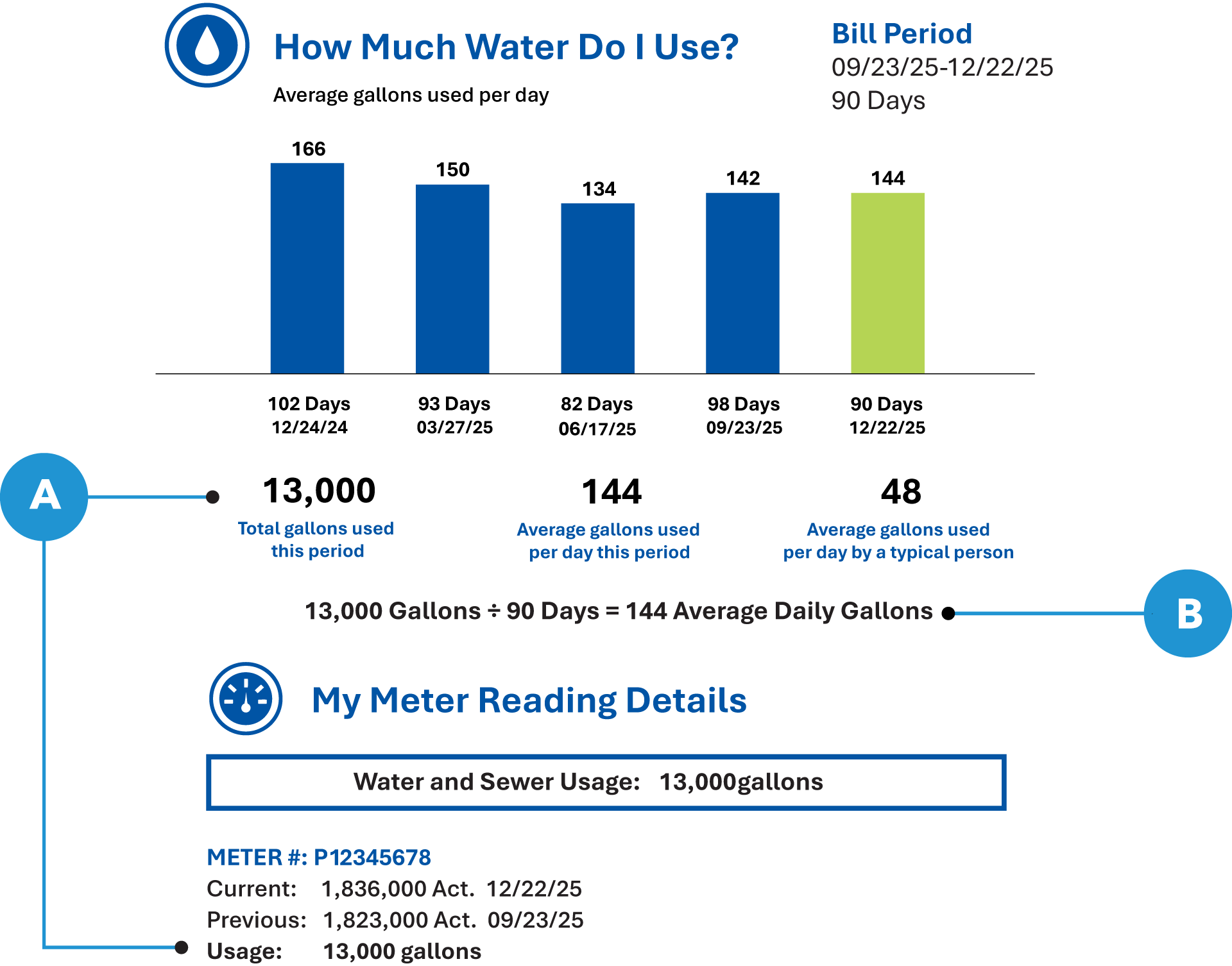 Understanding Your Water Bill | WSSC Water
But beware the seasonal spike. Summer water bills can double because of hoses, kiddie pools, and the sudden urge to make your grass look like a golf course. The average family spends 60% more on water in July than in February. That’s not a mystery—it’s you, standing in the yard with a hose, watering the driveway for 20 minutes while scrolling TikTok. We’ve all done it.
The Final Verdict (and a Little Mercy)
If your water bill is under $70 a month for a family, you’re doing fine. If it’s over $100, you’ve either got a leak, a teenager who takes 45-minute showers, or you’re growing a secret marijuana farm in the attic. (Hey, no judgment—just check the hydro bill while you’re at it.)
The punchline? Most water bills are perfectly reasonable—we just panic because we never look at them until they shout. Check your bill for unexplained increases over three months, and always read the fine print about “franchise fees” and “infrastructure surcharges.” Those are just fancy names for “we need a new pipe, so you’re paying for it.”
So go ahead, take that 10-minute shower. Just don’t let the faucet drip while you brush your teeth, and for the love of all that is liquid, fix that running toilet. Your wallet—and the ghost in your bathroom—will thank you.
