How Much Are Water Bills Monthly

Let’s be honest: no one loves opening their mailbox to find a bill. But the water bill? It’s that quiet friend you forget about until it slides under the door like a polite re...

Let’s be honest: no one loves opening their mailbox to find a bill. But the water bill? It’s that quiet friend you forget about until it slides under the door like a polite reminder. You probably use water dozens of times a day—brushing your teeth, making coffee, washing your lucky jeans—but have you ever stopped to wonder what that monthly slice of life actually costs?
The short answer: most U.S. households pay between $35 and $100 per month for water and sewer service. That’s a wide range, I know—kind of like asking how much a pizza costs. Are we talking a frozen one from the bargain bin or a wood-fired pie with truffle oil? Your water bill depends on where you live, your family size, and how much you love long, steamy showers.
It’s All About Where You Hang Your Hat
Your zip code is the biggest player in this monthly drama. A friend in Atlanta might pay around $90 for a family of four, while a pal in Phoenix could see $70 for the same usage. On the flip side, residents in parts of the Northeast or coastal California sometimes push past $120 a month. Why the difference? Local infrastructure, drought taxes, and the age of the pipes underground.
Must Read
Think of it like gas prices—every town has its own little economic weather system. One city might have old pipes that need constant repairs, while another enjoys a new, efficient plant. You can’t move just for cheaper water (well, you could, but don’t tell your boss that’s why you’re relocating).
How Much Water Does a Real Person Actually Use?
Let’s imagine a typical Tuesday in the life of Jenny, a non-water-hoarding human. She takes a ten-minute shower (hot, feels great), runs the dishwasher once, flushes a few times, and waters her sad little fern. That might be around 80 to 100 gallons per day for her household. Sound like a lot? It is—average American families use over 300 gallons per day for everything from laundry to leaky faucets.
Now, multiply that by 30 days, and you get a ballpark of 2,400 to 4,500 gallons per month. Most water companies charge by the hundred gallons or in “tiers”—the more you use, the higher your rate per gallon. That’s why your bill can jump if you suddenly start filling a kiddie pool or hosing down the driveway every afternoon.
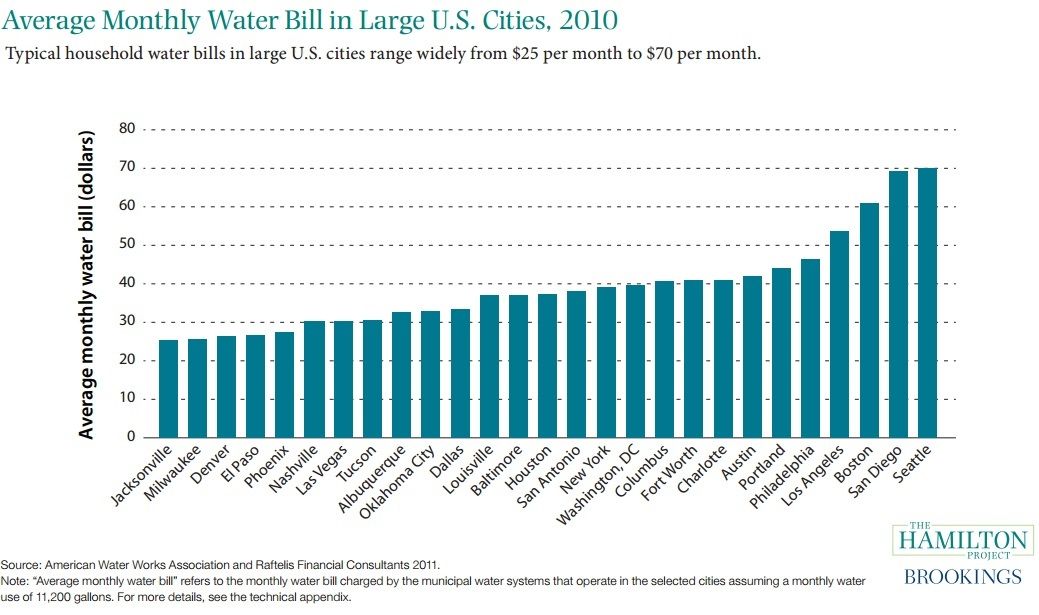 Water Bill Average at Lynda Rahman blog
“Wait, so my bill is like a cell phone plan for water?” Exactly. A little fixed fee to keep the connection alive, plus a variable cost for how much you actually gush. That fixed fee—often $15 to $30—covers the meter reading, the pipe maintenance, and the people who make sure your tap doesn’t run brown. You pay that even if you’re on vacation in Cancún.
The Sneaky Spikes That Make You Gulp
Ever had a month where your water bill was double the usual, and you just shrugged? Don’t shrug. Usually, it’s a silent runner toilet or a dripping faucet that’s slowly filling a swimming pool in your basement. A toilet leak can waste 200 gallons a day—that’s like leaving the hose on for five hours straight. And your meter? It’s counting every single drop.
Seasonal changes are another culprit. In summer, you might water the lawn, fill up the inflatable pool for the kids, and wash the car three times. Suddenly, your bill inches from $50 to $85. It’s not a scam—it’s just physics and biology conspiring against your wallet. But here’s the good news: most leaks are fixable with a $5 washer from the hardware store.
Why Should You Even Care? (Besides the Money)
Okay, we get it: money matters. But water bills are also a tiny mirror reflecting bigger things. When your bill is high, it might mean your household is wasting energy—because pumping and heating water takes electricity, too. Lowering your water usage doesn’t just save dollars; it reduces your carbon footprint by a surprising amount. Plus, it’s a small way to say “I’m being mindful” in a world that often feels too busy to care.
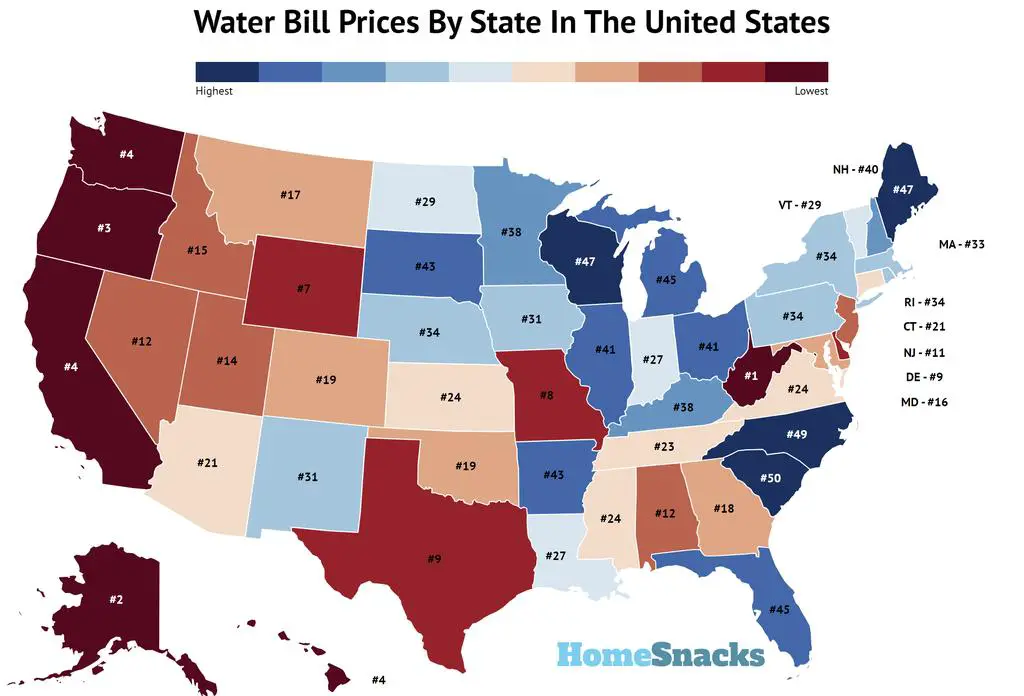 Average Water Bill By State In The US For 2023
And let’s be real—thinking about water can make you feel oddly connected to your community. That pipe under the street? It’s shared with your neighbors, the local bakery, and the school down the block. When you save water, you’re not just being thrifty; you’re spreading a little kindness to the infrastructure that keeps your life from turning into a dusty Mad Max scene.
How to Make Your Bill Less Ouch-y
Start small. Turn off the faucet while you shave—sounds tiny, but saves 3 gallons per minute. Run the washing machine only when you have a full load (I know, I know, laundry is the worst). And put a timer on your shower: five minutes less can save about $15 a month. That’s a fancy latte every week, guilt-free.
If you’re feeling fancy, invest in a low-flow showerhead. They cost about $20 and can cut your water use by 40%. Your morning shower will still feel like a warm hug, I promise. And for goodness’ sake, fix that dripping tap—one drop per second wastes over 3,000 gallons a year. That’s like flushing a toilet 250 times for absolutely no reason.
At the end of the day, your water bill is just a number. But it’s a number that tells a story about your habits, your home, and your little patch of the world. You don’t have to be a water conservation superhero. Just be a curious, slightly annoyed human who notices when the bill looks weird. Because when you care about the cost, you usually end up caring about the resource itself—and that’s a pretty good deal for everyone.
