What Is Cold Brew Vs Iced Coffee

Picture this: It’s a sweltering summer afternoon. You drag yourself to a café, craving a tall glass of caffeine that won’t leave you a sweaty mess. You stare at the menu, and...
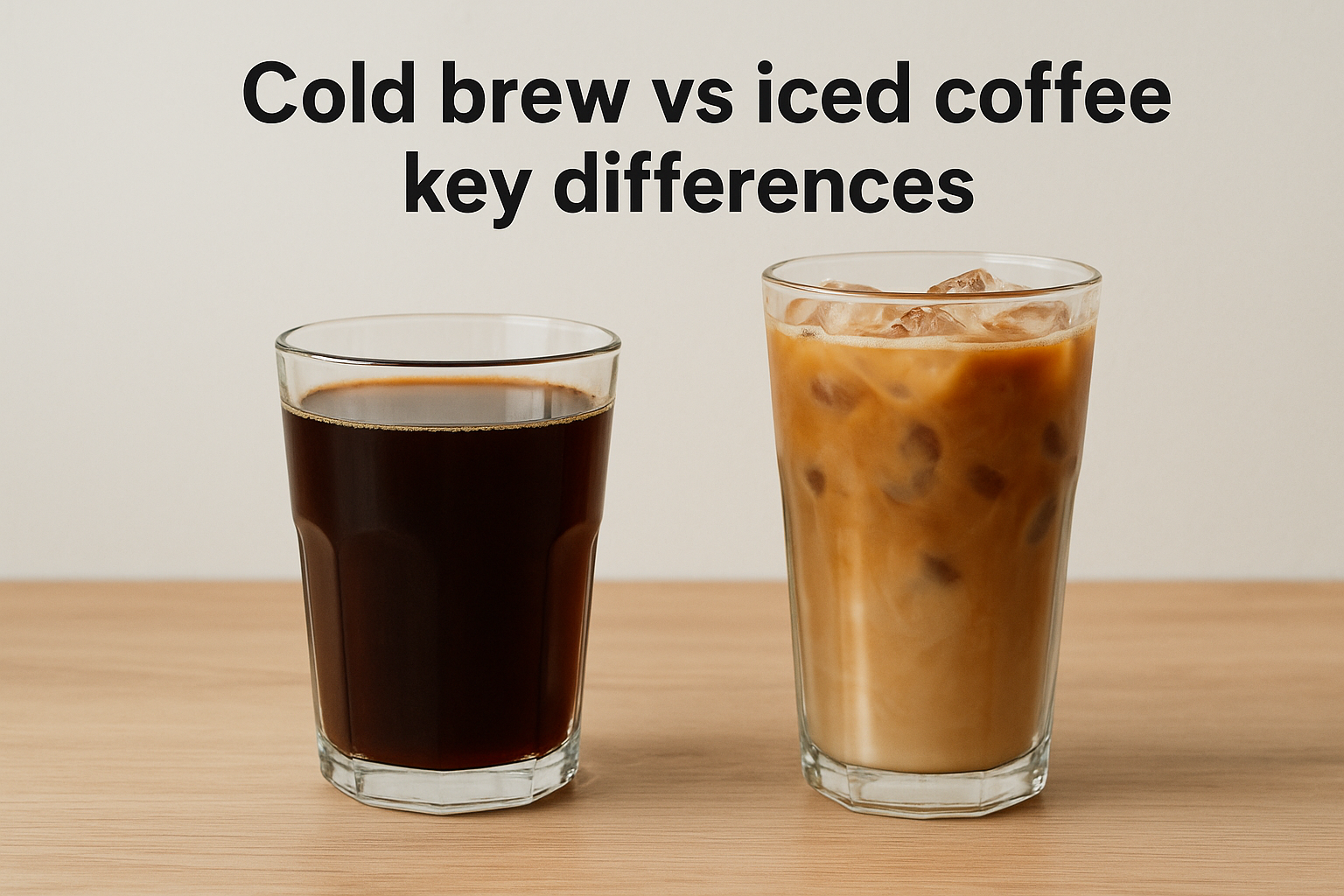
Picture this: It’s a sweltering summer afternoon. You drag yourself to a café, craving a tall glass of caffeine that won’t leave you a sweaty mess. You stare at the menu, and there they are: Cold Brew and Iced Coffee. They look the same, but ordering wrong is like wearing a winter coat to a beach party—technically possible, but deeply foolish.
Let’s clear the fog. Iced coffee is just your regular hot coffee that has been cooled down and poured over ice. Think of it as a breakup: hot emotions that got dumped into a cold, watery situation. Cold brew, on the other hand, is a patient monk of a drink—it never sees heat. It’s made by steeping coffee grounds in cold water for 12 to 24 hours, like a very slow, caffeinated teabag spa treatment.
Why does this matter? Because the taste difference is dramatic. Iced coffee, having been brewed hot, often tastes more acidic and bitter—like a grumpy high school teacher who drank too much lemonade. Cold brew, by contrast, is smooth and mellow. It’s the coffee equivalent of a friendly golden retriever that somehow learned to pour you a cup.
Must Read
The Science of the Sip (No Lab Coat Required)
Here’s the nerdiest fact you’ll read today: heat extracts chemical compounds from coffee grounds faster than cold water. That includes the delicious stuff (oils, caffeine) but also the cranky stuff (acids, bitter tannins). Cold water is picky—it mostly grabs the sweet, chocolatey flavors and leaves the grumpy molecules to sulk in the grounds.
Surprising Fact #1: Despite its gentle nature, cold brew actually has more caffeine than iced coffee—about 20-30% more per ounce. It’s like a ninja in a suit: looks smooth, will knock you out cold. Iced coffee, while still potent, is more of an enthusiastic jogger.
Also, cold brew is concentrated. Most cafés serve it as a concentrate mixed with water or milk. Drink it straight and you’ll vibrate through the ceiling—I once saw a pigeon explode from secondhand buzz. (Okay, that’s an exaggeration, but you get the point.)
Which One Is Your Caffeine Soulmate?
If you’re lazy and impatient, iced coffee is your best friend. You brew coffee the normal way, cool it down, and dump it over ice. It takes maybe five minutes. Perfect for mornings when you’re still wearing one sock and your brain hasn’t booted up yet.
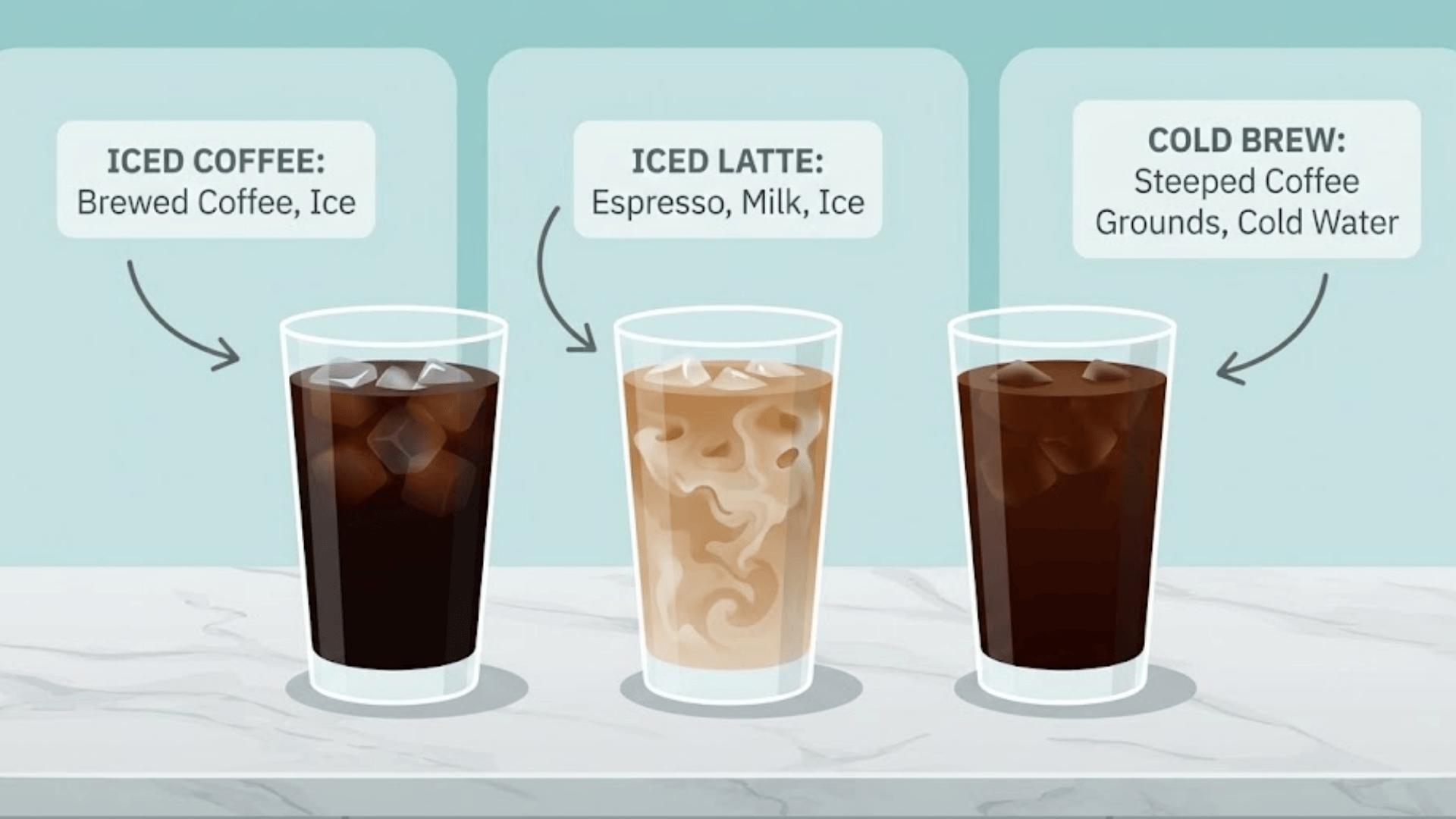 What Is an Iced Latte? Meaning, Taste, and Variations - Eat Thrive Glow
If you’re a planner (or just obsessive), cold brew wins. You need to start the night before, let it steep for 12-24 hours, then strain it. It’s like a relationship with a slow cooker—requires forethought, but the payoff is glorious. I personally set a timer on my phone labeled “Do Not Touch, Coffee Ghost” to keep my curious hands off the jar.
But here’s the trap: not all iced coffee is equal. Some shops make “iced coffee” by just pouring yesterday’s leftovers over ice. That’s not coffee—that’s liquid regret. Real iced coffee should be freshly brewed hot, then chilled quickly to preserve flavor. If your iced coffee tastes like burnt asphalt, they did it wrong.
The Great Dilution Debate
Surprising Fact #2: Iced coffee gets weaker as the ice melts. That’s because the ice dilutes the already-made coffee. Cold brew, being stronger, can handle a melting iceberg without getting watery. It’s like the Hulk of coffee—no amount of thawing damages its power.
Also, cold brew is smoother on your stomach. The low acidity means less heartburn for sensitive souls. Iced coffee, with its hot-acid extraction, can sometimes make your insides feel like a lava lamp. If you’re prone to coffee stomach, cold brew is your savior. Praise the cold beans!
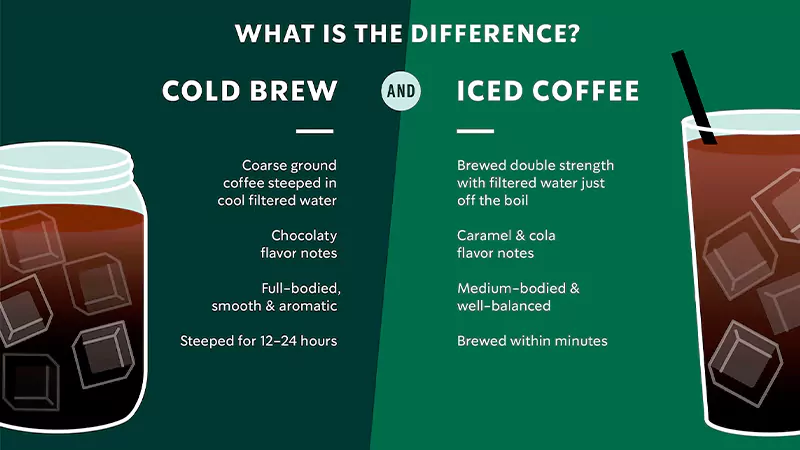 Iced Coffee vs. Cold Brew Coffee: Hvad er den virkelige forskel?
But don’t romanticize cold brew too much. It can be expensive if you buy it premade—some shops charge $6 for a glass that’s mostly ice. Making it at home is cheaper, but you’ll need cheesecloth and the patience of a saint. I once tried straining it with a sock and ended up with a cup of tiny rocks. (Do not try this at home, unless you enjoy dental emergencies.)
Does Temperature Trick You?
Here’s a weird twist: cold brew isn’t always served cold. Some baristas heat it up for a “hot cold brew” (where do they get these names?). That’s fine, but it loses the smoothness advantage. Iced coffee, on the other hand, is always meant to be cold. Serve hot iced coffee and you’ve created a contradiction—or a hipster meltdown.
And what about Nitro Cold Brew? That’s cold brew infused with nitrogen gas, giving it a creamy head like a beer. It’s coffee pretending to be a stout. Drink it and you’ll feel sophisticated, even if you’re wearing pajama pants. I once ordered one and immediately understood the appeal of foamy things—even if I had no clue what nitrogen did. (It’s magic, probably.)
So, the final verdict: Choose iced coffee when you want a quick, bold, familiar kick. Choose cold brew when you want a smooth, potent, almost dessert-like experience that makes you feel like a master of time and chemistry. Either way, you’re getting caffeine. Unless you accidentally order decaf. Then you might as well drink raincloud tears.
Now go forth, order with confidence, and wave away any barista who tries to convince you they’re the same. They are not. They are coffee cousins, not twins. And cousins can be wonderful—as long as you know which one to invite to your morning.
