What Is Deionized Water Used For

So, you’ve heard the term deionized water floating around, and it sounds like something out of a sci-fi lab, right? Maybe you picture scientists in white coats zapping a glass...
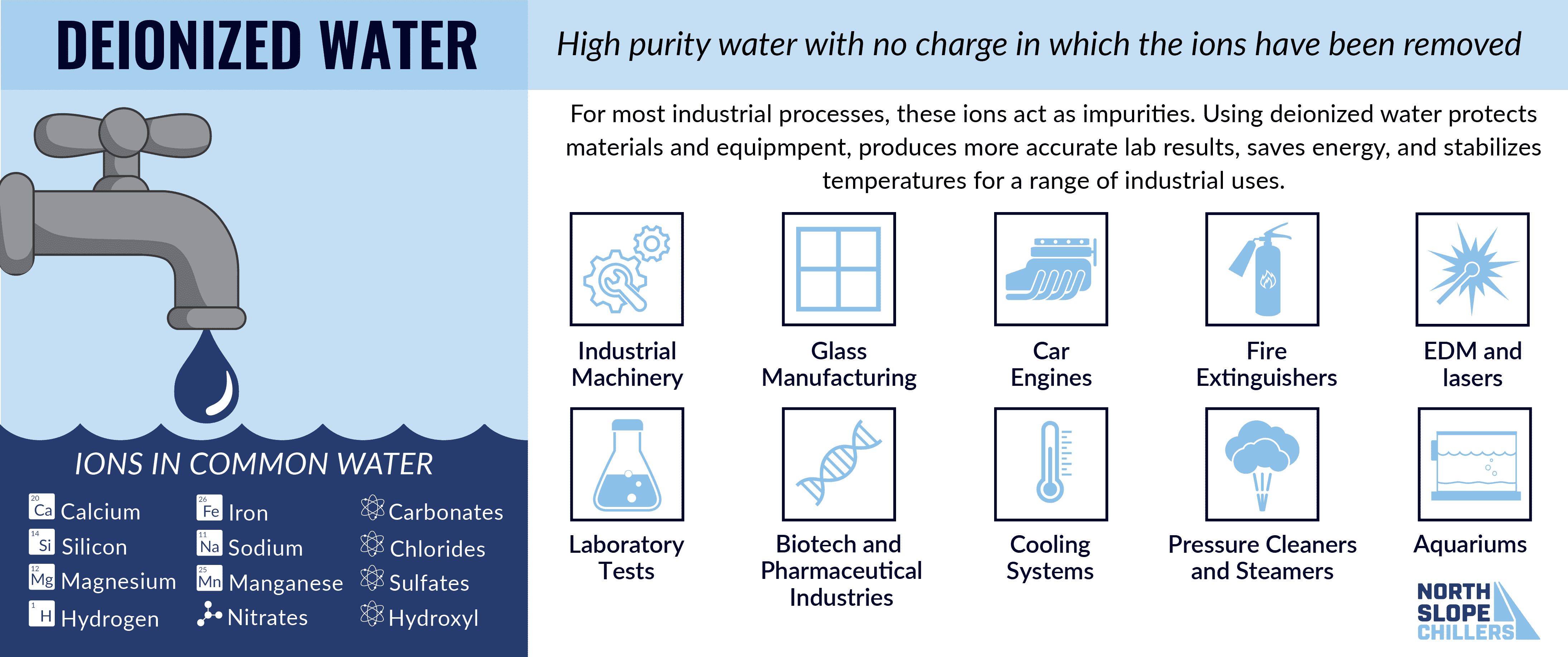
So, you’ve heard the term deionized water floating around, and it sounds like something out of a sci-fi lab, right? Maybe you picture scientists in white coats zapping a glass of H2O with lightning bolts. The truth is actually super chill and a little bit surprising.
What even is it? Well, regular tap water is full of little hitchhikers—minerals like calcium, magnesium, and sodium. Deionized water is simply regular water that has had those hitchhikers removed. It’s like a blank slate for water, totally pure and neutral.
So, what do we actually use this super-pure stuff for? The answers are way cooler than you might think, from washing your car to keeping a nuclear reactor happy. Let’s dive into the weird and wonderful world of DI water.
Must Read
Your Car’s Best Friend (and worst enemy)
Ever washed your car only to find ugly water spots all over the paint after it dries? That’s not the water’s fault—it’s the minerals! Those calcium and magnesium particles get left behind when the water evaporates.
Deionized water is the secret weapon of pro detailers. Because it has nothing in it, it simply evaporates and leaves a spot-free, mirror-like shine. Use it for the final rinse, and you’ll feel like a total genius.
It’s also the same reason you shouldn’t use tap water in your steam iron. Regular water will slowly clog it with mineral scale. DI water keeps it flowing smoothly—like a clean river.
The Science Lab’s Secret Sauce
Walk into any chemistry or biology lab, and you’ll find gallons of deionized water sitting around. It’s the unsung hero of almost every experiment. Why? Because if you’re trying to measure a reaction, you can’t have random minerals messing with the results.
Think of it like baking a delicate soufflé—you wouldn’t want a pinch of random salt that you didn’t add. DI water is the “zero” on the measuring scale for scientists. It ensures that the only thing being tested is the stuff they actually put in the beaker.
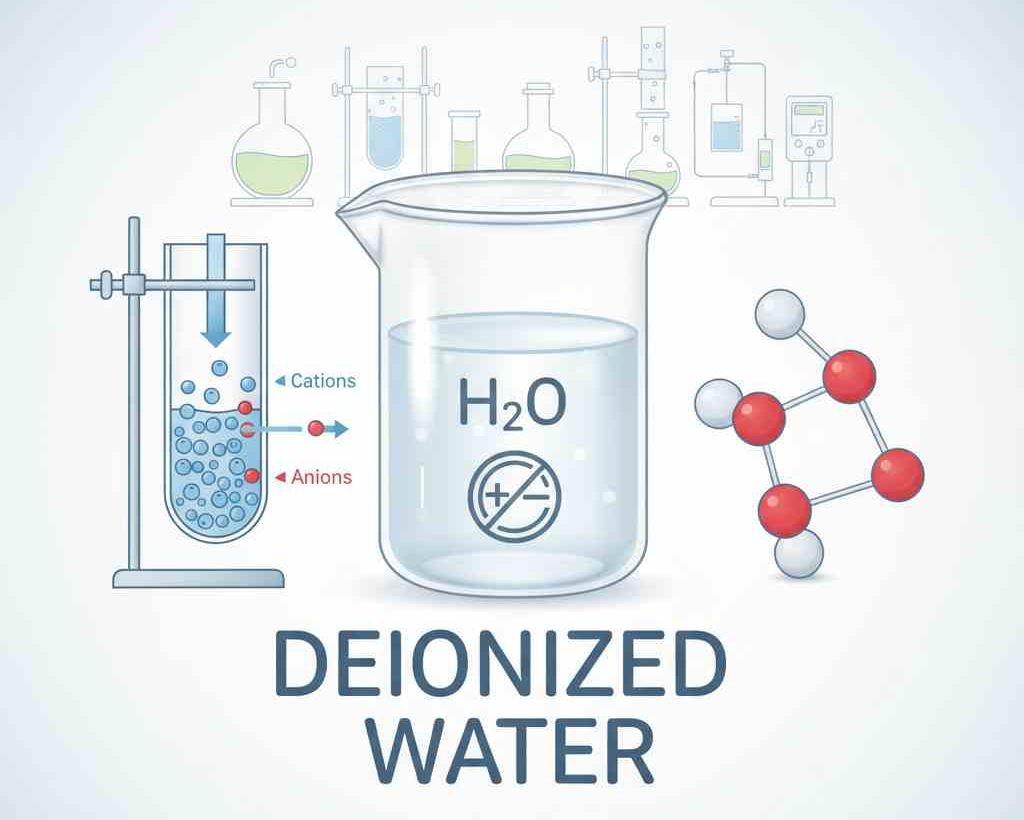 A Guide to Deionized Water: Production, Applications, and Lab Systems
It’s also used to rinse glassware after cleaning. If you’re a total neat freak, you get it. No smears, no residue, just pure clarity.
Battery Juice for Your Ride
Here’s a fun one: your car battery! If you have a traditional lead-acid battery (the kind you can check the fluid level on), you must use deionized water to top it off. Tap water will introduce minerals that can short-circuit the battery’s internal plates over time.
It’s like feeding a racehorse junk food—it might run for a bit, but eventually, it’ll break down. DI water keeps the chemical reaction inside the battery clean and efficient. Think of it as premium fuel for your engine’s little power plant.
Keeping Things Cool (Literally)
Have you ever noticed that your car’s radiator fluid is usually green or orange? That’s a coolant mixture, and the base is almost always deionized water. Regular water would cause rust and mineral deposits inside your engine block—bad news.
Same goes for big industrial cooling systems in factories and data centers. They need water that won’t clog up the pipes or corrode the equipment. DI water is like the calm, reliable friend who never leaves a mess.
If you’ve ever seen a massive server room, those giant AC units use deionized water to keep everything from overheating. Your Instagram feed literally depends on it.
 What Is Demineralized Water? Atlas Scientific, 42% OFF
The Pharmacy and Your Medicine Cabinet
Most liquid medicines you take—cough syrups, eye drops, IV fluids—are mixed with deionized water. It’s the cleanest possible canvas for the active ingredients. You wouldn’t want mystery minerals in your eye drops, right?
Even contact lens solution is mostly DI water. It’s gentle on your eyes because it lacks the irritating minerals found in tap water. It’s like giving your eyeballs a spa treatment.
Food production also uses it for washing fresh produce and making sodas. Have you ever wondered why restaurant soda tastes different? The secret is often filtered or deionized water creating a cleaner flavor.
Is It Safe to Drink?
This is the big question everyone asks. Technically, yes, you can drink it. It won’t hurt you. But it tastes kind of flat and weird because all the minerals that give water its “zip” are gone.
However, drinking only deionized water for a long time isn’t great for your teeth or body. You actually want those trace minerals in your daily hydration. So, stick to tap water for drinking, and save the DI water for the cool stuff—like making your car look amazing.
Final thought: Deionized water is the invisible hand that keeps our world running smoothly. It’s in your lab, your car, your batteries, and even your medicine. Not bad for something that’s basically just water with all the personality removed, huh?
