How To Decrease Chlorine In Pool

Last summer, my neighbor Dave decided to “shock” his pool right before a party. He poured in so much chlorine that the water looked like a giant, terrifying blue slushie. When...

Last summer, my neighbor Dave decided to “shock” his pool right before a party. He poured in so much chlorine that the water looked like a giant, terrifying blue slushie. When his niece, Lily, jumped in, she came out looking like a peeled shrimp and smelled like a hospital laundry room.
Dave spent the whole party apologizing while people used his garden hose to rinse off. His pool was a biohazard, not a backyard oasis. That’s when I realized: knowing how to decrease chlorine is just as important as knowing how to add it.
Maybe you’ve been there. You test the water, see that eye-watering purple result, and panic. Don’t worry—I’ve got your back (and your eyes). Let’s fix this, one splash at a time.
Must Read
Why Is Your Pool a Toxic Soup?
Chlorine levels spike for stupid reasons sometimes. You shocked too hard, the stabilizer got eaten by UV rays, or maybe the pool store sold you a “super tablet” that was basically a chemical grenade.
Remember: high chlorine isn’t the end of the world—it’s just annoying. Your skin will itch, your swimsuit will fade, and you’ll smell like a YMCA from 1987. But we can fix that.
Method #1: The Sun Is Your Free Friend
If you have a sunny day, do nothing. Seriously. Direct sunlight breaks down chlorine naturally—a process called photolysis. It’s basically nature’s “undo” button.
Just take off the pool cover, let the sun bake the water for 4 to 6 hours, and test again. It feels weird to ignore the problem, doesn’t it? But it works.
If you’re impatient, add a non-stabilized chlorine reducer (sodium thiosulfate). But honestly? Let the sun do the work while you drink an iced tea. Your pool doesn’t need a chemical intervention every time.
Method #2: The Hydrogen Peroxide Trick
This sounds like a science experiment, but hydrogen peroxide neutralizes chlorine on contact. Grab a big bottle (3% is fine, but 35% “food grade” is faster) and slowly pour it into the deep end with the pump running.
 How To Dilute Chlorine In A Pool at Benjamin Wanda blog
Use about 1 quart of 3% peroxide per 10,000 gallons to lower chlorine by 1 ppm. Test every 20 minutes—don’t just wing it. Pro tip: Don’t mix this with other chemicals at the same time. You’re not Walter White.
Your water might get cloudy for a few hours. That’s just the peroxide oxidizing leftover gunk. Gross, but temporary.
Method #3: Drain and Dilute (The Nuclear Option)
If your chlorine is over 10 ppm and you’re desperate, drain half your pool and refill with fresh water. This is hard work, wasteful, and should be your last resort. But hey, sometimes you gotta admit defeat.
Only do this if you have a sand or DE filter. Cartridge filters hate massive water changes. Also, check your local laws—some places hate pool draining like it’s a crime against nature.
After you refill, rebalance your pH and alkalinity. You’ll basically be starting from scratch, but at least you won’t have a pool that burns like napalm.
Method #4: The “Throwing Money at It” Approach
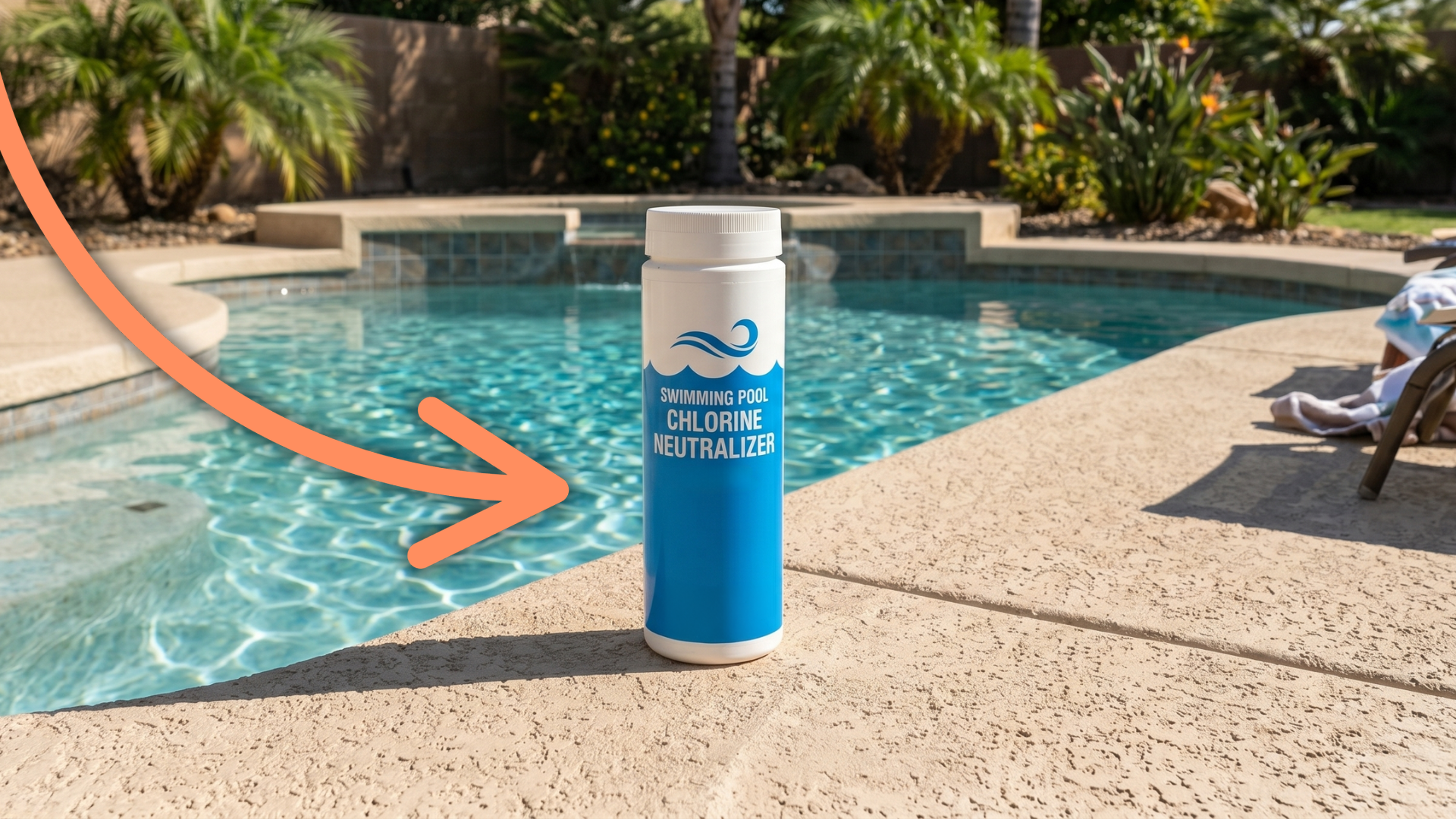
You can buy a chlorine neutralizer at any pool store. It’s usually sodium thiosulfate in a bottle, and it works instantly. Add it with the pump running, and within an hour, your levels drop like a rock.
The downside? It’s like paying a bouncer to kick out your annoying party guests. Effective, but you feel a little dirty. Follow the dosage exactly—overdoing it will nuke your chlorine to zero, and then you’ll have algae within a day.
 Pool Volume Calculator (For All Shapes and Sizes)
Always test after 30 minutes. Do not trust your eyes; trust the test kit. Your eyes will lie and tell you the water is fine when it’s actually a breeding ground for bacteria.
What NOT to Do (Because You Will Try)
Don’t pour baking soda in thinking it will lower chlorine. It raises pH and alkalinity, making the chlorine more aggressive. You’ll trade one problem for a skin-burning nightmare. Bad trade.
Don’t use “pool shock” to fix high chlorine. That’s like trying to put out a fire with gasoline. I know it sounds dumb, but people do it. You’re smarter than that, right?
And please, don’t jump in thinking it’s okay because you’re “tough.” Your skin is not made of Teflon. Eye inflammation is real. So are green swim trunks turning pink.
The Final Splash
Look, pools are living things. They have moods. Sometimes they’re perfect, sometimes they’re jerks. High chlorine is just your pool being a dramatic diva. You can tame it.
Try the sun first because it’s free. Use hydrogen peroxide if you want a science project. Buy a neutralizer if you’re in a hurry. But whatever you do, keep testing until you hit that sweet spot of 1–3 ppm.
And if you see Dave at the next barbecue, tell him I said less is more. His pool is now my cautionary tale. You’re welcome.
