Why Is My Bath Tub Water Yellow

So, you step into your bathroom, ready for a relaxing soak, and you’re greeted by bath water that looks like it was brewed in a rusty tea kettle. Yellow water. It’s not the go...
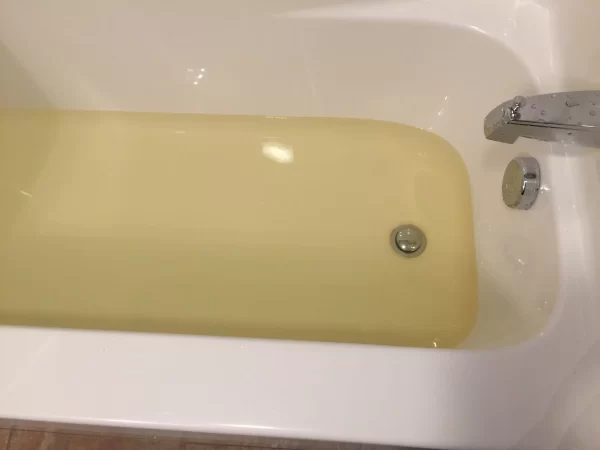
So, you step into your bathroom, ready for a relaxing soak, and you’re greeted by bath water that looks like it was brewed in a rusty tea kettle. Yellow water. It’s not the golden hue of a fancy spa treatment—it’s the color of a suspicious puddle. Don’t panic. You haven’t accidentally filled the tub with lemonade, and no, your plumbing isn’t haunted by a very sick ghost.
Before you call an exorcist or a plumber (both are expensive), let’s talk science. The most common culprit is iron—specifically, iron that’s dissolved in your water supply. Think of it as your pipes throwing a tiny, metallic party, and the water is the punch. When that iron hits the air and mixes with oxygen, it oxidizes, turning your clear water into a murky, yellowish-brown mess. It’s basically the water version of a cut apple turning brown, but way less tasty.
The Sneaky Suspects: Rust and Sediment
Your water isn’t just running through pristine, magical pipes. Over time, those metal pipes—especially old galvanized steel ones—can rust on the inside. That rust flakes off like dandruff from a very angry dragon, and when you turn on the hot water, it stirs everything up. Hot water is the main offender because heat accelerates corrosion, so you might only see yellow when you’re running a bath, not the kitchen tap. It’s like your hot water heater is a sloth that only wakes up to shake off its rusty coat.
Must Read
Another common cause is sediment from your municipal water supply or well. If your town flushes the water mains (which they do a few times a year to clean them), you can get a temporary rush of yellow water. That’s just nature’s way of saying, “Hey, your plumbing needs a vacation.” Also, if you have a well, heavy rains or construction nearby can kick up manganese and iron deposits, turning your bath into a swampy lagoon. Surprising fact: Manganese in water can also cause black staining on your laundry, so if your underwear suddenly looks tie-dyed, you’ve got a clue.
Is It Safe? (Spoiler: Usually Yes)
Here’s the good news: yellow water is not typically hazardous to your health. The EPA allows up to 0.3 milligrams of iron per liter of water, and most yellow water is just above that—like a very relaxed limit. You’re not going to grow a third arm or turn into a rust golem. However, it can taste metallic, and it might stain your white towels or bathtub. Think of it as a free, unwanted dye job for your linens. Fun fact: The Romans deliberately added iron oxide to their bathwater for its reddish tint—they thought it was medicinal. You’re just recreating Roman luxury, completely by accident.
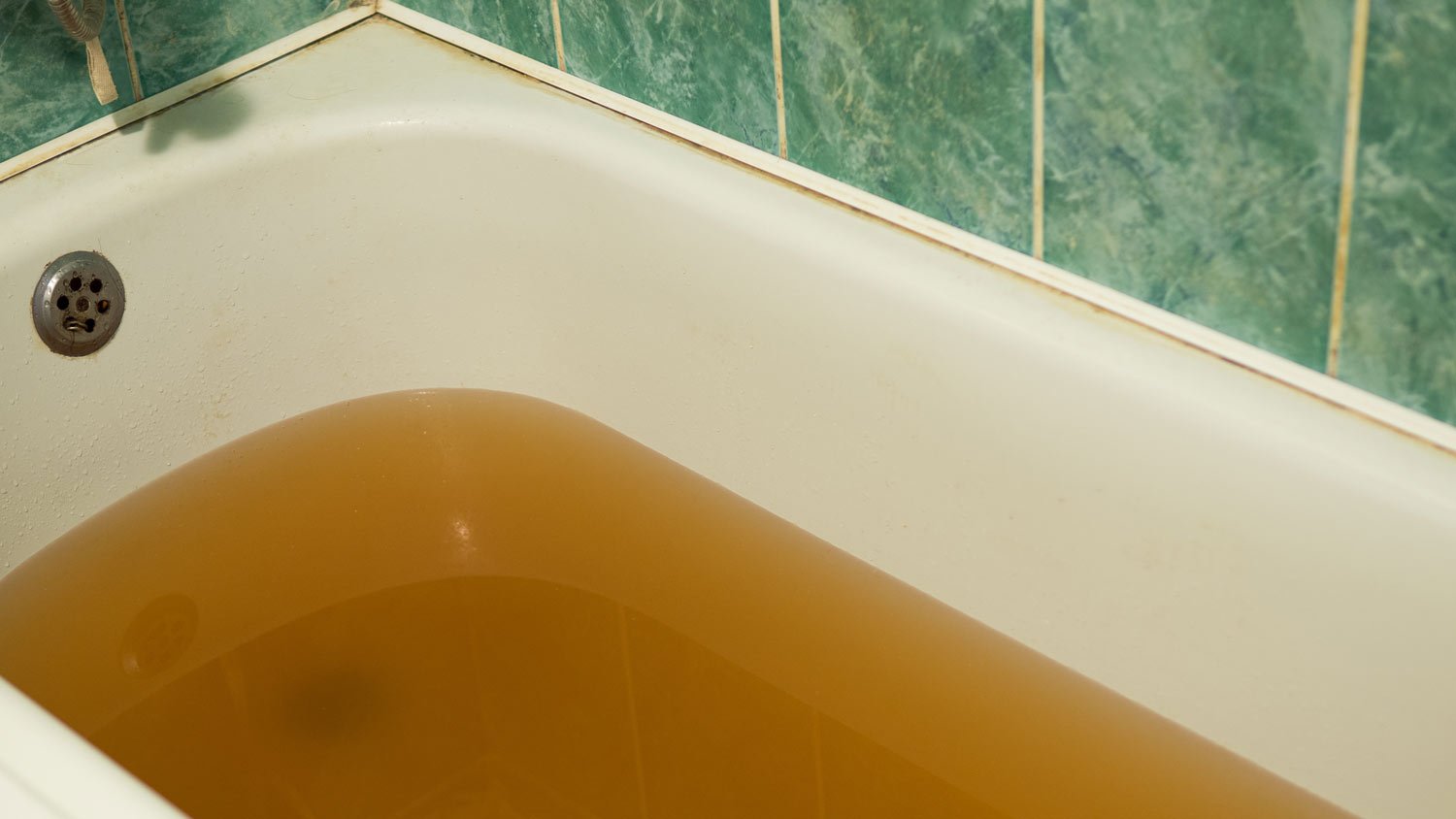 Why Is My Bath Water Yellow? | Angi
The real concern is if the water is brown or orange and comes with a gritty texture. That could mean a burst pipe or heavy sediment that might clog your faucet. If the water is also cloudy or smells like rotten eggs, that’s sulfur bacteria, and it’s time to call a professional. But plain, clear-ish yellow? That’s just your pipes being dramatic.
How to Fix the Yellow Tub
First, try running your cold water for a minute. If the cold water runs clear but the hot is yellow, your water heater is probably the guilty party. Sediment accumulates at the bottom of the tank like a tiny, sandy beach. You can flush it out by attaching a hose to the drain valve and letting it run until the water is clear. It’s like giving your water heater an enema—glamorous, but effective.
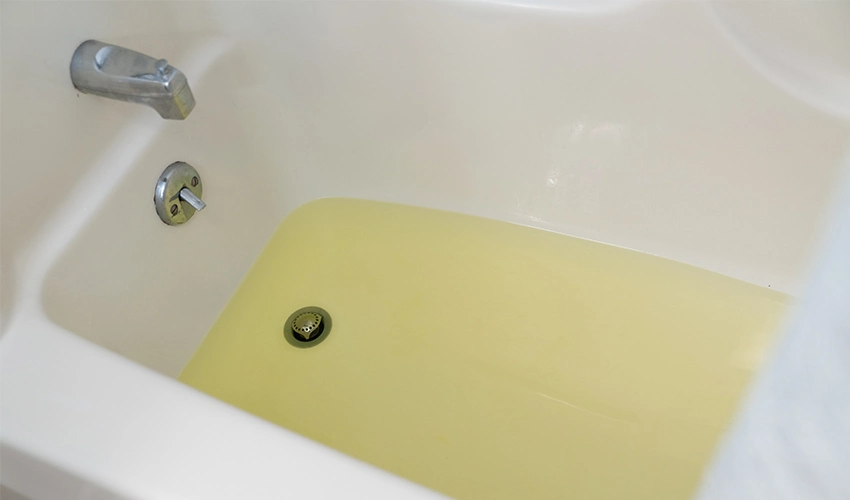 Why Is My Bathwater Yellow? | Mr. Rooter
If both hot and cold water are yellow, the problem is likely in your main supply. Call your city water department and ask if they’ve been flushing mains. They might say, “Oh yeah, it’s fine, it’ll clear up in a day.” Alternatively, install a whole-house water filter with a sediment and iron-removal system. It costs a few hundred dollars, but it’s cheaper than buying new towels every month. Joke: You know you’re an adult when you’re excited about installing a sediment filter. Congratulations, you’re growing up.
When to Actually Panic
Panic if the water is green—that’s usually copper from corroded pipes, which can be toxic in large amounts. Panic if the yellow is accompanied by a strong chemical smell, like bleach or ammonia (that’s a plumbing emergency). Panic if your neighbors all have clear water and you’re the only one with a tub that looks like a cheap beer. But if it’s just yellow, and it smells like dirt? Relax. Your water is just having a bad day.
In the end, yellow bath water is a harmless, annoying quirk of modern plumbing. It’s your home’s way of telling you that the pipes are old, or the city is messy, or you need to clean your water heater. So go ahead, run that bath. Add some bath bombs. The water will still get you clean—you’ll just look a little bit like you’ve been marinating in a shallow river. And hey, if anyone asks, tell them you’re going for a “vintage copper” aesthetic.
