Does Shower Water Have Chlorine

Let’s be honest: you probably don’t think about your shower water much. You turn it on, it gets hot, and you sing off-key into a loofah. But here’s a little secret your plumbi...

Let’s be honest: you probably don’t think about your shower water much. You turn it on, it gets hot, and you sing off-key into a loofah. But here’s a little secret your plumbing isn’t telling you—yes, that water almost certainly contains chlorine.
Wait, is that a bad thing?
Not exactly! City water systems add chlorine to kill bacteria and viruses, which is frankly a modern miracle. Without it, your morning rinse might come with a side of cholera—no thanks.
But here’s the plot twist: that same chlorine that keeps you safe can also be a bit of a party pooper for your skin and hair. It’s like a bouncer at a club—great for keeping out troublemakers, but maybe a little too aggressive with the regular guests.
Must Read
What chlorine does in your shower (besides making it smell like a pool)
When you stand under that steamy stream, chlorine reacts with organic matter—yes, including you. This creates byproducts called trihalomethanes, which are basically chlorine’s less charming cousins.
These little guys can strip your skin’s natural oils, leaving you feeling drier than a desert cactus. Your hair? It might start acting like a grumpy straw broom instead of a silky superstar.
But don’t panic—this isn’t a horror movie! Think of it more like a fun science experiment you accidentally signed up for every morning. The good news is you have options.
Should you become a shower detective?
You might be wondering, “Do I need to test my water like a mad scientist?” Not necessarily, but it’s surprisingly easy! Most municipal water providers post their chlorine levels online, or you can buy a simple test strip at a hardware store.
 Water Chlorination vs Reverse Osmosis - Carewater Solutions
Or you can just assume it’s there—and guess what? That’s actually empowering. Knowledge is the first step to turning your shower into a spa-like sanctuary of joy.
How to have fun with chlorine (and win)
First, you can install a simple shower filter—they’re like tiny bouncers that kick chlorine to the curb. They’re cheap, easy to install, and your skin will throw a thank-you party.
Second, embrace the ritual. Let the water run for a minute before you get in—this lets the most volatile chlorine escape into the air (and adds a dramatic steam effect). It’s like giving your shower a pre-game warm-up.
Third, laugh at the absurdity. You are literally standing under a chemical designed to disinfect swimming pools, and you’re using it to wash your armpits. That’s both nuts and incredible.
What about the smell?
Yes, that faint “pool-ish” aroma is chlorine doing its job. But if it ever feels too strong, just remember: you are a water wizard with control over your own micro-climate. A little lemon-scented body wash, and you’re basically a citrus superhero.
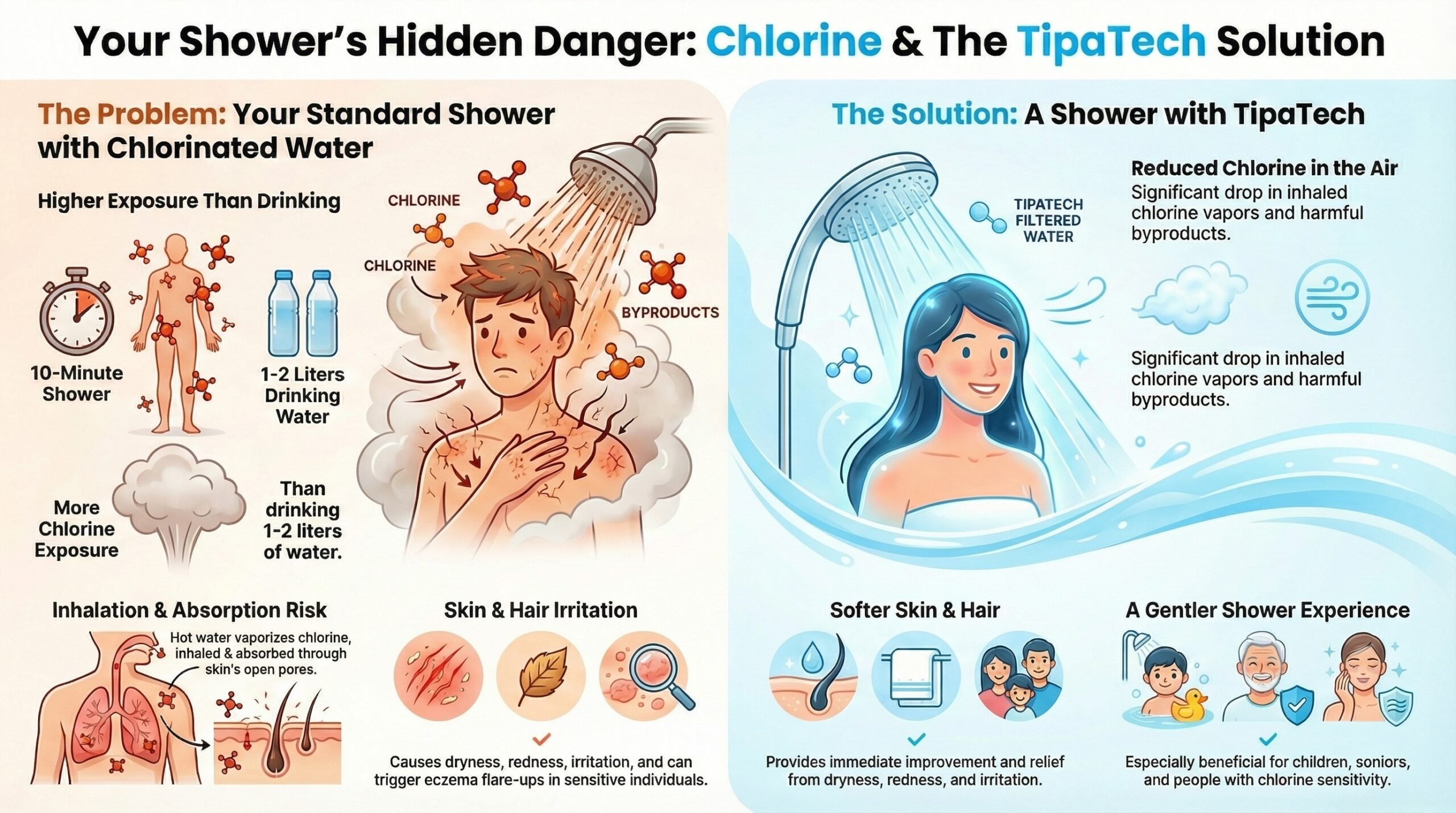 Chlorine in Showers vs. Drinking: The Hidden Danger | TipaTech
Plus, that smell can actually be a fun conversation starter. Next time someone asks, “Did you just come from a pool?” you can say, “No, I’m just a connoisseur of municipal water chemistry.” Watch their face light up with confusion and delight.
The uplifting truth
Here’s the beautiful takeaway: your shower water is alive with a tiny chemical dance. Chlorine is neither villain nor hero—it’s a tool. And now you know how to use it to your advantage.
You are not just bathing; you are interacting with a complex ecosystem every single day. That makes your morning routine a mini science lesson, a self-care moment, and a quiet act of rebellion against dryness.
So go ahead, turn on that water. Let it pour. Know that a bit of chlorine is there, doing its job, while you do yours—which is to feel clean, happy, and just a little bit curious about the world around you.
The next time you step out of the shower, maybe give a little wink to the mirror. Not because you’re a water expert (though you are now), but because you found joy in the ordinary. And that, my friend, is the real magic. Want to learn more? Start with your faucet—it has more stories to tell than you think.
