How Much To Have A Well Drilled

You’ve decided to become a water baron in your own backyard. The dream of free, crystal-clear H2O, untethered from the tyranny of the municipal water bill, is a powerful one....

You’ve decided to become a water baron in your own backyard. The dream of free, crystal-clear H2O, untethered from the tyranny of the municipal water bill, is a powerful one. But before you start picking out a name for your aquifer (I suggest “The Moist Abyss”), let’s talk money.
Paying to have a well drilled is a bit like paying for a mystery box from a very expensive, very loud eBay seller. You’re going to shell out some serious cash, but you won’t know exactly what’s inside until the drill hits something—or doesn’t. The national average, last time I checked my calculator’s coffee-stained memory, is between $3,750 and $15,300. Yes, that’s a wider range than my uncle’s moods during a three-day barbecue.
The Deep, Ugly Truth About Depth
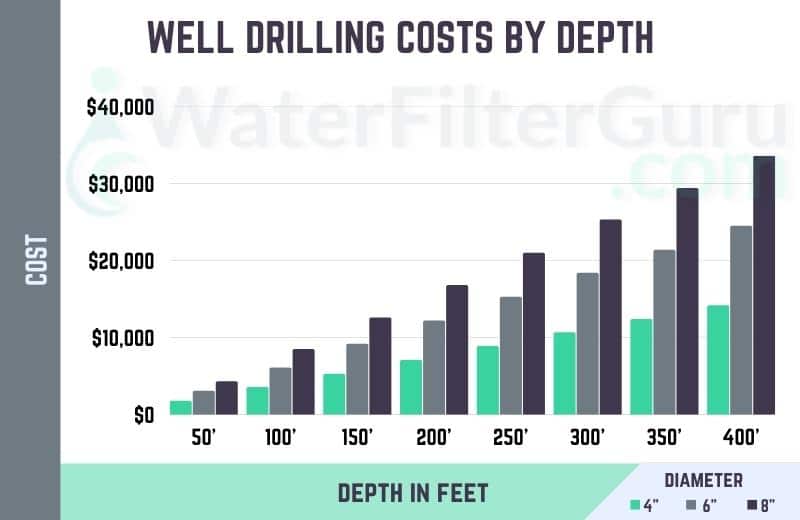
The first variable is how deep you have to go. If you live in a part of the country where groundwater is basically skimming the surface, you might only drill 50 feet—a bargain. But if you’re unlucky, you might be drilling 400, 600, or even 1,000 feet down.
Must Read
Imagine paying a giant metal gopher by the foot. Every single foot costs money—typically $15 to $60 per foot just for the drilling. At 500 feet at $50 a pop, you’ve just spent $25,000 on a glorified straw in the dirt. And that’s before you even taste the water.
A surprising fact: the deepest wells ever drilled for domestic use go over 2,000 feet. At that point, you aren’t drilling a well; you’re building a vertical subway tunnel for a mole with expensive taste. You could have bought a small house in Ohio for the cost of that hole.
The “Dry Hole” Dread (And Other Horrors)
Here’s the secret punchline of the well-drilling industry: they charge you even if they find nothing. That’s right, you can pay thousands of dollars for a dry, empty hole that your neighbors will politely call “an ambitious landscaping feature.” This is why drillers insist on a contract that says you pay for the footage, regardless of result.
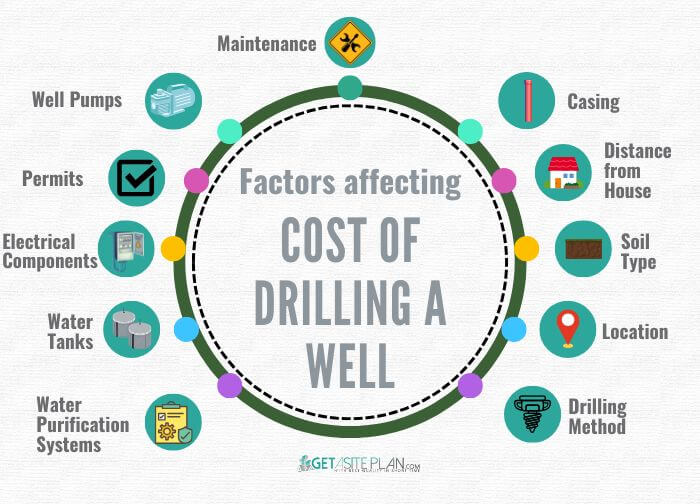
But let’s say you hit water. Hooray! Now you need a pump, which is the mechanical heart of your new underground empire. A submersible pump and its wiring can set you back $1,000 to $3,000. And if you want to pull water from 800 feet deep, you’ll need a pump the size of a trash can that sounds like a freight train starting up.
 Water Well Drilling Cost | New Well Drilling Cost: How Much Is It To
Don’t forget the pressure tank—that big blue or grey canister in your basement—and the casing (the pipe that keeps your well from collapsing into a muddy pit). Add another $500 to $2,000 for those goodies. Suddenly, your “free water” has a $20,000 entry fee.
Permits, Paperwork, and People You Need to Pay
Before that giant drill rig shows up and shakes your neighborhood like a 7.0 earthquake, you need a permit. These cost anywhere from $100 to $1,000, depending on how much your local government loves red tape. Then there’s the water testing. You should test for bacteria, nitrates, and that suspicious metallic taste that might mean you’ve tapped into the Flint River drainage.
Testing costs $100 to $300. If the tests reveal your well water is cleaner than bottled, you’re a champion. If it reveals your water is mostly arsenic and bat guano, you get to buy a filtration system that costs $1,000 to $5,000, minimum. Surprise! You’ve just become a part-time chemist with a full-time subscription to a water filter cartridge service.
The “Hidden” Costs That Will Sneak Up On You
Drillers don’t always include trenching to run the pipe from the well to your house. That can be $500 to $2,000 if you have to dig through buried tree roots or that pet cemetery you forgot about. Also, your driveway will likely need a slight repair after the 40-ton truck parks on it. Add $200 to $1,000 for concrete patches and apologies to your HOA.
 How Much Does a Well Cost? (2024 Well Drilling Cost Guide)
Oh, and electricity. A pump running on a deep well can suck up $50 to $150 a year in power. That’s less than your Netflix subscription, but still—it’s the principle of the thing. Your well is now a paying tenant on your electric bill.
So, What’s the Grand Total?
For a typical suburban well that’s 150 feet deep, with a basic pump, decent pressure tank, and no toxic surprises in the water, expect to pay $8,000 to $12,000. That’s roughly the price of a gently used 2012 sedan with a dent in the door. For a deep, complicated well in rocky soil? Be ready for $18,000 to $35,000. At that point, you are financing a small yacht, but you’ll be drinking from it.
The most surprising fact? In many states, a well can increase your property value by at least the cost of drilling it. You get free water, lower insurance premiums (no city pipe bursts—that’s your pipe now!), and the smug satisfaction of saying, “My water comes from the earth, Dave—not from a reservoir.”
So, go ahead and get that well drilled. Just keep your checkbook open, your sense of humor sharp, and your expectations set to “maybe this will work, maybe I’ll have a very expensive mud pit.” Either way, you’ll have a great story for your next café visit. And you’ll never have to worry about a drought again. Unless the pump breaks. Then you’re hauling buckets like a pioneer. But hey, that’s rustic!
