Water Softener How Does It Work

Ever wonder why your dishes come out of the dishwasher looking like they’ve been in a fight with a fog machine? Or why your shampoo just won’t lather up into a nice, fluffy cl...

Ever wonder why your dishes come out of the dishwasher looking like they’ve been in a fight with a fog machine? Or why your shampoo just won’t lather up into a nice, fluffy cloud? You might be dealing with hard water.
Hard water is basically regular water that picked up a bunch of extra minerals—mostly calcium and magnesium—on its journey through the ground. It’s not dangerous, but it’s definitely annoying. It leaves white scale on your faucets, makes your soap less effective, and can even shorten the life of your appliances.
So, how do we fix this? Enter the humble water softener. Think of it as a spa day for your home’s water supply. It strips away all that unwanted gunk, leaving you with soft, silky water that feels almost too slippery to rinse off.
Must Read
But how does this magic actually work? Is it some kind of high-tech wizardry? Nope. It’s actually a clever process called ion exchange. Sounds fancy, but it’s really just a game of mineral musical chairs.
The Secret Life of Resin Beads
Inside your water softener is a large tank filled with thousands of tiny, sticky plastic beads called resin beads. These beads aren’t just for decoration—they are the workers of the operation.
Every single bead is coated in sodium (salt) ions. And for some reason, calcium and magnesium ions really want to sit in those same spots. It’s like a crowded bus, and the hard water minerals are trying to steal the salt’s seat.
When hard water flows through the tank, the calcium and magnesium ions latch onto the resin beads, pushing the sodium ions off. They basically trade places. The water leaves the tank with a tiny bit of sodium, but all the hardness is left behind on the beads. Simple, right?
 Water Softeners | Midwest Smart Water Solutions
Why Is That Cool?
Because it means your water is now soft. Soap lathers like a dream, your hair feels shinier, and your coffee maker won’t look like it’s been through a mineral apocalypse. It’s like upgrading from a scratchy wool blanket to a cashmere throw.
And here’s the best part: the resin beads don’t just get clogged up and quit. That would be a terrible product. No, they get recharged. This is where the system’s second tank—the brine tank—comes into play.
The Regeneration: A Mini Cleanup Party
Every few days, usually in the middle of the night, your water softener runs a cycle called regeneration. It floods the resin beads with a super-concentrated saltwater (brine) from the second tank. This is the “flushing” stage.
Because the brine is packed with sodium, it overwhelms the calcium and magnesium. Those minerals get kicked right off the beads and flushed down the drain. Then the beads are rinsed, ready to grab more hardness again. It’s like hitting the “reset” button on your water supply.
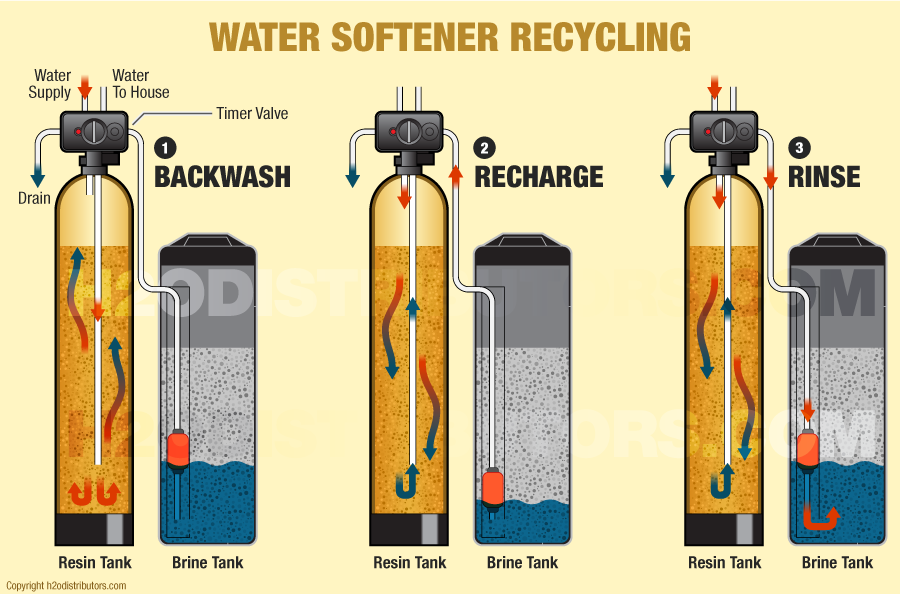 How Does A Water Softener Control Valve Work
So, while you’re sleeping, your water softener is having a tiny, noisy party to clean itself up. Pretty impressive for a machine that mostly sits in a corner of your garage, right?
Are There Downsides?
Well, you do add salt to your water. For most people, this tiny amount of sodium isn’t a big deal, but if you’re on a strict low-sodium diet, you might want to look into potassium-based softeners instead. They work the same way, just with a different mineral.
Also, soft water tastes a little… different. Some people say it’s “flat” or “slick.” You can get used to it, or you can install a reverse osmosis filter just for your drinking tap. That way, you get the softness for your laundry and shower, but the crisp taste for your glass.
At the end of the day, a water softener is a simple, smart solution to a very common problem. It takes your water from “meh” to “ahhh” with nothing fancier than a bunch of plastic beads and some table salt.
So next time your shampoo foams up like a cloud, give a little nod to the humble resin beads doing the heavy lifting in your basement. They’re the unsung heroes of your morning shower.
