What Is The Source Of The Water

You turn on the faucet, and out it comes. That clear, cold, life-giving liquid that we absolutely take for granted until the bill arrives. But have you ever really stopped to...

You turn on the faucet, and out it comes. That clear, cold, life-giving liquid that we absolutely take for granted until the bill arrives. But have you ever really stopped to think, while brushing your teeth or making that third cup of coffee, where this magical stuff actually comes from?
The Sky Is Basically a Giant, Leaky Ceiling
Let’s start with the obvious source: the sky. Yes, it rains, but think of it less as a weather event and more like the universe's very slow, very clumsy delivery service. Clouds are just big, fluffy sponges floating around, waiting for the perfect moment to drip on your freshly washed car.
When I was a kid, I honestly believed rain came from a giant sprinkler system in heaven. I pictured a bored angel with a hose, spraying us all randomly. The truth, involving evaporation and condensation, is way less fun but somehow more impressive.
Must Read
The Ground Is a Thirsty Sponge (and a Secret Vault)
So the rain hits the ground. Now what? Does it just hang out on the grass? No, most of it goes underground, like a teenager sneaking into the basement. It seeps through layers of dirt, sand, and rock, filtering itself along the way.
This is where we get groundwater. Think of it as the Earth’s personal water bottle, stored in what geologists call “aquifers.” I imagine these as massive, dark underground lakes where old pirate treasure would be if pirates died of thirst. Your tap water might be rain that fell during the Roman Empire, just chillin’ in the dark for two thousand years before you put it in your ice cube tray.
Where Does Your Town's Water Come From? The Two Main Characters.
Most towns have a simple choice: they either grab water from a reservoir (a man-made lake) or they suck it out of the ground. A reservoir is like the town’s shared swimming pool, but you don’t want to swim in it. We build dams to trap rivers, and that giant bathtub becomes our supply.
I remember visiting a reservoir on a school trip. Our guide told us it held enough water for the entire city for a year. I spent the whole time trying to spot a dead fish floating in it. Spoiler alert: I didn’t find one, but I still feel weird about swimming in lakes.
 What Is The Source Of Water In Well at Stephen Bobo blog
If your town uses wells, they are literally drilling down into the Earth’s secret stash. It’s like the planet has a hidden juice box, and we just stick a straw in it. The deeper the well, the older and purer the water tends to be, though it might taste a little “mineral-y” or like it has more character.
The Epic Filtering Process (Your Faucet’s Backstory)
Here’s where it gets good for your health. That raw water—whether from a reservoir or a well—is usually a party of mud, bacteria, and twigs. It arrives at a treatment plant looking like a bad cup of soup.
They run it through a series of screens, sand filters, and chemical baths that would make a fancy spa jealous. They add chlorine to kill the germs and fluoride for your teeth. By the time it reaches your glass, it’s been through more transformations than a reality TV star. The water basically had a hard past, and now it’s clean and respectable.
The Pipes: The Invisible Highways You Never Think About
Even after it’s clean, the water still has to travel. Imagine a massive network of pipes under your street, like a frozen spaghetti dinner made of iron and plastic. Some of those pipes are older than your grandparents.
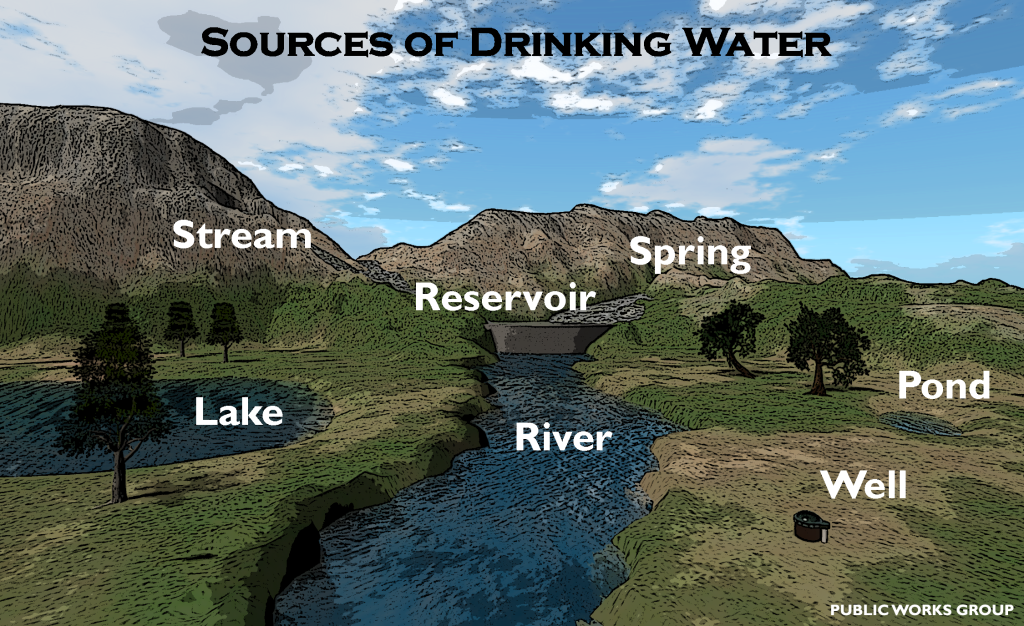 Water Source Poster - Public Works Group Blog
Every time you flush the toilet or run the dishwasher, you’re sending a signal back to the treatment plant. It’s a constant loop of give and take. You take a shower, the water goes to a different plant, gets cleaned again, and then might end up watering a golf course. Gross? Or just efficient? You decide.
That Weird Taste? That’s a Story.
Ever notice how water from the tap tastes different in different cities? That isn’t your imagination. It could be because of the source rock. If your water comes from limestone areas, it usually has more calcium and feels “hard” (soap doesn’t lather well).
If it comes from a river, it might have a slight earthy taste from the organic matter. And the classic “swimming pool” taste? That’s the chlorine at work, keeping your neighbor’s stomach bugs out of your morning cereal. Honestly, it’s a miracle.
The Ultimate Truth: It All Starts With a Cycle
So, the source of the water is really just a very old, very boring story on a loop. The water that dinosaurs drank is the same water you drink. It’s been a cloud, a river, a puddle, a glacier, and probably part of a Roman bath.
Next time you fill a glass, just give a little nod. That water has been on a longer, more adventurous journey than you have all week. It’s fallen from space, hidden in the dirt, and gone through a chemical spa treatment just to get to your lips. That deserves a toast, doesn’t it? Cheers to the leaky ceiling, the thirsty ground, and the heroic pipes. You’re welcome.
