What Is Regen In Water Softener

So, you’ve got a water softener. Congratulations—you’re basically living in a luxury spa for your pipes. But then you hear the word “regen,” and suddenly you’re wondering if y...

So, you’ve got a water softener. Congratulations—you’re basically living in a luxury spa for your pipes. But then you hear the word “regen,” and suddenly you’re wondering if your appliance is secretly a sci-fi character. Relax. Regen is just short for regeneration, and it’s not nearly as dramatic as it sounds. Unless you find plumbing fascinating, which, let’s be honest, is a weird flex.
What the Heck Is Regeneration?
Imagine your water softener is a tiny, hardworking bouncer at a club. Every night, it lets in calcium and magnesium ions (the “hard” water party crashers), but kicks them out by swapping them for sodium ions (the cool, soft water guests). Eventually, the bouncer gets tired—all the sodium gets used up. That’s when regeneration kicks in: it’s the bouncer’s overnight shift to flush out the crashers and reload on fresh salt.
Think of it as a Cinderella story, except instead of a glass slipper, you get a brine solution. The softener basically takes a bath in super-salty water, which acts like a magnet to yank the hard minerals off the resin beads inside. After that, it rinses everything down the drain, and your bouncer is ready to party—er, soften—again.
Must Read
Why Should You Care About This Spa Treatment?
Because without regeneration, your water softener becomes a useless lump of plastic and metal—like a gym membership you never use. Hard water creeps back into your life, leaving streaks on your dishes, scum in your shower, and that feeling of sandpaper on your skin. Nobody wants to feel like they’re showering in chalk dust.
And here’s a surprising fact: your water softener regenerates automatically, usually in the middle of the night. While you’re dreaming of winning the lottery, your appliance is working harder than a hamster on a wheel. It’s basically a nocturnal hero, and you never even say thank you.
How Often Does This Happen? (Spoiler: More Than You Think)
Most softeners regenerate every few days, but it depends on how much water you use. If you’ve got a family of six who take hour-long showers and wash their cars obsessively, your softener might regenerate daily. It’s like a teenager who needs a snack every two hours—except the snack is a pound of salt and the teenager costs you money.
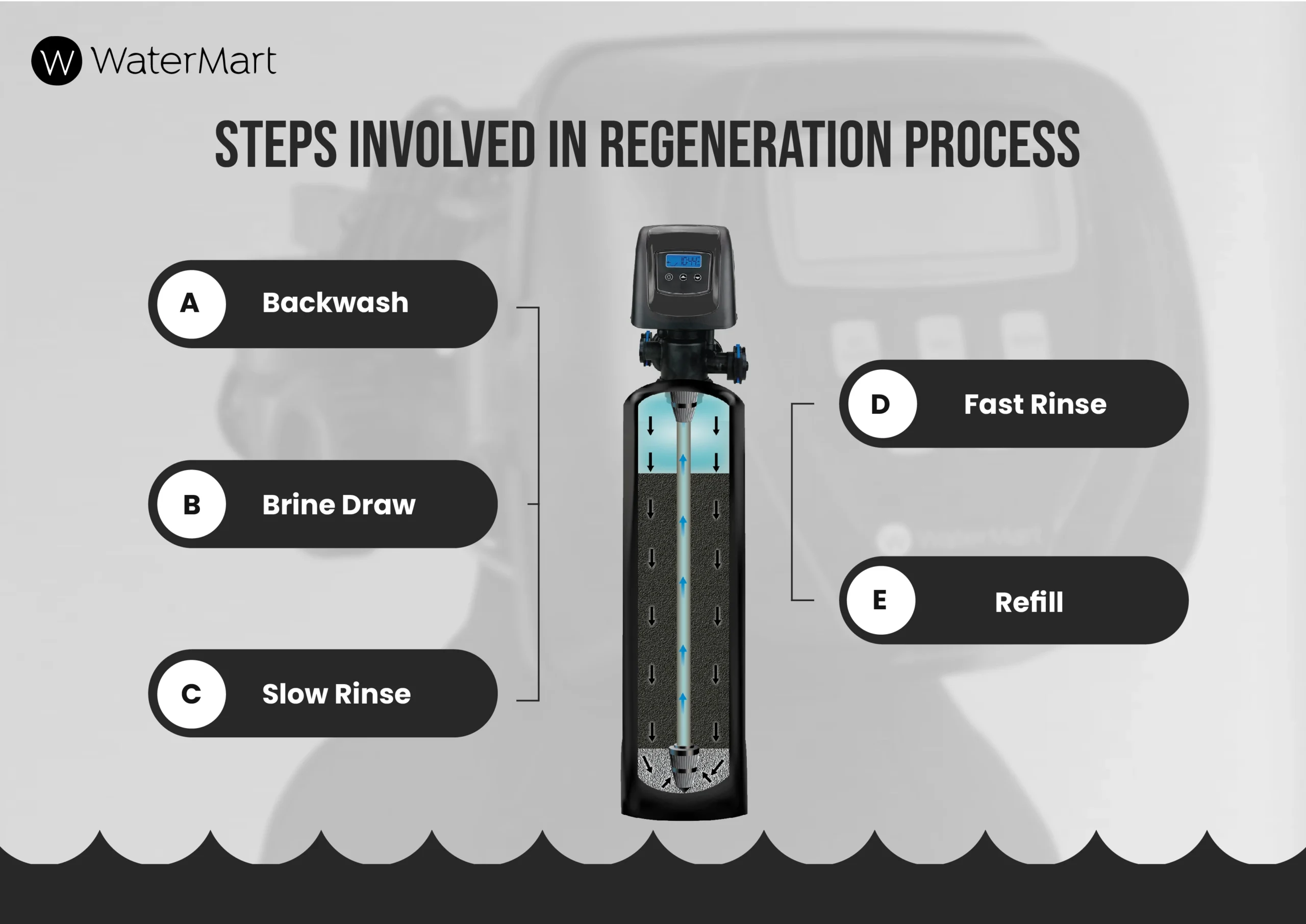 What Is Water Softener Regeneration - Process And Its Types
But here’s the kicker: some high-tech softeners are so smart they can sense when they’re running low on sodium and regenerate only when needed. That’s like having a toaster that knows when you’re out of bread. These fancy models even send alerts to your phone, which is both practical and slightly terrifying. “Your water is getting hard again. Regeneration initiated. Also, your milk expires tomorrow.”
The Step-by-Step Chaos of a Regeneration Cycle
Let’s break down the actual process, because it’s weirdly fascinating. First, the softener backwashes—meaning it blasts water backward through the resin tank to flush out debris. This is the equivalent of your dishwasher belching after a big meal. Then comes the brine draw, where salty water from a separate tank gets sucked in and scrubs the resin beads clean.
After that, it rinses with fresh water (slowly, like a cat licking its paw), then finally returns to service mode. The whole thing takes about 90 minutes, which is roughly the time it takes to watch a movie you’ve already seen three times. And just like that movie, the ending is predictable: your water is soft again, and you didn’t have to lift a finger.
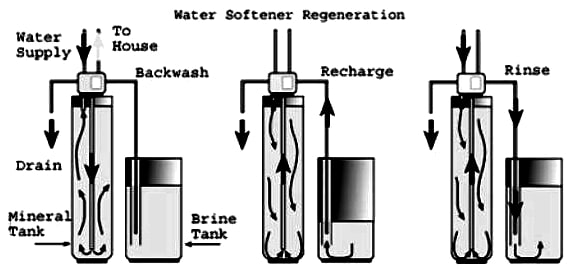 Water Softener Regeneration Process: Frequency & Problems
But There’s a Catch (Isn’t There Always?)
Yes, regeneration uses water—about 20 to 50 gallons per cycle. That sounds like a lot, but compared to the alternative (hard water destroying your pipes and water heater), it’s nothing. Think of it as a tiny sacrifice to the plumbing gods. Also, the salt you add to the system has to go somewhere—down the drain and into the environment. If you’re eco-conscious, you can use potassium chloride instead, which is gentler on plants but harder on your wallet.
And here’s a joke that will make you the life of a boring dinner party: “Why did the water softener break up with the hard water? Because it needed space for regeneration!” …I’ll show myself out.
Final Verdict: Is Regeneration a Total Pain?
Only if you forget to refill the salt. Then it’s a total pain. But if you keep that bucket full, the regen process is practically invisible. It’s like a ghost that does your laundry—except instead of sheets, it’s saving your shower head from becoming a calcium stalactite.
So next time you hear a faint gurgle from the basement at 3 a.m., don’t panic. That’s just your water softener on its superhero shift. Pour one out for your appliance—literally, into the brine tank. It’s doing the lord’s work, one salty rinse at a time.
