Why Is Hard Water Bad For Hair

We’ve all been there. You step out of the shower feeling like a million bucks, only to catch a glimpse in the mirror and realize your hair looks like a scarecrow that just los...
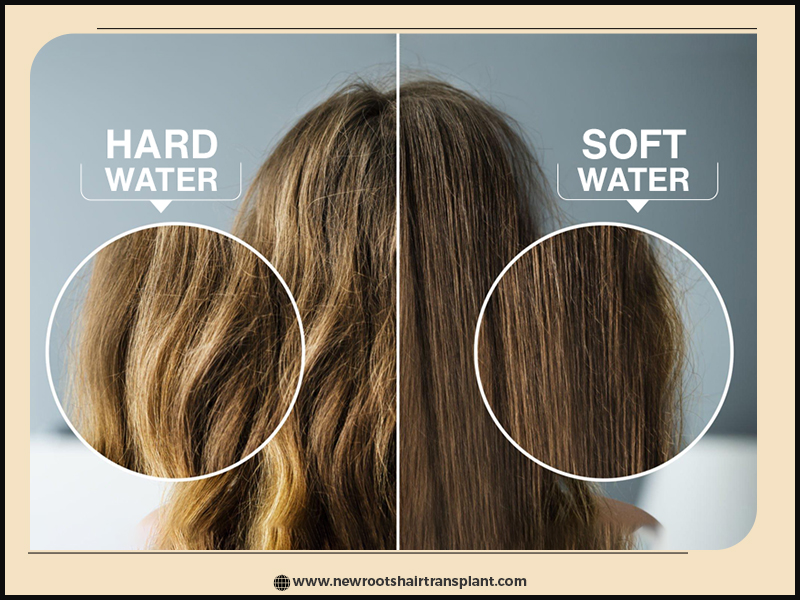
We’ve all been there. You step out of the shower feeling like a million bucks, only to catch a glimpse in the mirror and realize your hair looks like a scarecrow that just lost a fight with a tumbleweed. It’s crispy, it’s frizzy, and it has absolutely zero chill. Nine times out of ten, the culprit isn’t your shampoo, your conditioner, or even that expensive mask you bought on a whim. It’s the water itself.
I’m talking about hard water. It’s the frenemy that lives in your pipes and secretly sabotages your lather. Think of it like the difference between a gentle rain and a mineral truck driving through your hair.
What Even Is Hard Water?
Let’s get geeky for a second, but not too geeky. Hard water is basically regular water that got a little too friendly with the ground. As it travels, it picks up extra minerals—mainly calcium and magnesium. It’s like the water went to a salad bar and came back with way too much chalk and a side of rocks. You can’t see these minerals, but your hair can definitely feel them.
Must Read
You know that annoying white, crusty buildup on your showerhead or faucet? That’s hard water throwing a party. And guess what? It throws that same party on your scalp and through your hair strands. Gross, right?
The Shampoo Stand-Off
Here’s the first sign of trouble: Your shampoo just won’t foam. You squeeze out a normal amount, you scrub, and… nothing. It feels flat, like trying to blow bubbles with a straw in day-old soda. That’s because the minerals in hard water react with the soap to form a sticky, waxy residue called soap scum. Your shampoo is literally fighting the water instead of cleaning your head.
I once had a friend who was so convinced her shampoo was defective that she returned three bottles in a row. She moved to a different city with soft water and suddenly her hair was a commercial. It’s not you, shampoo. It’s the water.
The Crispy Hair Effect
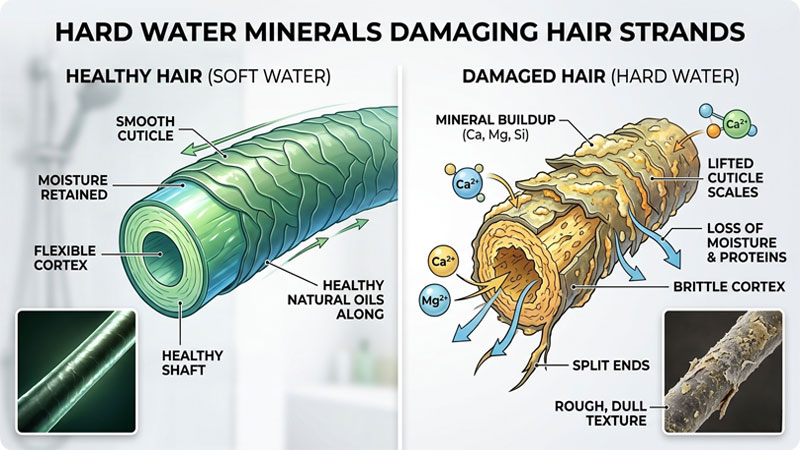
After the soap scum situation, your hair starts acting strange. Strands feel rough, like pieces of string cheese that have been left out in the sun. This is the mineral buildup. It coats the hair cuticle (the outer layer) and makes it stand up, instead of lying flat and smooth. When the cuticle is rough, light doesn’t bounce off your hair. Instead, it gets absorbed into the crusty mess, making your hair look dull and lifeless.
 Does Hard Water Cause Hair Fall? Chlorine, Iron & Bath Water Explained
And the frizz? Oh, the frizz. It’s like your hair decides to become a puffy cloud of protest. Hard water is a bully. It pushes moisture out of your hair and traps the minerals in. So you end up with a scalp that’s dry and itchy, and ends that feel like hay on a summer road trip.
Color? What Color?
If you color your hair, hard water is basically your arch-nemesis. That expensive, painstakingly applied balayage? The minerals will grab onto the color molecules and rip them out or change their tone. Blondes turn brassy, reds turn muddy, and brunettes get a weird, ashy orange tint. It’s like the water is saying, “Oh, you wanted honey blonde? How about rusty copper instead?”
I had a friend who spent $300 on highlights, only to have them look green-ish after two washes in her new apartment. She thought she was cursed. Nope. Just hard water doing what hard water does best—being a total party pooper.
The Itchy Scalp Conspiracy
Let’s not forget your poor scalp. The waxy buildup from hard water doesn’t just sit on your strands; it forms a tight little layer on your scalp, too. This can clog your hair follicles, leading to dandruff, flaking, and a constant, nagging itch. You scratch your head and white stuff falls onto your shoulders, and you think, “I washed my hair today!” Yes, you did. But the hard water didn’t let the soap rinse off properly.
 Hard Water Hair Damage: The Complete Guide (Causes, Diagnosis & Fixes)
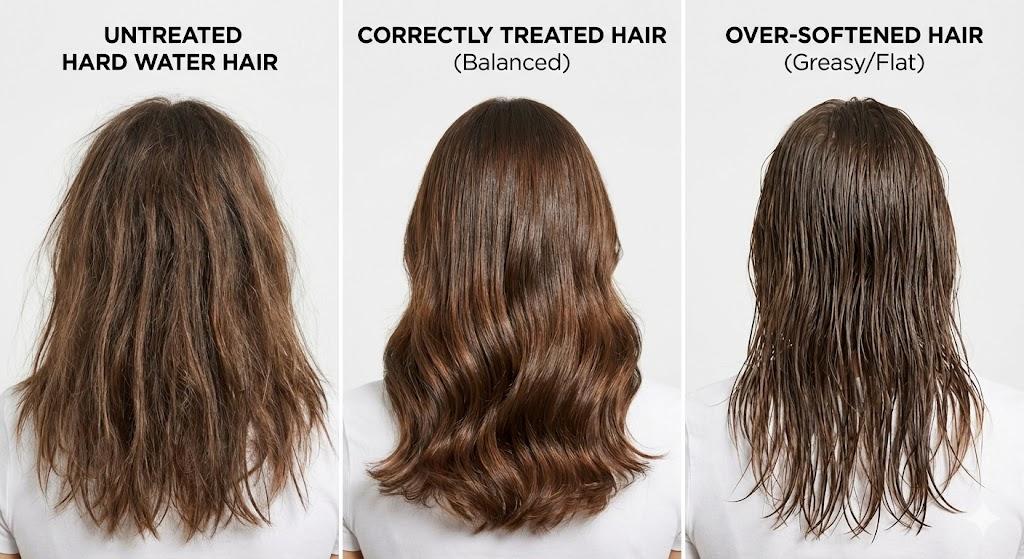
It’s like wearing a greasy hat that you can’t take off. Your scalp gets angry. It gets dry. And sometimes, it overcompensates by producing more oil, leading to a nasty cycle of greasy roots and crispy ends. You can’t win.
Is There Hope?
Absolutely. You don’t have to move to a soft-water city or install a giant filter that costs your monthly rent. The easiest hack is a chelating shampoo. It’s a fancy word for a shampoo designed to bind to those minerals and rinse them away. Use it once a week. It’ll smell a bit like science lab, but your hair will thank you.
Another trick? An apple cider vinegar rinse. Mix one part ACV with four parts water, pour it over your hair after shampooing, and let it sit for a minute. The acidity helps dissolve the mineral scale. It sounds weird, but it works like a charm. Your hair will feel clean, smooth, and it’ll also make your bathroom smell like a salad. Small price to pay for good hair.
And if nothing else, just laugh about it. Because honestly, blaming your hair woes on the water is way easier than admitting you haven’t changed your pillowcase in two weeks. Hard water is a struggle, but now you know the enemy. Go forth, lather twice, and rinse like you mean it.
