What Does The Ph Of Water Mean

Okay, let’s talk about water. Not the fancy bottled kind with a celebrity endorsement, but the stuff that comes out of your tap and, let’s be honest, sometimes tastes a little...

Okay, let’s talk about water. Not the fancy bottled kind with a celebrity endorsement, but the stuff that comes out of your tap and, let’s be honest, sometimes tastes a little bit like a wet sock. You’ve probably heard people toss around the term “pH” like it’s some kind of secret water password. But what does the pH of water actually mean? Grab a glass, sit down, and let me explain this without making your brain melt.
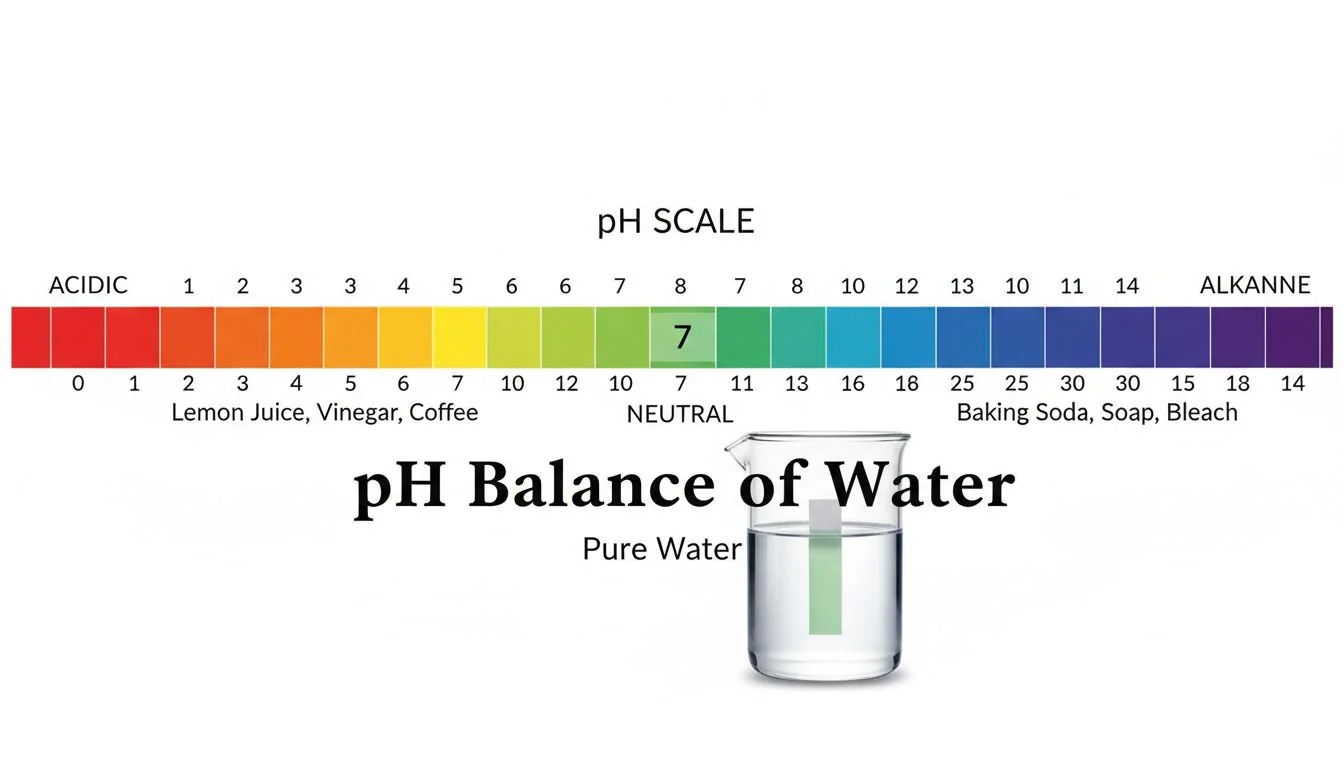
First, the super simple truth: pH is just a measurement of how acidic or alkaline (also called basic) something is. Think of it as a grumpy scale from 0 to 14. Seven is the sweet spot—neutral, like a perfectly balanced seesaw. Anything below 7 is acidic (think lemon juice, or your stomach after a bad burrito), and anything above 7 is alkaline (like baking soda, or your grandma’s bleach when she’s cleaning the bathroom).
The Weird History of "pH"
You might think "pH" stands for something fancy like "Power of Hydrogen" or "Perfection of Hydration." Nope. It literally stands for “potential of hydrogen.” A Danish chemist named Søren Sørensen invented it in 1909. Why? Because he needed to measure the acidity of beer. That’s right—the entire concept of modern pH exists because a dude wanted to know if his lager was too sour. You’re welcome, science.
Must Read
Now, pure water has a pH of exactly 7. But here’s the kicker: pure water is actually quite rare. Most water you drink has tiny bits of stuff dissolved in it—minerals, gases, even the ghost of last week’s coffee. These little hitchhikers change the pH. A pH of 6.5 to 8.5 is generally fine for drinking. But if it drops below 6? That’s like drinking a weak acid. Your teeth will start sending you angry letters.
Don't Panic About Your Water's Mood
Let’s get one thing straight: your body is a master at managing pH. Your blood stays in a super tight range around 7.35 to 7.45. If it goes even a tiny bit off, you’re in the hospital. But the water you drink? It doesn’t directly change your blood pH. So all those ads for “alkaline water” that promise to “balance your body”? They’re selling you a pretty lie. Your stomach is basically a vat of hydrochloric acid with a pH of 1.5 to 3.5. That alkaline water hits your belly and gets instantly neutralized. It’s like tossing a marshmallow into a volcano.
 What Does Ph In Water Do For You | Detroit Chinatown
That said, the pH of water does matter for other things. Ever wonder why your tap water tastes metallic or leaves white crust on your faucets? That’s often due to low pH (acidic) water eating away at your pipes. Or high pH (alkaline) water leaving behind a chalky mineral residue. You’re not a bad person; your water just has a personality disorder.
Surprising Facts That Will Make You Sound Smart
Here’s a fun one: pH is logarithmic. That fancy word means a change of just 1 pH unit is actually ten times more acidic or alkaline. So a pH of 5 is ten times more acidic than a pH of 6, and a hundred times more acidic than a pH of 7. That’s like comparing a hangry toddler to an entire kindergarten class. Another surprise: rain is naturally slightly acidic—pH around 5.6—because it absorbs carbon dioxide from the air. Pure, neutral rain doesn’t exist. So the next time it pours, you’re basically getting a mild, planet-wide soda shower.
Think your bottled water is fancy? Some brands have a pH of 8 or 9. But plain ol' tap water from a city supply is usually around 7.2 to 7.8. And fish? They are incredibly picky about pH. A goldfish needs a pH between 6.5 and 7.5. If you drop it into lemonade? That’s not a prank; that’s a fish funeral.
 Mineral-Rich vs Ultra-Pure Water: What's Best for You?
How to Test Your Water (Without a Lab Coat)
You don’t need a degree to test pH. You can buy cheap test strips at any aquarium store or online. Dip it, wait 30 seconds, and compare the color to a chart. It’s the closest you’ll get to being a mad scientist without wearing goggles. If your water’s pH is super low (below 6), you might want a water filter that adds minerals back in. If it’s high (above 9), it might taste a bit soapy. Either way, don’t worry—your body will handle it. Unless you’re drinking pure battery acid. Don’t do that.
So here’s the bottom line: the pH of water is just how acidic or alkaline it is, measured on a scale from 0 to 14. It matters for plumbing, fish, and your taste buds, but not for your overall health like the internet screams. Next time someone smugly tells you their alkaline water is “changing their life,” just smile, sip your regular tap water, and remember: you know it’s all about the potential of hydrogen from a century-old beer experiment. Cheers to Søren.
And if anyone asks for a source? Just say you read it in a café from a very funny friend. That’s science enough.
