Does Fridge Filter Remove Lead

You’re standing in your kitchen, glass in hand, staring at the fridge dispenser. That little filter light is blinking again, and a nagging thought bubbles up: "Does this thing...
You’re standing in your kitchen, glass in hand, staring at the fridge dispenser. That little filter light is blinking again, and a nagging thought bubbles up: "Does this thing actually remove lead?"
Let’s get straight to the point. The short answer is yes, many modern refrigerator filters can reduce lead, but it’s not a blanket guarantee. It all depends on the specific filter and the certification it carries.
Most standard fridge filters use activated carbon, which is great for taste and chlorine. But lead? That’s a much smaller, trickier particle.
Must Read
To reliably remove lead, your filter needs to be NSF/ANSI Standard 53 certified for lead reduction. Check the box, the manual, or the filter itself for that stamp of approval.
Without that certification, you’re basically paying for a fancier glass of water that might still contain heavy metals. Think of it like buying a raincoat that looks waterproof on the hanger but leaks during a storm.
The Certified Good Guys
Brands like GE, Frigidaire, Whirlpool, and Samsung often include lead-reducing filters in their higher-end models. You’ll usually find models ending in "3" or "4" that meet Standard 53.
Also keep an eye out for the NSF 42 certification for taste and odor. It’s great for your morning brew, but it doesn’t touch lead. You need that 53.
A fun fact: some pitcher filters, like those from Brita and PUR, also carry NSF 53 certification for lead. You can actually get the same protection from a $20 pitcher as from your built-in fridge dispenser.
It’s just like choosing between a fancy espresso machine and a solid French press—both can deliver the goods. The real hero is the filter, not the container it lives in.
The Culture of Clean Water
Remember Erin Brockovich? That movie turned a generation into amateur water-quality detectives. Suddenly, everyone was suspicious of their tap water and reaching for bottled or filtered options.
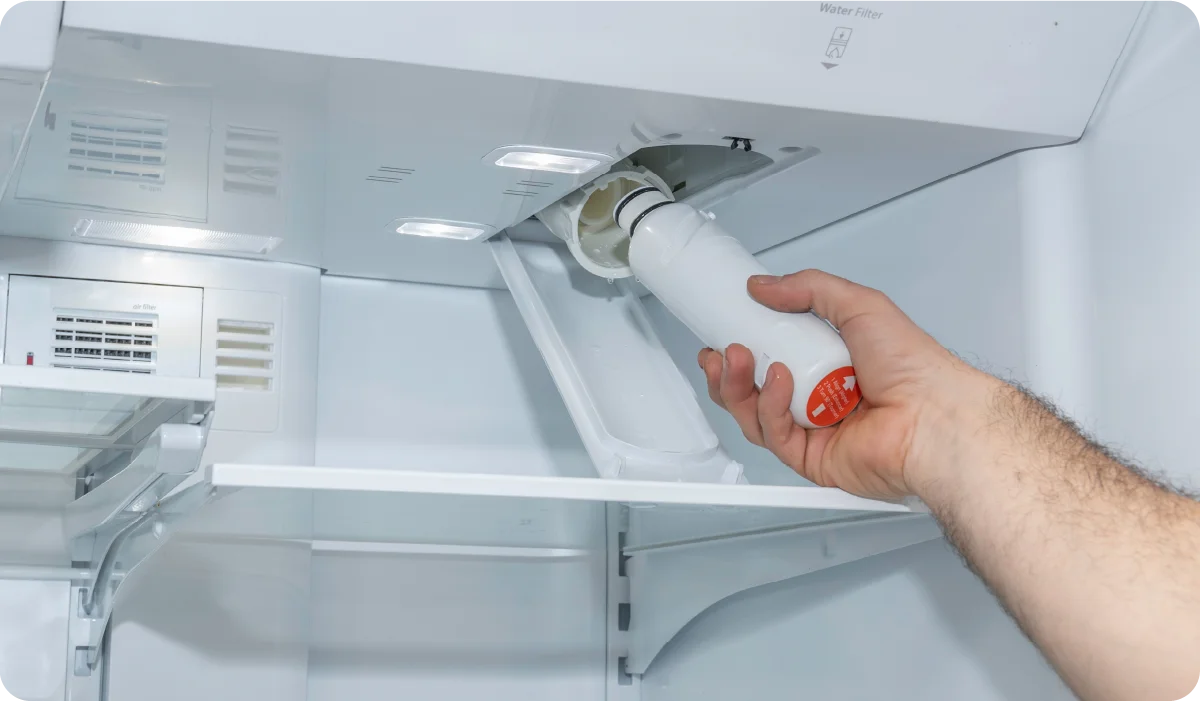 Step-by-Step Guide to Safely Remove Your Refrigerator Water Filter
That cultural moment is echoed in the 2023 Netflix film Painkiller, where the systems we trust (pharmaceuticals, water infrastructure) are questioned. We’re living in an era where we dig deeper into what’s behind the curtain.
Your fridge filter might feel mundane, but it’s a small stand against a big problem. Lead contamination isn’t just a Flint, Michigan, story—it’s a reality in older homes with lead pipes or brass fixtures.
“Every sip is a choice,” as the wellness influencers say. They’re not wrong. Choosing a certified filter is choosing peace of mind for your family.
Practical Tips for the Fridge Filter Skeptic
Tip one: Replace your filter every six months. Even if the light hasn’t turned red, the carbon pores get clogged. An expired filter can actually release trapped contaminants back into your water.
Tip two: Flush the system. After installing a new filter, run three to five gallons of water through it. This washes out carbon dust and activates the filtration media.
Tip three: Don’t bypass the bypass. Some fridge models have a built-in bypass plug for when you don’t have a replacement filter. Never use it for drinking water—it sends unfiltered, untreated water straight to your glass.
Tip four: Test your water. Home testing kits cost about $15 at the hardware store. Check both your tap water and your filtered water to see exactly what your fridge is (or isn’t) removing.
And here’s a crazy stat: a single lead-filter cartridge can remove about 150,000 parts per billion of lead over its lifetime. That’s roughly the equivalent of cleaning 150 Olympic-sized swimming pools of contamination.
 Do LG Refrigerator Water Filters Remove PFAS, Lead, and Chlorine?
The Tiny Valve of Trust
There’s a scene in Mad Men where Don Draper says, “What you call love was invented by guys like me… to sell nylons.” Filter marketing can feel the same way—convincing you to pay for something you don’t fully understand.
But the science is real. Activated carbon filters impregnated with specialized media actually bind to heavy metals like lead, pulling them out of the water stream.
It’s like a microscopic magnet, grabbing onto the bad stuff while letting the good minerals through. Nature knows what it’s doing, even in a plastic cylinder inside your fridge.
One more cultural nod: in The Office, Michael Scott once tried to filter water with a coffee filter. It’s hilarious, but it’s also a reminder that not all filtration is created equal. Respect the certification.
Wrapping It Up with a Splash
So, does your fridge filter remove lead? It can, but only if you’ve done your homework. Look for NSF 53, replace it on schedule, and test your water annually.
Your morning ritual—pouring a glass of water to wake up, brewing the coffee, hydrating after a run—is built on trust. Trust in the appliance, the filter, the system.
That trust is worth the fifteen seconds it takes to check a sticker.
Next time you hear the ice machine churn out cubes, remember: you’re not just getting cold water. You’re getting a small victory over an invisible foe. Pour it, sip it, and move on with your day. You’ve got bigger things to worry about—like what to watch on Netflix tonight.
