Does Uv Light Help Drink Water

So, you’ve heard about UV light and water. Maybe you’re picturing a tiny, tanning-bed ray zapping your bottle of tap water. I get it—the mental image is hilarious. But does UV...
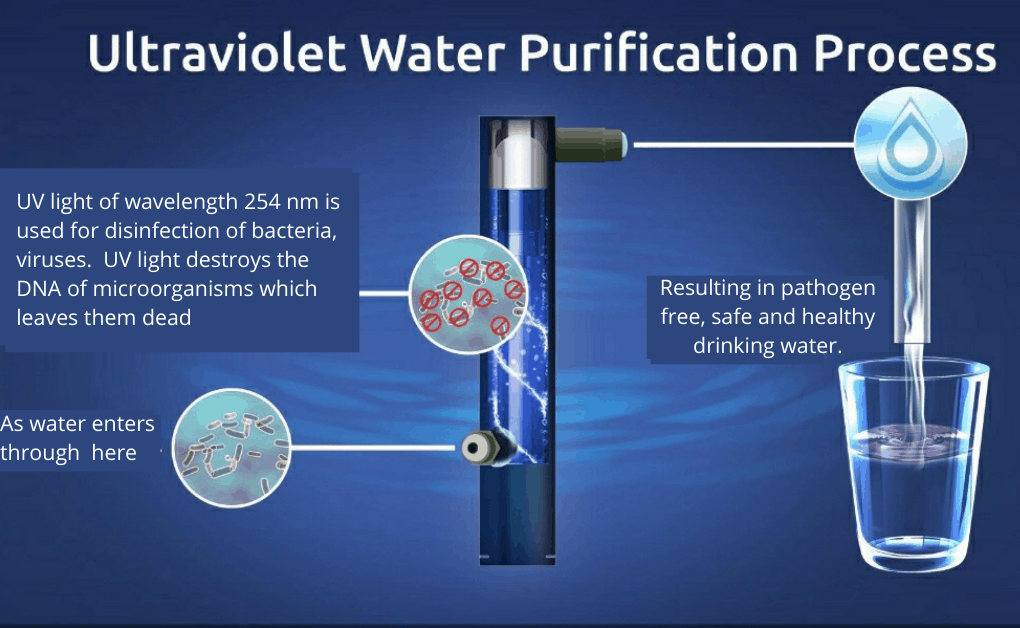
So, you’ve heard about UV light and water. Maybe you’re picturing a tiny, tanning-bed ray zapping your bottle of tap water. I get it—the mental image is hilarious. But does UV light actually help drink water? Let’s dive in, shall we?
The Short Answer: It’s a Germ-Busting Superhero
Yes, UV light can absolutely help purify water, but not in the way you’re thinking. It doesn’t add flavor, sparkle, or make it taste like a summer vacation. What it does is zap the living daylights out of bacteria, viruses, and protozoa.
Think of it as a microscopic, germ-fighting rave where the UV light is the bouncer—and only the bad guys get kicked out. The type of UV light we’re talking about here is “UV-C,” which has just the right wavelength (around 254 nanometers) to mess with germ DNA.
Must Read
When those little buggers get hit, they can’t reproduce. They become harmless, like a smartphone with a dead battery. Pretty cool, right?
But Wait—Does This Actually Make Water Drink Better?
Let’s be real: your water isn’t usually crawling with aliens. If it’s from a clean tap, it’s already safe. But if you’re camping, traveling, or your pipes look like they’ve seen better decades, UV is a game-changer.
It doesn’t remove dirt, chemicals, or heavy metals—that’s a job for filters. But for sterilization, UV is a superstar. It turns questionable water into something you can actually swallow without a prayer.
Imagine you’re lost in the woods, and the only water source is a muddy puddle. You filter out the crud, then hit it with UV light. Congrats—you’ve just invented primitive room-temperature tea. It’s safe, clean, and won’t give you a tummy ache.
The Science-y Part (Stripped of Lab Coats)
UV light works by disrupting the DNA of microorganisms. It’s like a cosmic photocopier that jams every time it tries to copy a germ. The bug can’t multiply, so it dies off or becomes inert.
This is why purification systems use UV lamps inside water bottles or flow-through devices. You turn on the light, swirl the water, and wait a minute or two. The water isn’t boiled, frozen, or chemically treated—just bathed in invisible, germ-killing sunshine.
Fun fact: UV water treatment is used by hospitals, space stations, and even some city water plants. If it’s good enough for astronauts (who drink recycled sweat), it’s good enough for your camping trip.
 UV & Water Filtration – McQuinn Pumps
The Practical Jokes and Warnings
Do not stare at the UV light. It’s not a nightlight. It can burn your corneas and make you see stars—literally. Also, it won’t turn your water into a glowing, magical potion. Sorry to burst your bubble.
Another thing: UV light only works on clear water. If your water looks like swamp soup or has floating bits, you need to filter it first. The light can’t penetrate murkiness, just like a flashlight struggles through fog.
And please, don’t leave your UV bottle in the sun thinking it’ll do the job. Natural sunlight contains UV, but it’s too weak and takes hours. Your device uses a concentrated, artificial beam—more like a laser pointer than a sunbeam.
Real-Life Scenarios: When It’s a Lifesaver
Camping in the wild: Your friend insists on drinking straight from a stream. You whip out your UV purifier, give it a 90-second blast, and say, “Not today, Giardia.” Your friend goes home with a healthy gut; you go home with bragging rights.
Traveling to places with iffy tap water: Instead of buying 47 plastic bottles, you carry a UV bottle that recharges via USB. You look like a wizard at the hotel sink—pure magic, with a dash of electronics.
Emergency situations: Floods or power outages? UV devices that run on batteries are gold. They let you drink from questionable sources without turning your kitchen into a chemistry lab.
The Downsides (Because Nothing’s Perfect)
First, UV doesn’t kill everything instantly. Some tough cysts (like Cryptosporidium) need extra time. Always follow the manufacturer’s instructions—don’t just flick the light and gulp.
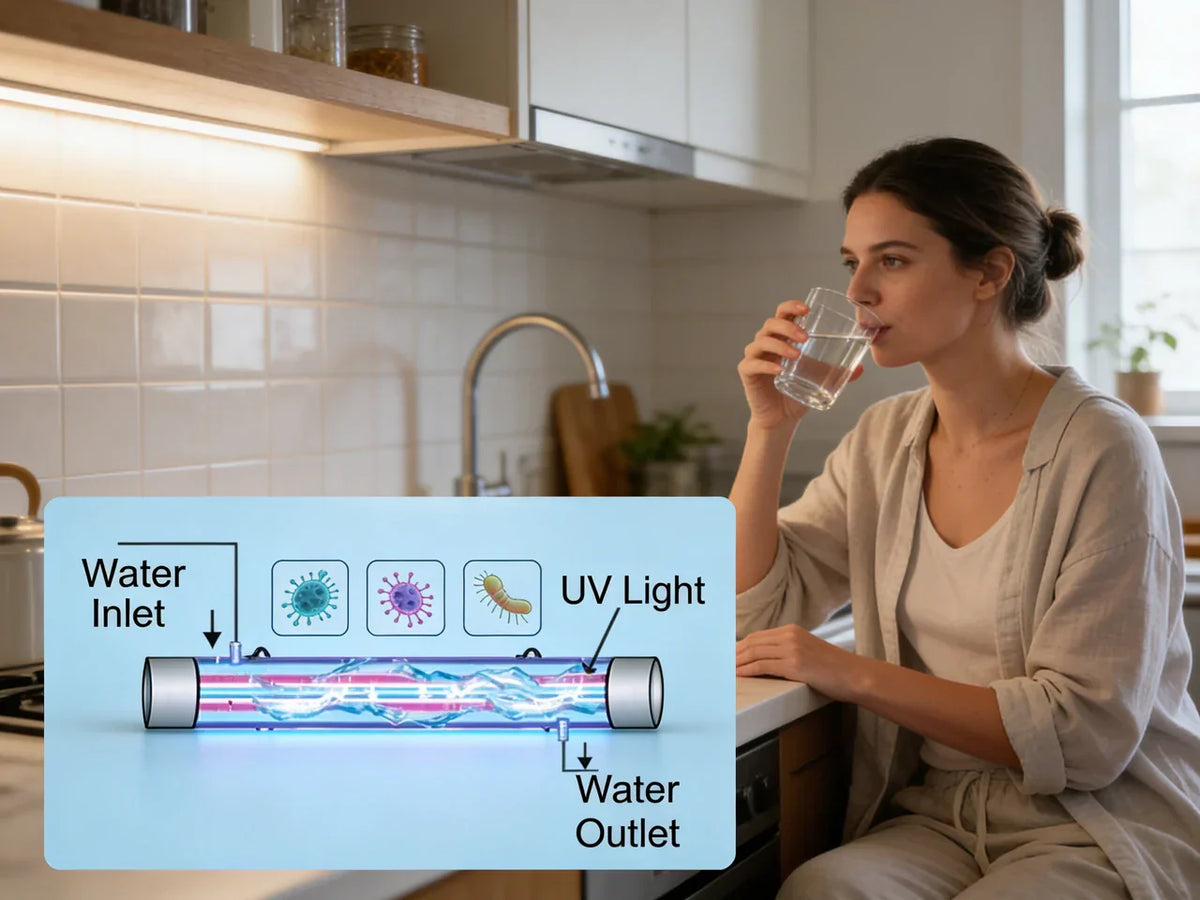 UV Water Treatment: UV Light & Filtration for Safe Water – Frizzlife
Second, it runs on batteries or power. If your device dies, so does your purification. Always carry backup batteries or a spare method, like water purification tablets.
And finally, UV won’t fix bad taste. If your water smells like a swamp, UV won’t change that. Filter it first, then zap it. You’ll get clean and palatable water—the holy grail.
The Final Verdict: Should You Get One?
If you’re an outdoor adventurer, a traveler, or a prepper, absolutely yes. UV devices are light, fast, and chemical-free. They’re like a tiny, portable sun that hates germs.
If you’re just drinking tap water at home? Eh, skip it. Your water is probably fine, and this is just another gadget gathering dust. But for everyone else, it’s a brilliant, modern solution.
So, does UV light help drink water? It helps make it safe to drink, which is the whole point. It’s not about flavor or fizz—it’s about not getting a stomach bug on vacation.
An Uplifting Conclusion (I Promise)
Here’s the beautiful thing: we live in a time where a little ray of light can save you from a day of misery. A simple beam, invisible to your eye, can turn a scary puddle into a friend. That’s not just science—that’s hope in a bottle.
So next time you’re sipping from a UV-cleaned bottle, give a little cheer to the tiny photons doing their job. They’re out there, fighting the good fight, one germ at a time. You’re not just drinking water; you’re drinking victory.
And if you ever feel down, remember: even if your day is dark, there’s always a little UV light of possibility. Go forth, stay hydrated, and keep smiling—your gut will thank you later.
