Does Ro Filter Remove Fluoride

So, you’ve bought a shiny Reverse Osmosis (RO) system, thinking you’re basically building a mini water-bottling plant in your kitchen. You’re ready to sip on water so pure it...

So, you’ve bought a shiny Reverse Osmosis (RO) system, thinking you’re basically building a mini water-bottling plant in your kitchen. You’re ready to sip on water so pure it makes a glacier look like a Gatorade spill. Then, a thought hits you like a rogue ice cube to the forehead: Does this thing remove fluoride? Whoa. Plot twist.
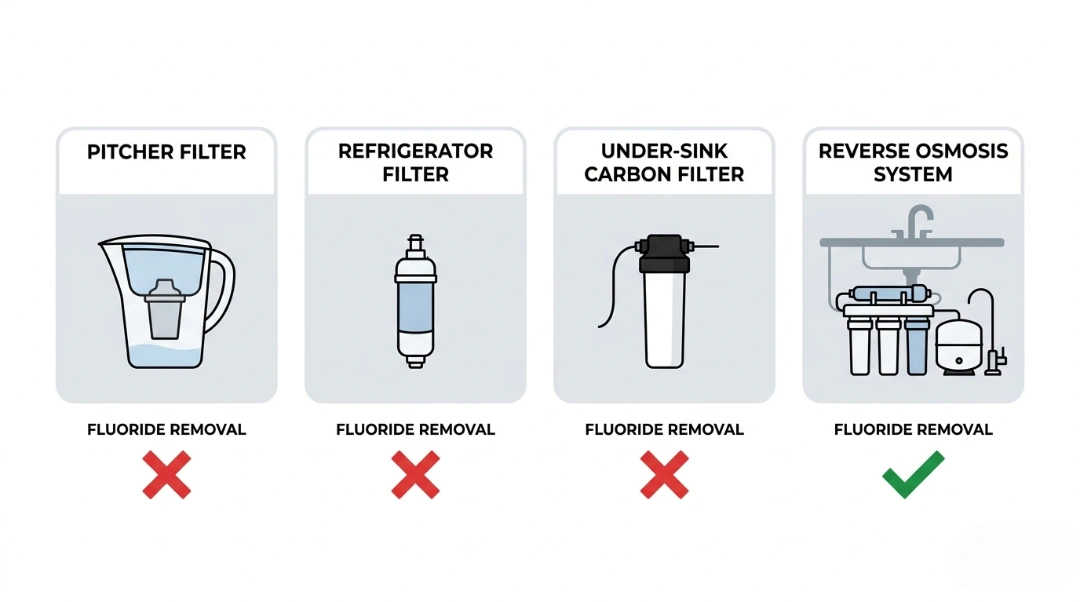
Let me save you the suspense: Yes, RO filters absolutely obliterate fluoride. We’re talking about a 90% to 99% removal rate. That’s not just a “meh, maybe” – it’s a dramatic, over-the-top, “I’m breaking up with you, fluoride” kind of breakup. Your RO system is basically the security bouncer at a club, and fluoride is the questionable guy with a fake ID.
Now, before you start panicking about missing out on your daily dose of “tooth armor,” let’s get one thing straight. RO is brutally efficient. It doesn’t just wave at fluoride and say, “Hey, maybe stick around.” No. It kicks it out with all the other dissolved solids – calcium, magnesium, even that tiny bit of dissolved gold you secretly hoped was in your tap water. Sorry, treasure hunters.
Must Read
The Science Bit (But Make It Fun)
Here’s the deal. RO systems work by literally squeezing water through a membrane that has holes so small, you’d need an electron microscope to see them. We’re talking pores that are 0.0001 microns wide. That’s like trying to shove a beach ball through a keyhole. Fluoride ions, bless their tiny charged hearts, are just too big and too charged to make it through the security checkpoint.
Think of it this way: your RO membrane is the world’s angriest coffee filter. Water is the coffee (delicious, welcome), and fluoride is the bitter, unwanted coffee grounds that get left behind. It gets flushed down the drain. Bye-bye, fluoride. Don’t let the drain hit you where the good water left you.
But wait – is this a good thing? Well, for most people brushing their teeth twice a day, getting fluoride from tap water is like eating a whole birthday cake for breakfast because your cereal has vitamins. You’re already getting enough from your toothpaste. Unless you’re licking concrete, you’re probably fine.
The "But My Dentist Said..." Episode
Ah, yes. The dentist. The human who makes you floss just to feel guilty. They love fluoride the way a golden retriever loves a tennis ball. And they’re not wrong – it helps prevent cavities. However, your RO system doesn't care about their feelings. It’s a cold, hard machine that separates you from 99% of everything that isn’t H2O.
 Does Reverse Osmosis Remove Fluoride: The Truth!
Here’s a surprising fact: many dental studies show that excess fluoride can cause dental fluorosis (white spots on teeth) in kids. So, removing it isn’t necessarily an act of war on your enamel. It’s more like you’re fine-tuning your personal water cocktail. You get enough from that blob of toothpaste you glob onto your brush like a maniac.
And here’s the kicker: if you’re truly worried about your teeth, you can buy a cheap fluoride filter faucet attachment that puts it back in after your RO system removes it. Yes, you read that right. You can remove it, then add it again. It’s the circle of life, but for water. The Lion King with plumbing.
But What If I Want Fluoride? (The Anxiety Loop)
Let’s say you’re the type of person who enjoys the taste of government-mandated dissolved minerals. You like knowing exactly what’s in your glass. Well, tough luck with an RO system. It’s a steamroller of purification. It removes everything: pesticides, lead, chlorine, and yes, your precious fluoride.
Most RO systems come with a remineralization filter as an add-on. This sassy little cartridge puts calcium and magnesium back in for taste. Some even add a tiny bit of fluoride. But it’s not automatic. It’s like buying a salad and then asking the waiter to bring your own croutons and bacon bits. You have to be proactive about your weird water choices.
I’ll be honest: unless you’re a competitive swimmer who lives in a tub of municipal water, you probably don’t need to worry. The difference in cavity rates between RO water drinkers and tap water drinkers is negligible – like arguing over which color of M&M tastes best. They all melt the same in your mouth.
 Does Reverse Osmosis Remove Fluoride? Explained
The Eco-Guilt Trip
Now, here’s the downside that no one puts on the fancy box. RO systems produce a lot of wastewater. For every gallon of pure, fluoride-free, crystal-clear water you drink, about 3 to 4 gallons go down the drain, laden with the fluoride you just evicted. It’s like a very thirsty, melodramatic teenager who takes a shower for an hour and then complains about the water bill.
But hey, that’s the price of purity. If you live in an area where the local water tastes like a swimming pool’s angry stepchild, then it’s totally worth it. Just know that your RO filter is essentially a peace treaty between you and the universe: you get awesome water, and the drain gets a chemistry lesson.
The Verdict (Finally!)
So, does RO remove fluoride? Yes. It removes it with the enthusiasm of a teenager offered free coffee. It’s gone. Vanished. Poof. But – and this is a big, sparkly, toothy but – it also removes other stuff that might be good for you. It’s a water apocalypse, but only for the minerals you didn’t know you loved.
My advice? If you’re not a conspiracy theorist who thinks fluoride is alien brain-control juice, then don’t stress. Drink your RO water, brush with fluoridated toothpaste, and maybe eat some cheese (it’s great for teeth). Life’s too short to overthink your drinking water. Unless it tastes like a sock. Then, definitely get the RO. Just don’t blame me when your dentist gives you the disappointed parent look.
And remember: you can always buy a bottle of fluoridated water from the store and mix it with your pure RO water if you want to create the ultimate custom blend. Be the alchemist you were always meant to be. Just don’t sell it for $12 a bottle. That’s silly. Even for a café conversation.
