How Much Is Average Water Bill

Last week, my friend Sarah texted me a photo of her water bill with a skull emoji. The number was $187, and she swore she hadn’t been filling a secret swimming pool in her bac...

Last week, my friend Sarah texted me a photo of her water bill with a skull emoji. The number was $187, and she swore she hadn’t been filling a secret swimming pool in her backyard. I actually checked her yard—nope. That got me wondering: how much is the average water bill, anyway? Is Sarah getting hosed, or is that just the price of clean laundry and long showers?
Spoiler alert: the average water bill in the U.S. hovers around $40 to $60 per month for a single-family home. But—and here’s the kicker—that number can swing wildly based on where you live. I’m looking at you, California. In some cities, you might pay $30; in others, prepare to hit triple digits if you have a lawn that actually gets watered.
The Shocking Truth: It’s Not Just Water
See, your water bill isn’t just for the H2O coming out of your tap. It’s a bundle of costs: water supply, treatment, sewer services, and sometimes even stormwater fees. So when you see that bill, you’re paying to keep your water clean and your poop flushed away. Glamorous, right? That’s why a family of four can see a bill of $70 to $100 per month, while a single person in a small apartment might hit only $20.
Must Read
Let me break it down a little more. The average U.S. household uses about 300 gallons of water per day—that’s 9,000 gallons a month. At a national average rate of about $1.50 per 1,000 gallons, that’s around $13.50 for the water itself. Wait, that’s tiny! But then the sewer and treatment fees pile on, often doubling or tripling that base cost. Fun fact: In many cities, you pay for sewer based on the water you use, even if it didn’t all go down the drain. Yes, that includes the water you gave to your tomato plants. Sorry, garden hose fans.
Why Does Your Neighbor Pay Less?
Here’s where it gets ironic. I pay about $55 a month in a midsize Midwestern city, while my cousin in Phoenix regularly sees $90 bills. Why? Infrastructure, climate, and local politics. Older cities with rusty pipes charge more to fix them; hot, dry cities charge more to conserve water. Meanwhile, in rainy Seattle, water is practically a gift from the gods. If you live in a place with aging infrastructure, you’re basically paying off last century’s plumbing mistakes.
And don’t even get me started on fixed fees. Many utilities charge a flat fee just to keep your account open—like $10 to $20 before you turn on a single tap. So if you skip town for a month, you still get a bill that says “You owe us for breathing near the meter.” That’s why your bill can feel like a tax on existence.
 Average Water Bill By State In The Us For 2024 – YWJYT
The Sneaky Factors That Jack Up Your Bill
Let’s talk about your habits—because yes, you might be the problem. A ten-minute shower uses about 20 gallons of water. If you and your partner both take one daily, that’s 1,200 gallons a month just for rinsing off. You’re basically funding a small waterfall every morning. Add in a leaky toilet (which can waste 200 gallons a day silently), and suddenly that $60 bill becomes a $120 nightmare.
But here’s the good news: the average water bill is manageable if you tweak a few things. Fix that drip, switch to low-flow showerheads, and water your lawn only when it really needs it. My friend Sarah? She found a hidden leak in her basement pipe. After fixing it, her bill dropped to $65. She owes me a coffee for saving her sanity.
So, How Much Should You Expect to Pay?
Real talk: for a typical family of three in a suburban home, budget $50 to $80 per month for water and sewer combined. If you’re single and frugal, $20 to $40 is normal. Retirees with a garden might hit $60 to $100 in summer. And if you run a car wash out of your driveway, I’m not judging, but your bill will look like a mortgage payment. Check your local utility’s website for average rates; they often publish them.
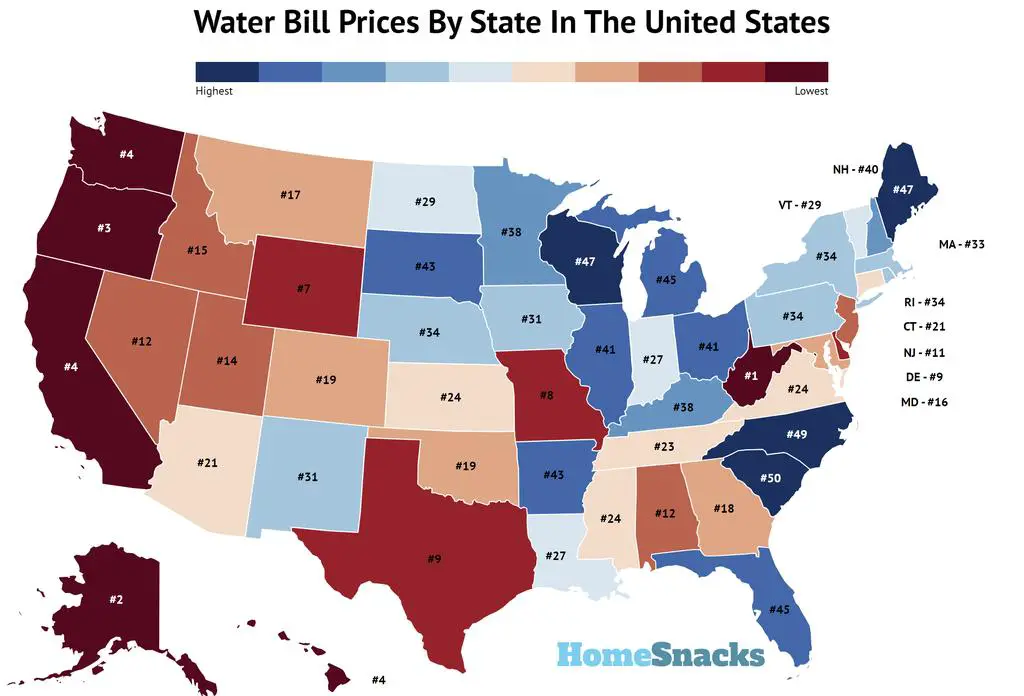 Water Utility Rates By State _ Water Bills By Month – QKCS
One last thing: always read the fine print. Some cities bill every two months, so a $120 bill might actually be a monthly $60. Your eyes just thank you for that happy accident. Look for comparisons online—sites like Circle of Blue or your state’s public utility commission have handy data.
What To Do If Your Bill Seems Off
If your bill suddenly jumps, don’t panic—be suspicious. Check for leaks first (toilet dye test, look under sinks). Then call your utility. Sometimes they miss a reading or charge a phantom fee. My other friend Dave once got billed $400; turns out the meter reader misread a “1” as a “7.” Imagine paying for a phantom 600 gallons a day. They corrected it in a week.
At the end of the day, water is cheap compared to, say, streaming subscriptions. You pay for clean drinking water that comes to your house without you lifting a finger. So the next time you see that average bill of $50, take a deep breath. And then turn off the tap while brushing your teeth. Your wallet—and the planet—will thank you.
